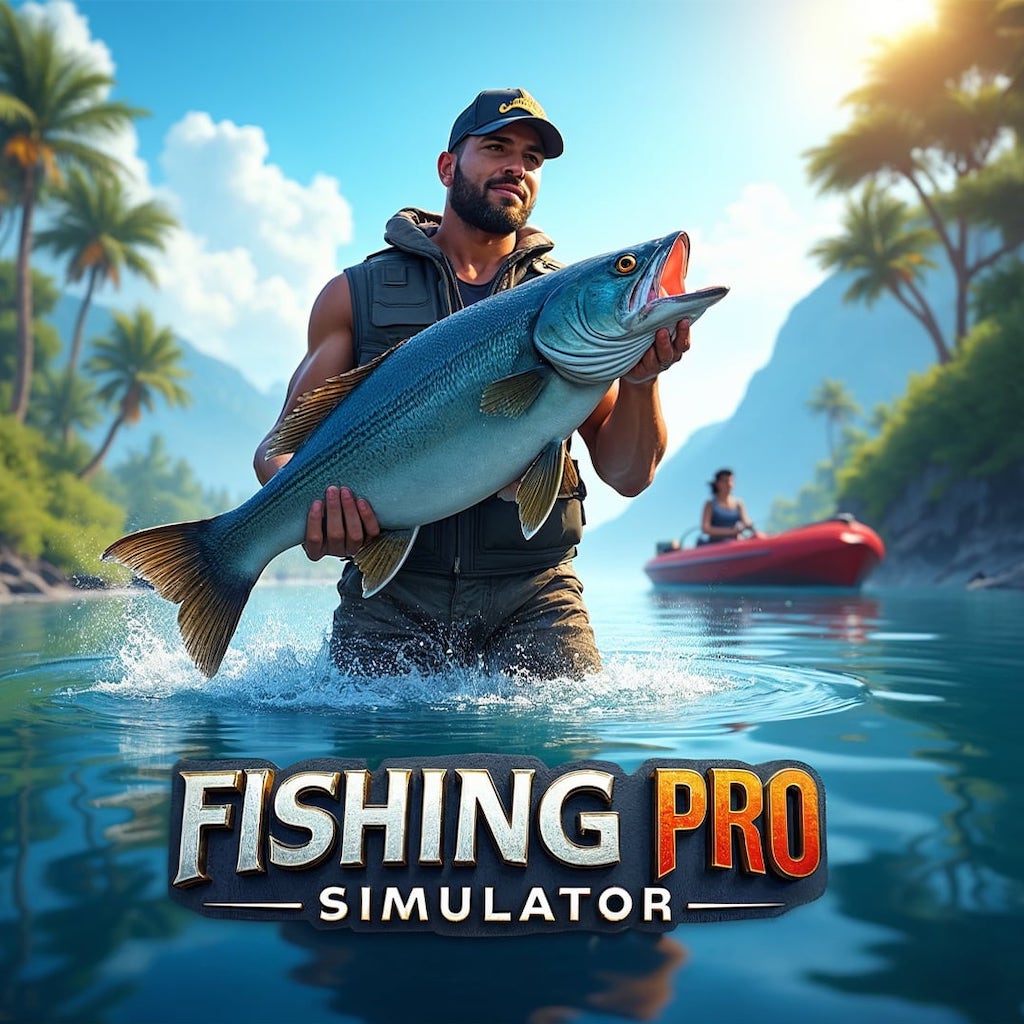
Fishing games occupy a curious place in gaming. Some lean towards the arcade, prioritising instant gratification and exaggerated catches, while others aim to recreate the slow, meditative rhythm of real angling. Fishing Pro Simulator, newly launched on Nintendo Switch, firmly belongs to the latter category.
Despite sharing a name style with several similarly titled fishing games released over the years, PlayForFun’s 2026 entry aims for something specific: a relaxed yet technical simulation focused on patience, observation, and incremental mastery. It’s less about flashy moments and more about the calm anticipation between them.
On paper, that sounds niche. In practice, Fishing Pro Simulator becomes a surprisingly absorbing experience — provided you meet it on its own tranquil terms.
The Art of Doing (Almost) Nothing
The core loop is deceptively simple:
Choose a location.
Cast your line.
Wait.
Yet within that stillness lies the game’s design philosophy. Fishing Pro Simulator deliberately slows the pace, encouraging players to observe environmental conditions, understand fish behaviour, and react with careful timing rather than reflexive action.
Unlike arcade fishing games where catches feel guaranteed, success here depends on managing several interlocking systems:
Rod positioning
Line tension
Reel speed
Fish stamina
Pull too hard and the line snaps. Reel too slowly and the fish escapes. Maintaining balance becomes a tactile mini-game that mirrors real fishing surprisingly well.
Early catches feel modest, but landing a larger fish after a prolonged struggle creates genuine satisfaction — the kind born of patience rather than spectacle.
Nature as the Main Character
Where Fishing Pro Simulator excels most is in atmosphere.
Locations range from calm lakes to flowing rivers and open-water environments, each emphasising serenity. Gentle water movement, ambient wildlife sounds, and shifting light conditions create an experience closer to a digital retreat than a traditional sports game.
The dynamic weather and time-of-day system adds meaningful depth. Fish activity changes with environmental conditions, encouraging experimentation:
Morning fog attracts certain species.
Overcast afternoons alter feeding patterns.
Stormy evenings bring rare catches.
Rather than overwhelming players with statistics, the game teaches through observation. If fish stop biting, the solution often isn’t better reflexes — it’s smarter planning.
This subtle educational design mirrors real-world angling logic in an accessible way.
Progression That Rewards Patience
Beneath the relaxing surface lies a light RPG progression system.
Players start with basic equipment and gradually earn currency through successful catches and challenges. Upgrading gear unlocks deeper gameplay layers:
Stronger rods handle larger fish.
Specialised lures attract rare species.
Advanced reels improve control during long fights.
The progression curve feels steady and fair. New equipment noticeably improves performance without trivialising earlier challenges.
One standout feature is the Fish Encyclopedia, a growing in-game database documenting species behaviour and habitat preferences. It’s both educational and mechanically useful, encouraging players to learn rather than grind blindly.
This system subtly transforms players from beginners into informed anglers — one of the game’s smartest design choices.
The Rhythm of Portable Play
The Nintendo Switch is an ideal platform for this style of game.
Short sessions work perfectly in handheld mode. Casting a few lines during downtime feels natural, and the relaxed pacing suits portable play far better than high-intensity genres.
On Switch 2, performance improvements are noticeable. Water reflections appear smoother, lighting feels richer, and frame pacing remains consistent even in more detailed environments. Load times are shorter, allowing players to move between locations seamlessly.
While not technically demanding, the improved hardware enhances immersion — particularly in sunrise and sunset scenes, where lighting plays a central role.
Skill Over Automation
A common issue with simulation fishing games is excessive automation. Many titles eventually allow players to win encounters with minimal interaction.
Fishing Pro Simulator avoids this pitfall by keeping players involved throughout every catch. Even late-game equipment doesn’t eliminate the challenge; instead, it shifts the focus to mastering tougher species.
The tension mechanic remains engaging over the long term because fish behaviour varies. Some pull aggressively, while others tire slowly, forcing constant adjustment.
It’s a small system executed well enough to carry the entire game.
Presentation: Functional Serenity
Visually, the game aims for realism without pushing hardware limits.
Water physics are convincing, lighting is naturalistic, and environments are cleanly designed. While textures occasionally lack detail compared to premium simulation titles, artistic consistency helps maintain immersion.
Sound design deserves special praise. Ambient audio — rippling water, distant birds, wind through trees — reinforces a sense of relaxation. Music remains minimal, appearing sparingly to avoid disrupting the atmosphere.
Menus are straightforward and easy to navigate, though occasionally plain in presentation.
Where the Simulation Shows Its Limits
Despite its strengths, Fishing Pro Simulator reveals budget constraints.
Location variety, while pleasant, can feel visually similar over extended play. Character customisation is minimal, and animations can appear stiff during fish interactions.
The game also lacks multiplayer or online leaderboards — features that could have added community engagement and long-term competition.
Additionally, newcomers unfamiliar with fishing concepts may find early progression slow. The game prioritises authenticity over instant gratification, which won’t appeal to every player.
Longevity and Replayability
Replay value primarily stems from collection goals:
Completing the Fish Encyclopedia
Unlocking rare species
Upgrading equipment
Completing daily and weekly challenges
Because gameplay emphasises relaxation rather than narrative progression, longevity depends largely on personal enjoyment of the fishing loop.
For players seeking calm, repeatable experiences, the game becomes almost ritualistic. For others, repetition may set in sooner.
Pros & Cons
Pros
- Relaxing, atmospheric gameplay
- Skill-based fishing mechanics feel rewarding
- Meaningful weather and time-of-day systems
- Strong portable experience on Switch
- Educational Fish Encyclopedia adds depth
- Excellent value price
Cons
- Limited visual variety across locations
- No multiplayer or leaderboards
- Slow early progression may deter some players
- Presentation occasionally feels budget-level
Final Verdict
Fishing Pro Simulator succeeds by recognising that, at its heart, fishing is about patience. Rather than chasing excitement through artificial drama, PlayForFun builds an experience centred on calm observation and gradual mastery.
It won’t compete with big-budget sports simulations, nor does it try to. Instead, it offers something increasingly rare: a game comfortable with quiet moments. The satisfaction of a successful catch comes not from spectacle but from learning — understanding weather, equipment, and timing.
On Nintendo Switch and Switch 2, that philosophy fits perfectly. Portable play enhances the game’s meditative qualities, turning short sessions into brief escapes from noise and urgency.
It’s not flashy, and it won’t appeal to everyone. But for players seeking relaxation paired with genuine skill progression, Fishing Pro Simulator proves surprisingly rewarding.