Overview
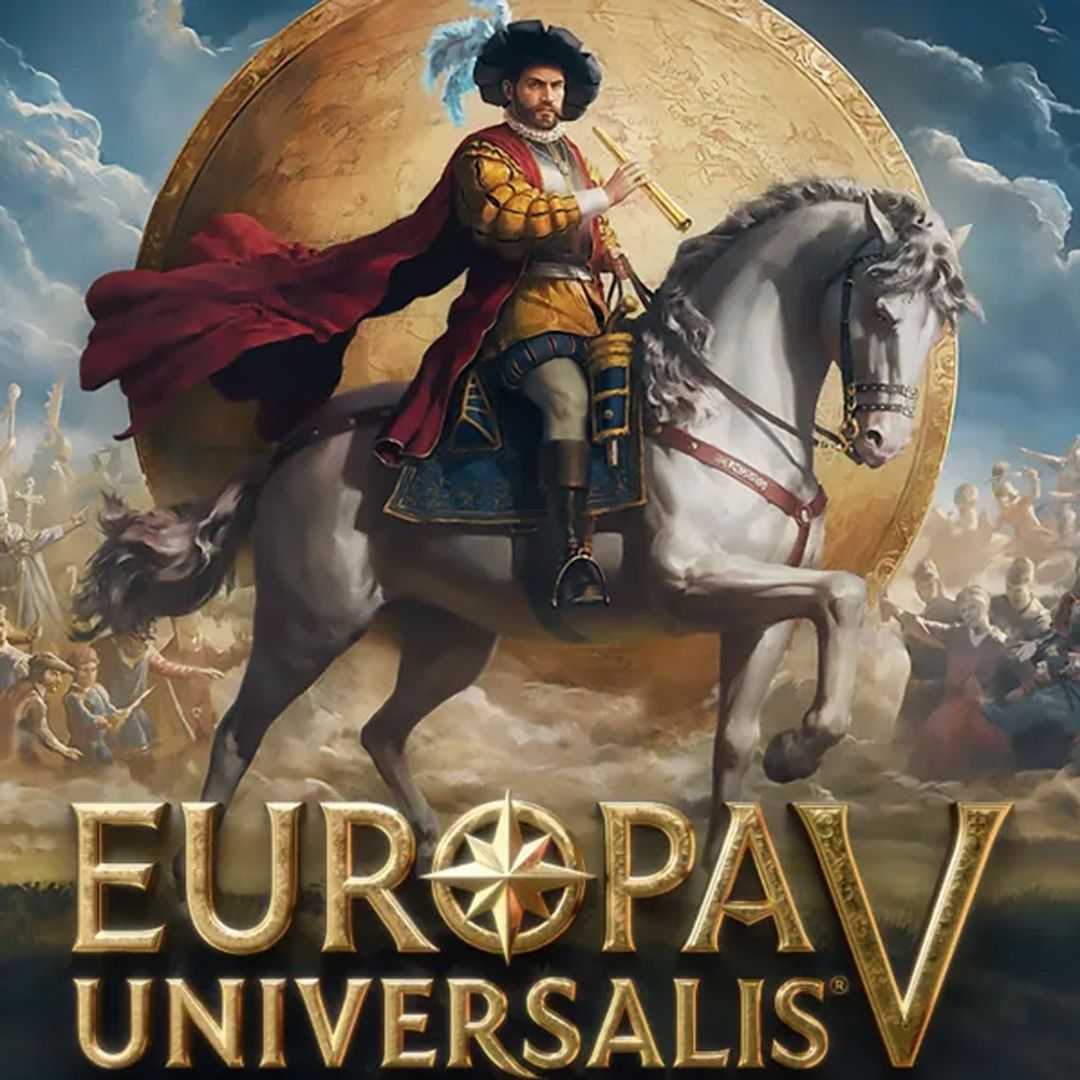
Europa Universalis V is the next evolution of one of the most ambitious historical grand‑strategy series ever made. Spanning nearly five centuries of world history — beginning in 1337 and extending to 1837 — the game invites you to commandeer any of hundreds of nations, and steer diplomacy, economy, warfare, religion and society in an ever‑shifting world.
From tribal realms to mighty empires, from forensic simulation of population groups to battlefield logistics and supply trains, EU V crams in layers of detail. It is a game clearly built for strategy enthusiasts who relish complexity, sovereignty and long campaigns of slow‑burn change.
Story & Setting
While not a narrative‑driven game in the conventional sense, EU V still has a story: the story of your nation. You are not just fighting battles or painting provinces; you are shepherding populations (POPs) with cultures, religions and classes, dealing with estates and internal factions, managing cohorts and supply lines, and navigating tectonic shifts — such as the Black Death, colonial expansion, religious reformations, industrialisation and the dawn of modern states.
The setting is vast and immersive: regions from Asia to Europe to the Americas. Map detail has been increased, provinces subdivided, terrain and climate matter. If you like emergent stories — “What happens when Persia becomes global naval power?”, or “Can I shepherd a small Italian city‑state into a colonial empire?” — EU V offers rich soil.
Gameplay: Systems, Strategy, and Scope
Systems & Depth
EU V is ambitious to the max. Its key systems include:
- A population modelling system: each POP has culture, religion, class, home region, etc.
- Estates that act like living power blocs: investing, building, loaning.
- Military logistics and supply systems: levies, professionals, supply trains, sieges tracking food capacity.
- A refined economic model: trade flows, terrain and climate affecting productivity, rural vs urban growth.
- Choice of automation: players can delegate certain systems to AI to focus where they want.
What this all means: the game is deep. Veins upon veins of mechanics to dig into. For a seasoned grand strategy fan, that’s a treat. But for newcomers? It will overwhelm, and indeed some reviewers caution about the steep learning curve.
Strategy & Player Choice
The freedom in EU V is glorious. Want to become a sprawling colonial empire? Go for it. Want to build a tight‑knit mercantile city‑state and dominate trade? Sure. Want to survive as a tiny mountainous monarchy while bigger powers fight each other? That too. The scale is enormous. Hundreds of nations, decades on end, shifting eras.
The interplay between internal politics (estates, classes, religious groups), external pressure (war, diplomacy, trade), and long‑term trends (population growth, industrial change) is sophisticated and satisfying. Good decisions ripple for decades; bad ones can undermine everything.
What Works
- The sheer scale: Timeline, map, number of systems make EU V feel like the ultimate sandbox for strategy fans.
- Depth and simulation: When systems all “click”, they deliver that satisfying feeling of managing a living world.
- Replayability: Each nation, each campaign will differ dramatically.
- Automation flexibility: Letting you auto‑delegate systems means you can focus on what you enjoy most.
What Doesn’t
- Complexity overload: It’s not for casual sessions or beginners. Many systems require time, attention. Reviewers call it “intensely intricate”.
- User‑interface and accessibility issues: Some players find the UI crowded, unintuitive, and navigation heavy.
- AI limitations: The computer often struggles to fully leverage the systems, so human players may get too much advantage.
- Lack of immediate “flavour” for smaller nations: While the big powers feel rich, some smaller states may lack unique events at launch.
Visuals & Audio
Graphically, EU V doesn’t necessarily reinvent the wheel, but it elevates the visual presentation of the series. The world map is more detailed, animations smoother, lighting improved. Terrain, climate, and even supply convoys contribute to an immersive world view. The soundtrack and audio design have drawn praise from the community for enhancing the mood and scale of events.
Performance is solid on capable systems, though some technical issues (especially on less powerful hardware) have been noted. Early reports mention stutters and crashes during large‑scale updates or heavily loaded states.
Final Thoughts & Score
Europa Universalis V is a landmark entry in the grand strategy genre. It pushes the boundaries of what a historical simulation can be — enormous in scope, deep in detail, and rich in player choice. For veterans of the genre, it’s a dream: you’ll spend countless hours exploring, building, plotting, governing.
However, it is not a casual game. The complexity is real. The UI and AI are not flawless. Some nations feel less “flavoured” at launch. If you prefer quick wins or low‑maintenance sessions, this might stretch you. But if you relish thinking in centuries instead of minutes, if you want to craft a world and watch it evolve under your hand, EU V delivers.
In short: a magnificent achievement, albeit one with jagged edges. As future expansions and patches arrive, this could easily become the standard for grand‑strategy. As it stands now — it’s a must‑play for the dedicated, and a strong recommend for those ready to learn.