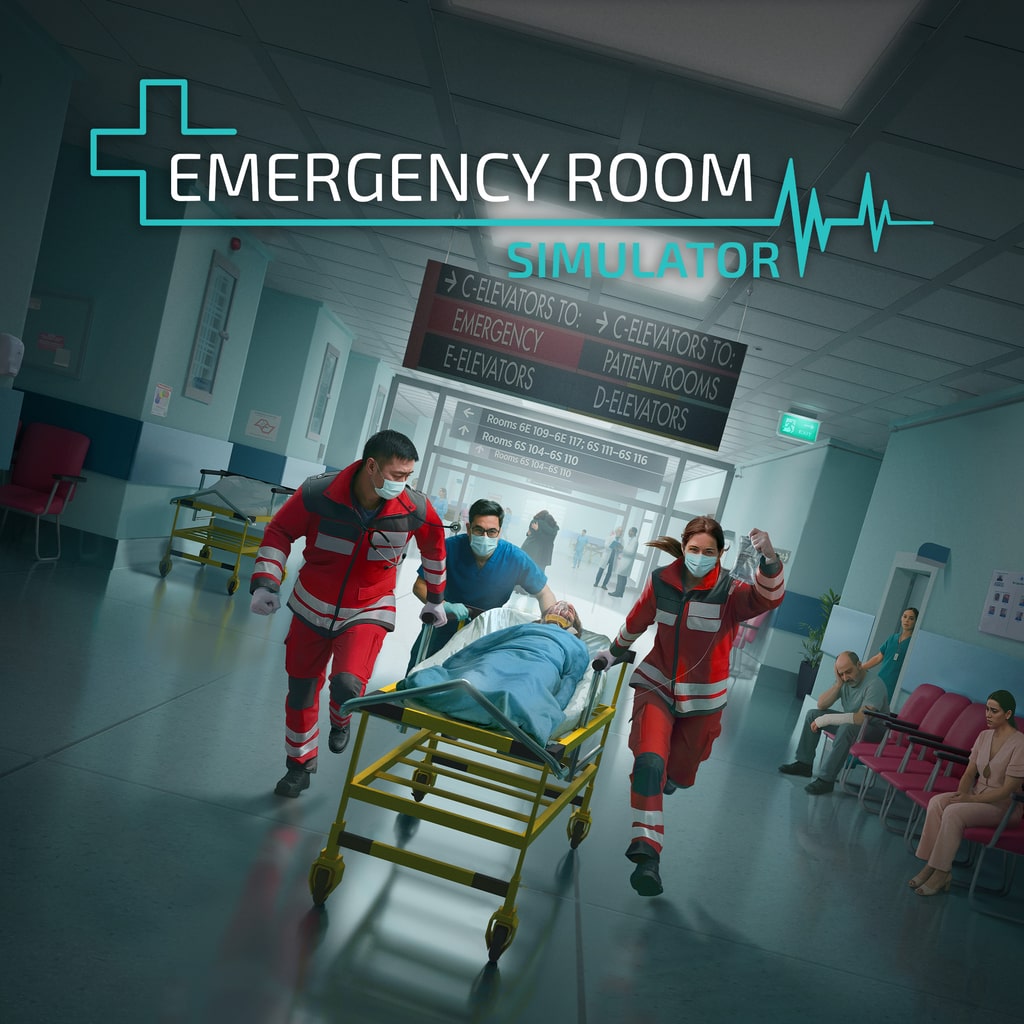
There is something inherently dramatic about working in an emergency room. The doors swing open, someone needs help, alarms sound, colleagues shout instructions, and somewhere in the middle of the noise is a patient who needs you to make the right decision. Emergency Room Simulator takes that pressure and turns it into a hands-on simulation that asks you to do more than simply point to the correct answer. You have to listen, investigate, diagnose, prioritise, and then carry out the treatment, all while the clock keeps ticking.
Developed by Caipirinha Games and published by Aerosoft, Emergency Room Simulator is very much a game about the process of medicine rather than the fantasy of being a superhero doctor. There are no dramatic power trips here, and the game is at its best when it slows down and lets you work through a case methodically. You might begin with something that seems straightforward, only for the situation to escalate into something far more serious. That contrast between quiet investigation and sudden panic gives the experience a surprisingly compelling rhythm.
Welcome to the Emergency Room
The first thing that stands out about Emergency Room Simulator is how much the experience centres on observation. Patients do not simply arrive with a giant arrow above their heads telling you what is wrong with them. You have to listen to what they say, pay attention to what the paramedics tell you, and examine the information available before deciding what to do next. It sounds simple on paper, but there is a satisfying sense of responsibility in making those decisions yourself.
The patient chart becomes your constant companion as you build a picture of what is happening. Asking the right questions can reveal useful information, while physical examinations can provide clues that point towards a particular diagnosis. From there, you can request tests such as blood tests, ECGs, X-rays, ultrasounds and CT scans to confirm your suspicions. It adds a nice detective element that makes each patient feel like a small puzzle rather than simply another task to tick off a list.
That investigative approach is arguably the game’s biggest strength. It makes you feel involved in the treatment process instead of reducing medicine to a series of minigames. When you finally reach a diagnosis after piecing together several clues, there is a genuine feeling of satisfaction. You have not merely been told what the problem is. You have worked it out.
When Every Second Counts
Of course, an emergency room would hardly be an emergency room if everything happened at a comfortable pace. Emergency Room Simulator understands this and regularly throws situations at you that completely change the mood of a shift. One moment you can be calmly examining a patient, and the next you are dealing with a potentially life-threatening emergency where there is no time to second-guess yourself.
These moments provide some of the game’s most memorable sequences. Performing CPR, stabilising an injured patient, or dealing with serious trauma creates a welcome sense of urgency. The pressure comes not from enemies or traditional game-over screens, but from knowing that the patient in front of you needs immediate attention. It is a simple idea, yet it gives otherwise routine interactions considerably more weight.
The game also does a good job of making prioritisation part of the challenge. An emergency department is not a place where everyone can be treated immediately, so deciding what needs your attention first becomes an important part of the experience. A patient with a relatively minor complaint might have to wait while someone in much greater danger receives treatment. These choices give Emergency Room Simulator a little more depth than its job-simulator foundations might initially suggest.
Learning the Ropes
There is a nice progression to the way the game introduces its various systems. Early cases let you become comfortable with examinations, patient charts and diagnostic procedures before things become more demanding. As you become more familiar with the hospital, you begin to recognise patterns and understand which tests are likely to be useful. It is not particularly difficult to grasp, but there is enough to learn that your first few shifts feel considerably less confident than those that follow.
That learning curve is important because Emergency Room Simulator is much more enjoyable once you stop thinking about every action individually. At first, finding a particular piece of equipment or remembering where something is stored can feel cumbersome. Eventually, however, you begin to develop your own routine. Interview the patient, examine them, check the obvious possibilities, order the appropriate tests, review the evidence and then decide on treatment.
There is something oddly satisfying about settling into that rhythm. It captures the appeal of a good job simulator, where the pleasure comes from becoming competent at something that initially seemed complicated. The game does not need to turn you into a medical genius to achieve that feeling. It simply needs to make you feel that you are getting better at the job, and for the most part, it succeeds.
A Hospital With Character
The hospital itself provides a suitably clinical backdrop for everything taking place. There is a reassuring amount of equipment and detail throughout the environment, helping the setting feel like somewhere designed for a purpose rather than simply a collection of rooms created to house objectives. Moving between treatment areas, diagnostic equipment and other parts of the hospital reinforces the feeling that you are working within a functioning environment.
The visual presentation is not going to compete with the biggest graphical showcases around, but that is hardly the point. Emergency Room Simulator benefits more from a believable atmosphere than from covering every surface with unnecessary detail. The sterile corridors, equipment, beds and treatment areas all contribute to the mood, while the sound design helps sell the difference between a quiet period and a genuine crisis.
It is during those busier moments that the environment comes alive. Alarms, voices and the constant movement of people create a sense that things are happening beyond your immediate field of view. When the hospital is quiet, that atmosphere can become almost meditative. Then a serious case arrives and suddenly the same surroundings feel considerably more intimidating.
The Paperwork Problem
For all its strengths, Emergency Room Simulator is not entirely free from the frustrations that come with detailed simulation games. Some routine interactions can feel unnecessarily fiddly, particularly when searching storage areas for a specific item. At times, the interface seems more interested in making you click through another menu than in letting you get on with treating the patient.
This can be particularly noticeable when a shift moves from calm to chaotic. Spending time navigating inventory screens while an urgent situation unfolds can interrupt the tension rather than enhance it. The intention is understandable, as the developers clearly want you to interact with the hospital rather than simply press a button to perform every procedure. Still, a little more streamlining would have made the experience considerably smoother.
Routine cases can also reveal repetition. Once you understand the basic process, certain examinations and treatments begin to feel familiar. Thankfully, the more dramatic emergencies provide enough variety to keep the overall experience from becoming completely predictable, but players expecting a constantly evolving medical drama may find the quieter sections somewhat methodical.
The Human Side
What ultimately makes Emergency Room Simulator work is its understanding of the importance of making its patients feel like more than objectives. Even when the presentation is relatively straightforward, there is something satisfying about taking a patient from an uncertain diagnosis to successful treatment. The game encourages you to pay attention rather than rush through every interaction, giving the experience a warmer quality than you might expect from a simulation so heavily focused on procedures.
It also helps that the game does not constantly bombard you with action. Emergency medicine is not an endless sequence of dramatic rescues, and the quieter moments give the more serious situations room to breathe. That contrast is essential, because if every patient were a life-or-death emergency, the tension would quickly disappear. Instead, the game builds a rhythm of observation, treatment, routine and sudden crisis.
There is definitely something rewarding about finishing a difficult case and knowing you got everything right. It may not deliver the spectacle of a traditional action game, but Emergency Room Simulator finds its excitement in competence. The satisfaction comes from making the correct call when the information is incomplete and then seeing the situation improve as a result.
Verdict
Emergency Room Simulator is an engaging and surprisingly thoughtful medical simulation that understands the appeal of putting the player directly in the role of the doctor. Its combination of patient interviews, diagnostic investigation, hands-on treatment and sudden emergencies creates a satisfying gameplay loop that can make a routine shift feel unexpectedly compelling. It is not perfect, and the fiddly inventory interactions and occasional menu-heavy procedures can take some of the shine off the experience, particularly when you are trying to respond quickly to an emergency.
Even so, there is genuine character here. Emergency Room Simulator does not simply throw medical terminology at you and call itself a simulation. It builds its experience around the process of figuring out what is wrong and deciding what to do about it. The quieter moments encourage patience, while the emergency situations test whether you have actually learned the ropes.
For fans of detailed job simulators, this is an easy recommendation. It will not replace the bigger hospital management games, nor does it need to. Its focus is narrower and considerably more personal, placing you at the centre of individual cases rather than asking you to manage an entire medical empire. When everything comes together, Emergency Room Simulator captures that wonderfully satisfying feeling of taking a problem, breaking it down piece by piece and eventually finding the answer.