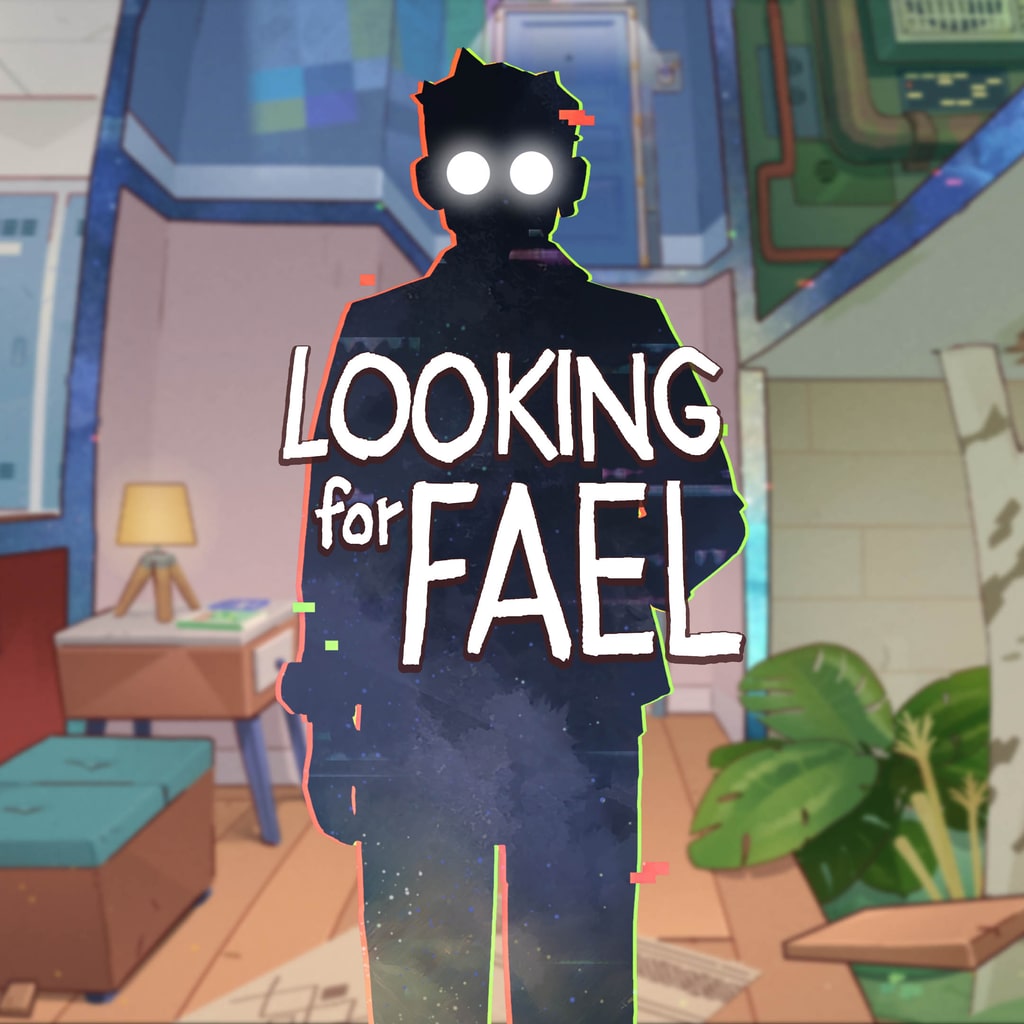
There is something quietly unsettling about returning home to find that the place you know better than anywhere else has become completely unfamiliar. Not because monsters have invaded or the lights have gone out, but because reality itself has decided to stop making sense. Doors refuse to lead where they should. Rooms multiply without explanation. Familiar objects begin to take on hidden meanings. Looking for Fael builds its mystery on that simple yet deeply effective premise, drawing players into a surreal escape room where every answer only seems to raise another question.
Developed and published by Hungry Bear Games, Looking for Fael is a narrative-driven puzzle adventure that blends escape-room design, psychological storytelling and nostalgic charm into something genuinely memorable. Rather than relying on horror clichés or relentless action, it invites you to slow down, observe your surroundings and think carefully about what you see. It trusts your curiosity to carry you forward, and more often than not, that trust is rewarded.
From the opening moments, the game establishes an atmosphere that is both comforting and deeply unnerving. It begins with a simple voice message from your missing roommate, Fael. Before long, the apartment you thought you knew has transformed into an impossible maze, where each new doorway reveals another strange reality. Every room seems connected by invisible threads, yet none of them follow conventional logic. That dreamlike uncertainty becomes the heart of the experience, prompting you to keep pushing forward simply because you need to understand what happened.
Every Room Tells a Story
Looking for Fael isn’t interested in hand-holding. It asks you to pay attention, experiment and trust your instincts. Every apartment functions as its own self-contained puzzle while also contributing to a much larger web of interconnected mysteries. Solving one challenge may unlock something in an entirely different location hours later, creating satisfying moments when seemingly insignificant discoveries suddenly become crucial.
This interconnected design is one of the game’s greatest strengths. Nothing feels random. Even the strangest machines or bizarre decorative items often serve a purpose that only becomes clear much later. The game constantly rewards players who notice tiny details or recall unusual clues from earlier chapters. It creates that wonderful feeling of gradually mastering an impossible place.
The puzzles themselves strike an impressive balance between accessibility and challenge. Some involve mechanical contraptions that require observation and experimentation. Others ask you to interpret symbols, environmental clues, or hidden relationships between rooms. Rarely does the game rely on arbitrary logic. Even when solutions prove difficult, they usually make perfect sense in hindsight.
There are occasions when a particularly abstract puzzle may leave players wandering in circles for longer than intended. A few later challenges push the boundaries of logic enough that trial and error inevitably enters the equation. Thankfully, these moments remain relatively rare, and the satisfaction of eventually solving them outweighs the temporary frustration.
The Wonderful Game Leaf
One of the game’s most charming ideas is the Game Leaf, a fictional handheld console inspired by 1990s portable gaming. Rather than being a simple collectible, it becomes an essential gameplay mechanic, introducing a variety of mini-games and puzzle sequences.
The Game Leaf feels like a heartfelt love letter to classic portable gaming. Each mini-game serves a practical purpose while adding welcome variety to the overall adventure. It never overstays its welcome, helping break up long stretches of environmental exploration with something playful and nostalgic.
More importantly, it reinforces one of Looking for Fael’s central themes. The past constantly shapes the present. Childhood memories, forgotten hobbies and old pieces of technology become meaningful elements of the narrative rather than mere references. The Game Leaf fits naturally into that larger emotional picture.
A Maze Filled with Personality
Visually, Looking for Fael leaves a lasting impression. Every environment feels carefully illustrated, almost like stepping into the pages of an imaginative graphic novel. The apartments shift dramatically in style, moving from ordinary domestic spaces to rooms overtaken by lush vegetation, mysterious laboratories, cinemas and bizarre dreamscapes that seem pulled directly from someone’s subconscious.
Comic artist Benoît “Beloup” Leloup’s influence is felt throughout every environment. Colours remain vibrant even when the mood turns melancholic, creating an unusual contrast that perfectly matches the game’s surreal tone. There is always something interesting to look at, whether it is an odd machine sitting quietly in the corner or a tiny visual reference tucked away for observant players.
Because every room has its own identity, exploration rarely becomes repetitive. You genuinely look forward to opening the next door simply to discover what impossible location awaits on the other side.
The subtle environmental storytelling also deserves praise. Many rooms convey pieces of Fael’s personality without relying on dialogue. Objects, decorations and forgotten experiments gradually build an image of someone brilliant, eccentric and perhaps struggling with something far deeper than it first appears.
Quiet Sounds, Loud Emotions
The soundtrack recognises that silence can often be more powerful than constant music. Gentle melodies drift through the apartments before fading into ambient sounds, leaving you alone with your thoughts. The result is an atmosphere that feels reflective rather than frightening.
Environmental audio does much of the heavy lifting. The distant hum of machinery, creaking floorboards, soft rainfall, or subtle echoes help each room feel alive despite its emptiness. These sounds reinforce the loneliness that underlies the entire adventure.
Voice acting is used sparingly, allowing written notes and recorded messages to carry much of the emotional weight. That restraint works in the game’s favour. The mystery feels personal because much of it unfolds through quiet discovery rather than through lengthy exposition.
A Story That Stays with You
At its heart, Looking for Fael is less about escaping a building and more about understanding another person. Each puzzle solved feels like uncovering another fragment of someone’s life. Rather than presenting Fael as a simple objective, the game gradually reveals the missing roommate as a fully realised character through environmental storytelling and scattered memories.
The emotional core develops gradually, posing thoughtful questions about identity, loneliness, creativity and how memories shape who we become. Without revealing major story beats, the narrative rewards patient players with an ending that feels earned rather than manufactured.
The pacing also deserves credit. New mechanics appear regularly enough to keep the adventure fresh, while the central mystery provides constant motivation to keep exploring. Even when you pause to solve an especially demanding puzzle, the desire to uncover another piece of Fael’s story remains compelling.
Not Quite Perfect
As imaginative as Looking for Fael is, it occasionally stumbles under the weight of its ambition. Some puzzle solutions venture so far into abstraction that players may feel disconnected from the otherwise logical design philosophy established earlier in the game. A slightly stronger hint system could have eased these moments without compromising the challenge.
Players expecting fast-paced gameplay or traditional action will also need to adjust their expectations. This is a deliberately thoughtful experience centred on observation, experimentation and careful exploration. Those willing to embrace its slower rhythm will discover something special, while others may find the pacing too gentle.
Fortunately, these shortcomings never overshadow what the game achieves. They simply remind you that Looking for Fael is unapologetically designed for players who enjoy taking their time.
Final Verdict
Looking for Fael is one of those rare puzzle adventures that lingers long after the credits roll. Its surreal environments, clever escape-room design and emotionally grounded storytelling combine to create something genuinely distinctive. Rather than chasing bigger spectacle or louder scares, it quietly builds an unforgettable world where curiosity is your greatest tool.
The apartment maze constantly surprises, the puzzles consistently engage, and the story unfolds with patience and confidence. Every new room feels like another piece of an intricate emotional puzzle, encouraging exploration not because the game demands it, but because you genuinely want to know what lies behind the next impossible door.
For fans of atmospheric adventures, escape rooms and narrative-driven puzzle games, Looking for Fael is an easy recommendation. It is imaginative, heartfelt and wonderfully strange, showing that some of the most memorable journeys can begin with nothing more than a missing friend and a door that should never have existed.