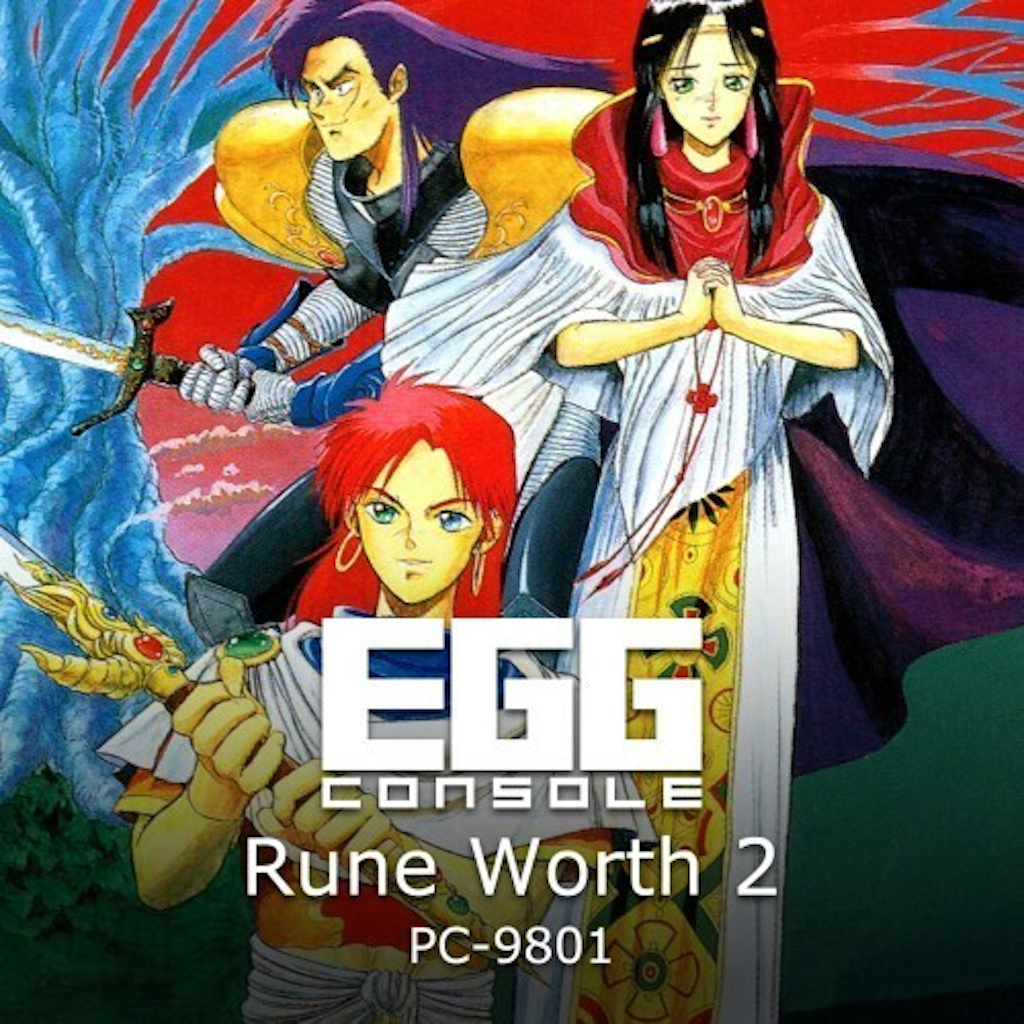
There’s a growing audience of players who don’t just seek new releases, but actively look backward — exploring the foundations of modern gaming through carefully preserved classics. EGGCONSOLE Rune Worth 2 PC-9801 sits firmly in that space. Originally released in 1991 for NEC’s PC-9801 home computer and now brought to modern platforms via the EGG Console service, this action-RPG offers a thoughtful look at early Japanese RPG design. It’s a game defined as much by its ambitions as by its limitations, rewarding patience and historical curiosity over instant gratification.
While it may not resonate with everyone, Rune Worth 2 remains a compelling artifact from a formative era, one that values atmosphere, deliberate pacing, and systemic experimentation.
A World Defined by Decline
The narrative of Rune Worth 2 is refreshingly serious for its time. Players step into the role of Leen Kashua, navigating a fantasy world where the influence of the gods is waning and humanity is left to grapple with the consequences. Rather than leaning into bombast or high-energy spectacle, the story unfolds with restraint and gravity, painting a setting that feels weary, uncertain, and quietly tragic.
This subdued tone gives the game a unique identity among early ’90s RPGs, many of which favoured brighter visuals or more heroic storytelling. Here, the world feels fragile, and the sense of decay permeates towns, dungeons, and conversations alike. However, that seriousness comes at a cost. Story progression is slow, dialogue is sparse by modern standards, and players unfamiliar with Japanese text may find narrative comprehension challenging, as the port offers limited localisation beyond menus.
Still, for those willing to engage with it on its own terms, the setting feels grounded and sincere — an example of early RPG storytelling striving for emotional weight rather than spectacle.
Methodical Action-RPG Combat
At its core, Rune Worth 2 is a top-down action RPG that blends real-time combat with exploration, inventory management, and character progression. Battles are not frantic affairs; instead, they encourage timing, positioning, and observation. Enemies telegraph attacks clearly, and success often comes from patience rather than aggression.
Combat mechanics feel deliberately paced. Swinging a weapon, casting spells, or retreating to avoid damage all require commitment, and careless actions are quickly punished. While this may feel restrictive compared to modern action RPGs, it creates a sense of tension that rewards careful play. Every successful encounter feels earned, not handed out.
Controls translate reasonably well to modern platforms, though they remain faithful to their original design. Movement and attacks lack the snap of contemporary action games, but they retain a consistency that becomes comfortable over time. There’s no attempt to modernise the feel beyond necessity — a decision that preserves authenticity, even if it limits broader appeal.
A Curious Sense of Time
One of Rune Worth 2’s more unusual mechanics is its in-game time system. Days last longer than expected, and the calendar structure is far removed from real-world norms. While this system doesn’t radically alter gameplay moment-to-moment, it contributes to a subtle sense of world-building.
Shops operate on schedules, towns feel different depending on the time of day, and progression carries a faint sense of passing years rather than static loops. It’s a mechanic that hints at deeper simulation aspirations — something rarely seen in RPGs of its era — and while it isn’t fully realised, it adds texture to exploration and reinforces the idea of a living world.
Presentation Rooted in Its Era
Visually, Rune Worth 2 is unmistakably a product of early ’90s Japanese PC gaming. Pixel art environments are functional and readable, with enough variation to distinguish towns, fields, and dungeons. Character sprites are simple but expressive within their limitations, and the overall presentation prioritises clarity over flourish.
The art direction won’t impress players accustomed to modern retro-styled RPGs that embellish nostalgia with contemporary effects. Instead, this is raw preservation — an experience that looks and feels like it did decades ago. For some, that authenticity is the draw; for others, it may feel austere.
Audio design follows a similar philosophy. Music loops frequently, but its melodies fit the somber atmosphere well. Sound effects are minimal and utilitarian, serving their purpose without distraction. There’s no voice acting or cinematic flourish, but the soundscape reinforces the game’s quiet, introspective tone.
Preservation Over Modernisation
EGG Console’s approach with Rune Worth 2 is one of careful preservation rather than reinvention. Quality-of-life features are minimal, and the game makes few concessions to modern expectations. There’s no extensive tutorialisation, limited guidance, and a general assumption that players are willing to learn through experimentation — or failure.
This approach may frustrate players seeking accessibility or streamlined systems. However, it also preserves the integrity of the original design, allowing players to experience the game much as it was originally intended. It’s a reminder of how RPGs once trusted players to figure things out on their own, even if that trust sometimes bordered on obscurity.
Who Is This For?
Rune Worth 2 is undeniably niche. It’s unlikely to convert players unfamiliar with retro RPGs or those seeking fast-paced action or modern storytelling. But for enthusiasts of gaming history, action-RPG fans curious about genre roots, or players who enjoy slow, methodical exploration, it offers genuine value.
Its combat has weight, its world has intent, and its mechanics reflect an era of experimentation rather than formula. While not every idea lands cleanly, the game’s ambition is evident throughout.
Final Verdict
EGGCONSOLE Rune Worth 2 PC-9801 is best viewed as a preserved relic rather than a modern contender. Its serious tone, deliberate pacing, and era-specific design make it an intriguing experience for the right audience, even if its age shows in almost every system.
Those willing to meet it on its own terms will find a thoughtful, atmospheric action-RPG that offers insight into the foundations of the genre. For everyone else, its dated mechanics and limited accessibility may prove difficult to overcome.