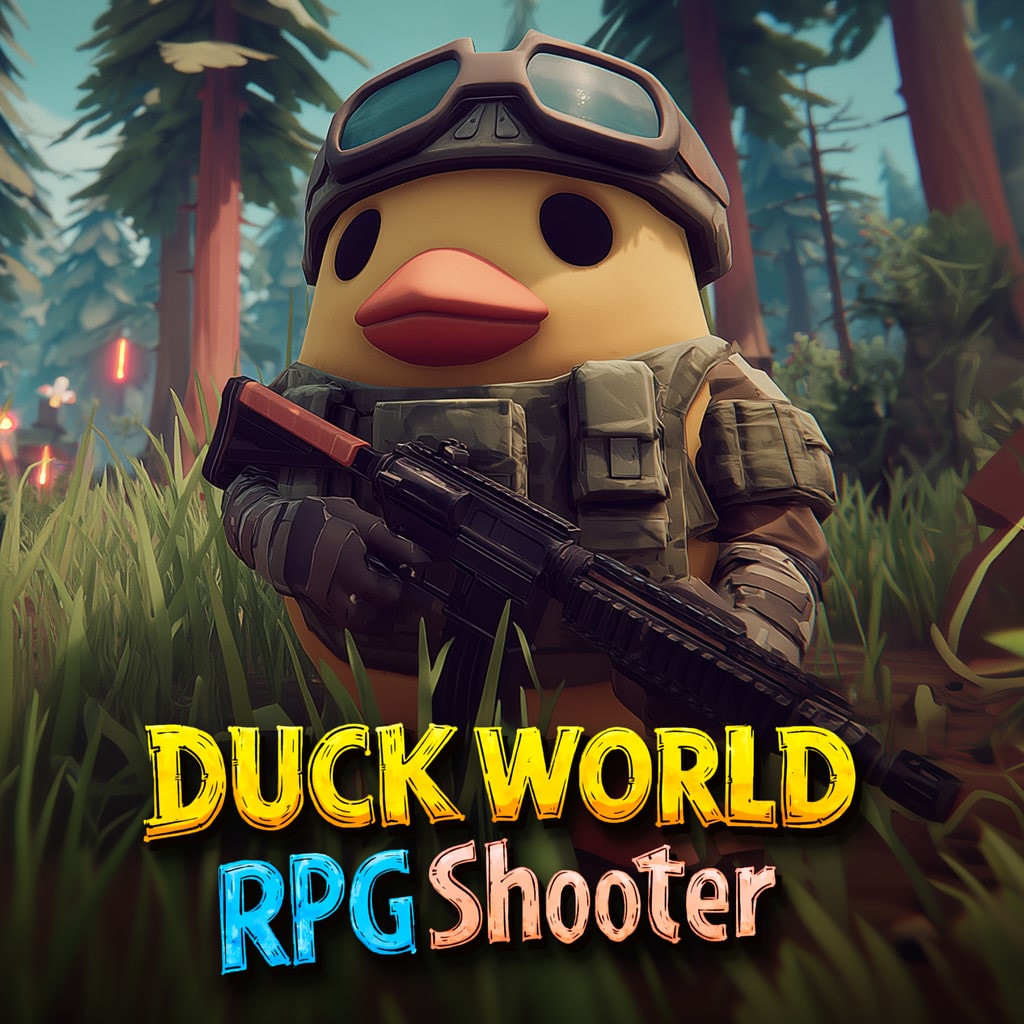
At first glance, Duck World – RPG Shooter looks like another tongue-in-cheek genre mashup: cute animal protagonist, guns that feel slightly too big, and a world that seems equal parts absurd and violent. But beneath the feathery surface lies a surprisingly tense, systems-driven survival shooter that leans more into paranoia, preparation, and consequence than its cartoon exterior suggests.
Developed by Dragon Path and published in partnership with Skystone Games, Duck World doesn’t just ask you to shoot your way to freedom. It asks you to think, plan, retreat, and sometimes accept that the smartest move is not pulling the trigger at all.
A World That Wants You Gone
You awaken alone in Duck World with minimal context and even fewer guarantees. Outside your hideout lies a hostile landscape of fractured ecosystems, roaming enemies, volatile weather systems, and scavenger logic that ensures no two runs feel quite the same. The tone is immediately clear: safety is temporary, confidence is dangerous, and overextension will get you killed.
The game’s dynamic maps are its quiet backbone. Environments shift between runs—loot placements change, enemy patrols reroute, weather alters sightlines and sound travel. A foggy marsh may favor stealth one moment and become a death trap the next when rain muffles enemy movement but also your own footsteps. Duck World thrives on instability, forcing constant adaptation.
Shooting Is Simple. Surviving Is Not.
Gunplay is deliberately straightforward. Weapons feel punchy and readable, favoring clarity over complexity. You won’t find overly flashy mechanics here, but what is present feels tuned for pressure. Ammo is scarce, reloads are slow enough to punish panic, and enemy behavior ensures you’re rarely fighting on ideal terms.
What elevates the shooting is how tightly it’s integrated into the survival loop. Every bullet spent is a future problem. Every loud encounter risks drawing attention you may not be equipped to handle. Combat isn’t about dominance—it’s about damage control.
Enemies range from aggressive scavenger ducks to bizarre mutated threats that seem born from the world’s decay itself. Some rush recklessly, others flank, retreat, or wait for environmental advantages. Encounters feel unpredictable without being unfair, largely because the game communicates danger clearly—if you’re paying attention.
Scavenging, Crafting, and the Tyranny of Choice
Scavenging is where Duck World truly earns its RPG label. Supplies are scattered generously but not safely. You’re constantly weighing whether to push deeper into a zone for rare materials or turn back before your luck runs out. Crafting options allow you to create tools, weapons, and survival gear, but resources are never abundant enough to support everything.
This scarcity creates meaningful decisions. Do you craft better armor now, or save components for a med kit you might need later? Do you reinforce your hideout’s defenses, or gamble on mobility upgrades for your next run? The game never tells you the correct answer—and that uncertainty is the point.
Crafting menus are clean, readable, and fast, which is critical when you’re managing risk under pressure. There’s no unnecessary friction, just constant tension over how much preparedness is enough.
The Hideout as Psychological Relief
Between runs, your hideout serves as both a mechanical hub and a psychological breather. Here, you build, fortify, and customize your space, turning it into a reflection of your priorities. Defensive upgrades increase survivability if enemies breach, while utility stations improve crafting efficiency or unlock new strategies.
The hideout never feels invincible, though. It’s safety with an asterisk—a reminder that everything in Duck World is provisional. This design choice keeps the tension alive even during downtime, reinforcing the game’s central philosophy: survival is always earned, never guaranteed.
Weather, Systems, and Emergent Stress
One of Duck World’s most effective features is its dynamic weather system. Rain reduces visibility and alters sound propagation. Storms can disable certain gear. Heat waves drain stamina faster, forcing shorter expeditions. These systems don’t exist to impress—they exist to complicate your plans.
What makes this work is how subtly the game teaches you to respect these variables. Early failures often stem from ignoring environmental cues, while later success feels earned through careful observation and restraint.
A Story Told Through Survival
Narrative in Duck World is understated but persistent. Environmental clues, scattered logs, and subtle visual storytelling suggest a world that collapsed under its own chaos. You’re not the hero here—you’re just another duck trying to escape a system designed to grind you down.
The lack of heavy exposition works in the game’s favor. Story emerges naturally through play, failure, and discovery. It’s not about saving the world; it’s about understanding it just enough to leave.
Performance and Presentation
Visually, Duck World strikes a careful balance between stylized and bleak. Character designs are expressive without undermining the danger, and environments carry a consistent tone of decay and unpredictability. Performance across platforms is solid, with stable framerates and responsive controls, though the Switch version shows occasional compromises in environmental density.
Audio design deserves special praise. Ambient sounds communicate danger more effectively than HUD indicators ever could. The distant echo of movement, the subtle shift in wind direction, the muffled chaos of a storm—all of it feeds into the game’s constant unease.
Final Verdict
Duck World – RPG Shooter is far more serious than its premise suggests. Beneath the ducks and guns lies a tightly designed survival experience built on consequence, restraint, and systemic tension. It doesn’t chase spectacle—it builds pressure. It doesn’t reward recklessness—it punishes it.
While some players may wish for deeper weapon variety or more explicit narrative beats, those omissions feel intentional. Duck World is about survival as a mindset, not a power fantasy. Every run teaches you something, often through failure, and every success feels genuinely earned.
It’s a game that respects your intelligence, tests your discipline, and never lets you feel completely safe—even when you think you’ve finally figured it out.