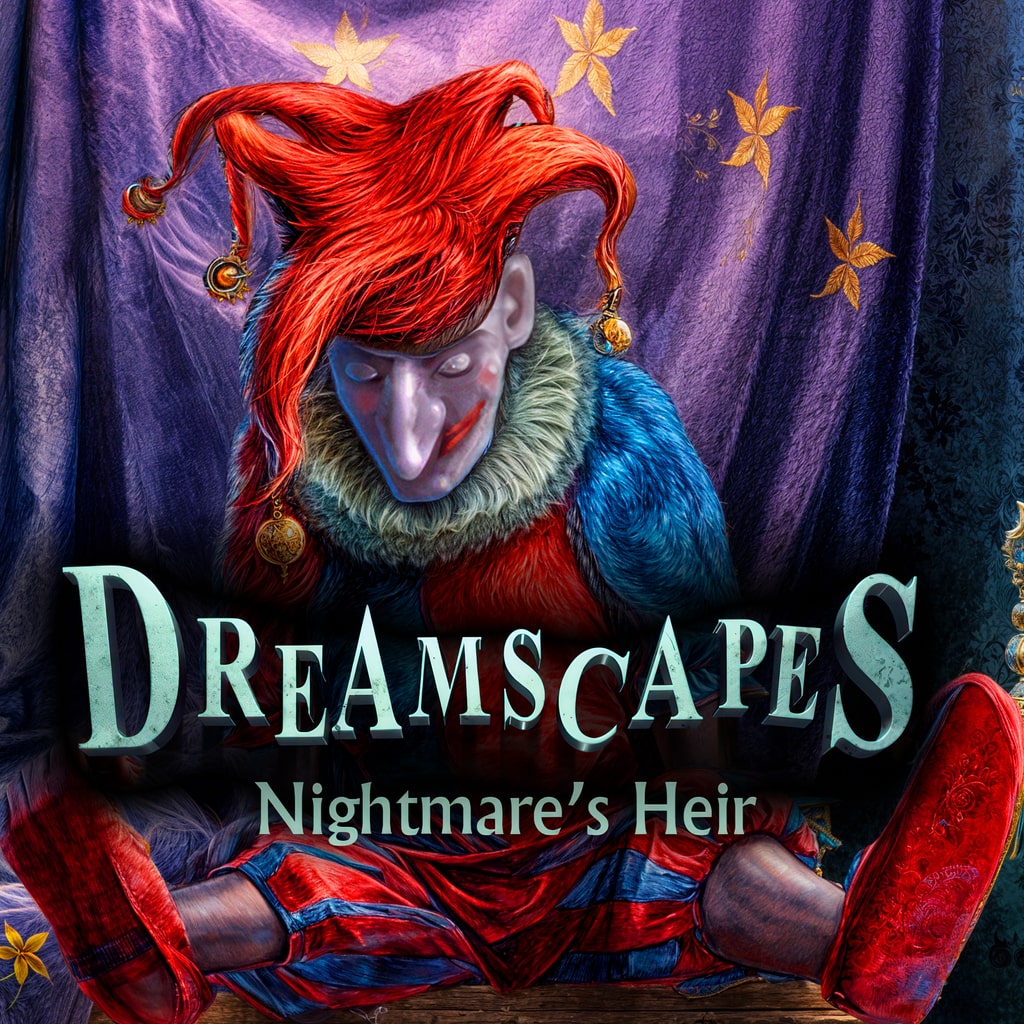
In a genre crowded with hidden-object scenes and casual puzzle experiences, Dreamscapes: Nightmares Heir enters the fray with a blend of photorealistic artwork, emotionally charged storytelling, and a haunted aesthetic that sets it slightly apart from its peers. This isn’t a groundbreaking game, nor does it attempt to redefine hidden-object mechanics, but it does a commendable job of intertwining narrative and puzzle elements in a way that’s both accessible and eerie. The result is a game that feels comfortable to pick up, yet mysterious enough to keep you engaged across its lengthy campaign.
At its core, Dreamscapes – Nightmares Heir is an atmospheric puzzle adventure that leans heavily on mood, story, and discovery rather than twitch reflexes or complex mechanical systems. It’s a game that invites players into surreal dreamscapes, each layered with symbolism, emotional resonance, and, of course, hidden objects to uncover.
Story: A Surreal Journey with Emotional Undertones
Nightmares Heir centres around a protagonist who inherits an old estate and, with it, troubling memories, fragmented dreams, and a host of dark family secrets. The narrative unfolds through a series of dreamlike episodes — each acting as a thematic chapter that blends fantastical imagery with fragmented memories.
Rather than spelling everything out in neat exposition, the story encourages interpretation. Dreams bleed into reality, symbols recur across scenes, and characters are glimpsed more like apparitions than grounded personalities. This fractured narrative complements the underlying themes of memory, loss, and the subconscious, and while it doesn’t always cohere into a fully satisfying arc, it sustains intrigue through ambiguity.
For players who enjoy story over spectacle, this is a strength; for those seeking clear plot progression or well-defined character arcs, it may feel opaque. Dreamscapes doesn’t hand you answers — it asks you to piece them together.
Gameplay and Mechanics: Familiar, Comfortable, But With Depth
The backbone of Nightmares Heir is its hidden-object gameplay. Each chapter consists of a series of scenes where players must locate specific items hidden within richly detailed environments. Alongside these classic scenes, there are mini-games and puzzle sequences that offer variety, ranging from jigsaws and pattern matches to sequence logic challenges.
Mechanically, the game does very little that’s revolutionary, but what it does do, it does well. The hidden-object scenes are thoughtfully designed, with items that are challenging but never unfairly obfuscated. When an item is genuinely difficult to find, subtle visual and audio cues help nudge players in the right direction without resorting to heavy-handed assistance.
The mini-games serve as a welcome break from visual scanning, and most offer a satisfying level of challenge without ever feeling punitive. They’re the kind that reward patience and lateral thinking, and because they vary in type and complexity, they help keep the overall experience fresh.
There’s a strong sense that puzzles were designed with flow in mind — rarely does one feel like a roadblock. Instead, challenges tend to introduce themselves naturally, allowing momentum to carry the player forward rather than interrupt it.
Visuals and Presentation: Dreamlike Realism
Visually, Dreamscapes – Nightmares Heir is one of its most compelling attributes. The environments are richly detailed, evocative, and consistently atmospheric. From mist-shrouded gardens to dimly lit corridors, each scene feels like a living part of the game’s dream world.
There’s a skilful blending of realism and surrealism in the art direction. Everyday objects sit alongside symbols that feel lifted from dreams — shuttered windows that echo forgotten voices, fractured reflections that hint at unseen truths, and landscapes that seem familiar yet impossibly twisted. This aesthetic magnifies the game’s central themes and keeps the environment engaging even outside of the hidden-object sequences.
The interface design is similarly thoughtful. Clues, hints, and menus are unobtrusive, letting the art take centre stage without sacrificing usability. Contextual hints are subtle, designed to support rather than dominate, which is fitting for a game that values immersion over hand-holding.
Sound Design and Atmosphere: A Haunting Score
The audio design further elevates the experience. A haunting, ambient musical backdrop underpins exploration, shifting subtly to match emotional beats and puzzle intensity. Subtle environmental sounds — distant echoes, rustling leaves, or soft murmurs — cultivate a mood that feels both immersive and slightly off-kilter.
Voice acting appears in key narrative moments and, while not award-winning, it contributes to the overall atmosphere without feeling out of place. Dialogue delivery opts for restraint over melodrama, which suits the game’s introspective tone.
Pacing and Player Engagement
One challenge Dreamscapes faces is pacing. The game is substantial — many hours of content — and its leisurely unfolding can feel too slow for players accustomed to more driven narratives or faster progression. Scenes sometimes linger, and quiet moments can extend longer than necessary.
However, for players who enjoy letting a game wash over them at their own pace, this can feel more like a feature than a flaw. The journey through memory and dreams is meant to be reflective, not rushed, and the gameplay rhythm reinforces that.
There are occasional spikes in difficulty — particularly in mini-games with less intuitive logic — but these are few and far between. The lack of a strict timer, coupled with generous hint systems, ensures that frustration rarely undermines immersion.
Accessibility and Optional Support
Nightmares Heir includes a range of options to support different playstyles. Players can adjust hint frequency, skip mini-games once enough attempts have been made, and review previously collected narrative clues in an accessible in-game journal. These features enhance accessibility without diminishing challenge, and they allow players to tailor the experience to their comfort level.
This thoughtful approach to player support is a welcome touch in a genre where difficulty balance can be subjective.
Final Verdict
Dreamscapes – Nightmares Heir is a polished and atmospheric hidden-object adventure that prioritises mood and thematic resonance over frenetic action or mechanical innovation. It delivers a sustained, immersive experience for players who appreciate evocative visuals, reflective storytelling, and thoughtful puzzle design.
Its narrative may feel elusive at times, and its pacing deliberately unhurried, but for those willing to lean into its dreamlike logic and symbolic imagery, the journey is rewarding. The game succeeds not by redefining its genre but by executing its vision with coherence, style, and respect for its audience.