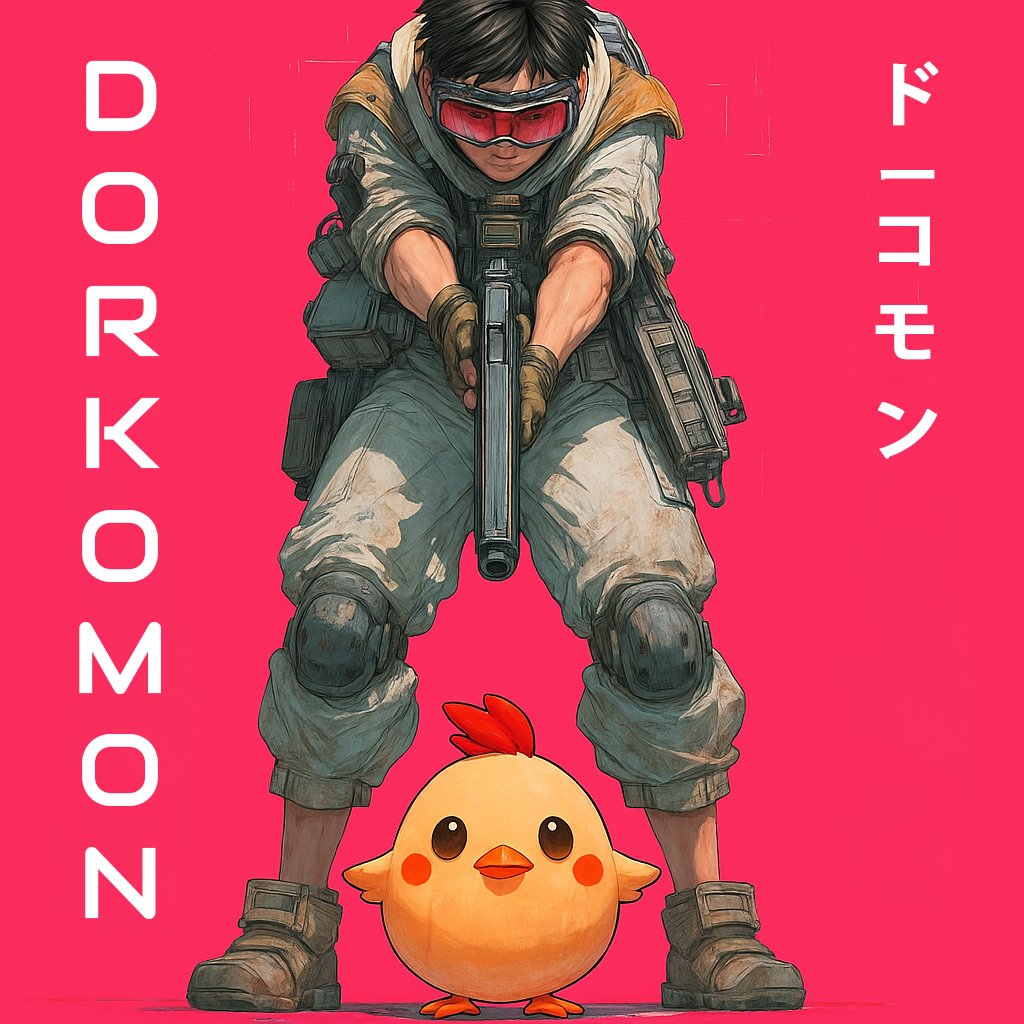
There are parody games, there are retro throwbacks, and then there’s Dorkomon — a loud, unapashedly ridiculous, mid-90s fever dream that asks a very simple question: what if the monster-collecting craze had gone very, very wrong? Instead of befriending adorable creatures and forming lifelong bonds, Dorkomon hands you a chunky FPS arsenal and politely instructs you to “blow every last one to kingdom come.”
Subtle? Absolutely not. Memorable? Surprisingly, yes.
Framed as the revenge project of disgraced fictional designer Takashi Fukuhara, Dorkomon leans hard into satire. It riffs shamelessly on the aesthetics, tropes, and marketing hysteria of late-90s monster franchises, twisting them into something that feels like a lost PlayStation demo disc oddity that’s somehow been unearthed in 2026. The result is a fast, arcade-style first-person shooter that is messy, juvenile, oddly charming, and occasionally far more entertaining than it has any right to be.
A World Gone Very Wrong
The premise is deliciously dumb. In the mid-1990s, mysterious creatures begin appearing across Japan. At first they’re a novelty — cute, collectible, marketable. But underground monster deathmatches soon spiral out of control, the creatures begin breeding uncontrollably, and now they’re a full-blown infestation. You, as a fresh recruit of the “DorkSquad,” are tasked with eradicating the problem in the most explosive way possible.
The tone is key. Dorkomon never pretends to be serious. The writing, mission briefings, and enemy designs all play into an exaggerated parody of collectible creature culture. Enemy names, designs, and behaviours often feel like twisted versions of something you half-remember from childhood, only now they’re spitting acid, charging at you, or exploding into neon goo.
This self-awareness carries the experience. Without it, Dorkomon would simply be a budget FPS with strange enemies. With it, the game feels like an intentional, tongue-in-cheek commentary wrapped inside arcade shooter chaos.
Fast, Loud, and Arcadey
Gameplay is where Dorkomon finds its footing. This is not a tactical shooter. It’s not story-driven. It’s not trying to be modern. Instead, it channels the spirit of classic arena FPS titles where movement, reflexes, and crowd control are everything.
You sprint through compact arenas and corridors, blasting waves of increasingly bizarre Dorkomon as they swarm from every direction. Weapons are chunky, exaggerated, and satisfying to use. Explosions are frequent. Enemy death animations are intentionally over-the-top. The game understands that if it’s asking you to eliminate hundreds of creatures that resemble warped plush toys, it better make it feel cathartic.
And it does.
There’s a pleasing rhythm to encounters. Smaller Dorkomon rush you in numbers, forcing constant movement. Larger variants behave more like mini-bosses, demanding focused fire and smarter positioning. Then there are the full boss monsters — grotesque, screen-filling abominations that feel like they crawled out of a late-night cartoon sketchbook.
The pacing rarely slows. Levels are designed to keep you moving, rarely allowing the player to camp or play cautiously. It’s arcade thinking through and through: momentum is survival.
“Collecting” the Dorkomon
One of the game’s clever jokes is its twisted take on collecting. You don’t capture Dorkomon — you “collect” them by obliterating them. Each defeated creature adds to your in-game index, logging their traits, weaknesses, and absurd backstories.
It’s a small feature, but it reinforces the parody beautifully. Flipping through your Dorkodex after a mission, reading ridiculous entries about creatures you just turned into confetti, adds an unexpected layer of charm and humour.
It also provides a gameplay incentive. Completionists will want to hunt down every variant, encouraging replay of earlier levels and higher difficulties.
Boss Fights and Set Pieces
Where Dorkomon really shines is in its boss encounters. These fights break from the standard horde formula and introduce more creative arenas and attack patterns. Some bosses force vertical movement, others turn the arena into a hazard-filled deathtrap, and a few are simply chaotic endurance matches.
They’re not mechanically complex, but they are memorable. Visually loud, mechanically frantic, and tonally absurd, these moments feel like the developers having the most fun with the concept.
Visual Style and Presentation
Visually, Dorkomon commits hard to a retro aesthetic. Low-poly models, bright textures, exaggerated animations, and bold colours give it the feel of a remastered PS1-era shooter. It’s intentionally rough around the edges, but that roughness feels stylistic rather than purely budgetary.
The creature designs are a highlight. Each Dorkomon looks like a rejected Saturday morning cartoon mascot that’s gone feral. Some are genuinely funny. Others are grotesque in a way that feels deliberately uncomfortable.
Sound design matches the chaos. Squishy impacts, exaggerated explosions, and a pounding, arcade-style soundtrack keep the energy high throughout.
Where It Falls Short
For all its charm, Dorkomon is undeniably repetitive. The core loop — enter area, clear waves, move forward — rarely evolves. New enemy types and weapons help, but the structure remains largely the same from start to finish.
Level design, while functional, lacks variety. Many environments blur together after a while, and the lack of environmental storytelling or meaningful objectives makes the game feel more like a series of combat arenas than a cohesive world.
There’s also a sense that the joke, while funny, doesn’t have enough layers to sustain the entire runtime. The parody lands early and well, but by the latter half of the game, you’ve largely seen what it has to offer tonally.
The Joy of Mindless Chaos
Yet, despite these shortcomings, Dorkomon remains oddly compelling. It knows exactly what it is and never tries to be more. It’s loud, silly, fast, and unapologetically arcade-like.
This is the kind of game you jump into for short bursts. Twenty minutes of frantic Dorkomon eradication is genuinely fun. Two hours straight can feel exhausting. Used in the right doses, though, it’s a chaotic palate cleanser between heavier games.
Final Verdict
Dorkomon is not a polished, deep, or particularly varied FPS. But it doesn’t need to be. Its strength lies in its commitment to absurdity, its tight arcade pacing, and its willingness to parody an entire genre of pop culture with gleeful destruction.
It feels like a relic from an alternate timeline where monster collecting evolved into monster annihilation — and somehow that concept works far better than expected.
Messy, repetitive, but undeniably entertaining, Dorkomon is the kind of budget oddity that sticks in your memory long after more serious shooters fade away.