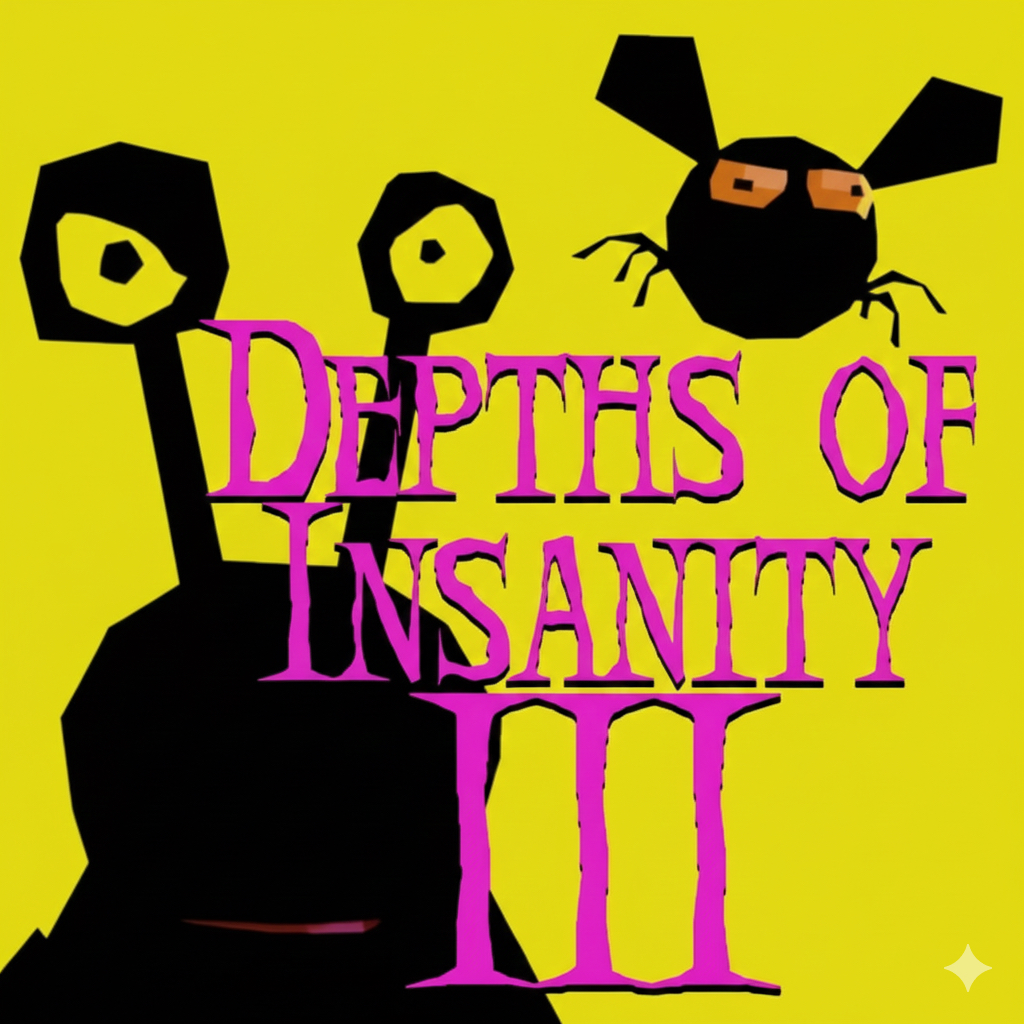
Psychological horror is a genre that thrives on escalation. Each entry must not only unsettle but deepen the unease established by its predecessors, expanding themes, mechanics, and atmosphere without dulling their impact. Depths of Insanity 3 takes on this challenge head-on, positioning itself as both a continuation and a refinement of the series’ core identity. Rather than reinventing its formula, it tightens its grip, leaning harder into environmental storytelling, mental disintegration, and oppressive atmosphere to deliver the most cohesive and disturbing chapter yet.
This third instalment understands its audience. It assumes familiarity with ambiguity, discomfort, and slow-burn tension, and it rarely compromises its vision to accommodate players seeking immediate gratification. The result is a horror experience that is more confident, more focused, and — at its best — deeply unsettling. While it is not without pacing issues and moments of mechanical limitation, Depths of Insanity 3 succeeds in reinforcing the series’ reputation as a thoughtful, psychologically driven descent into madness.
Narrative Continuation and Thematic Weight
Depths of Insanity 3 resumes its story in the aftermath of the previous game’s unresolved revelations. You once again inhabit a fractured protagonist whose grip on reality is increasingly unstable, navigating environments that feel both physically real and psychologically constructed. The narrative is deliberately opaque, told through fragmented memories, distorted audio logs, environmental clues, and unreliable internal monologues.
Rather than delivering answers outright, the game reframes earlier questions. Themes of guilt, repression, and identity are expanded, with recurring motifs — mirrors, locked rooms, looping corridors — taking on new symbolic weight. The world itself feels complicit in the protagonist’s mental collapse, reshaping and contradicting itself in subtle ways that suggest perception can no longer be trusted.
What Depths of Insanity 3 does particularly well is its restraint. There is no overreliance on exposition or shock twists. Instead, the narrative invites players to interpret meaning through repetition and distortion. Familiar locations appear altered, dialogue echoes with altered phrasing, and events are replayed with small but unsettling differences. These changes encourage players to question not only what is happening, but why it feels wrong.
That said, this narrative approach will not appeal to everyone. Players seeking definitive answers or clear story resolution may find the ambiguity frustrating. The game commits fully to interpretive storytelling, and while that commitment strengthens its atmosphere, it also risks alienating those who prefer more concrete narrative payoff.
Core Gameplay and Interaction
Mechanically, Depths of Insanity 3 adheres closely to its established formula: first-person exploration, limited interaction, light puzzle-solving, and minimal combat. This is not a game about empowerment. You are not equipped to fight the horrors you encounter; you are meant to endure them, avoid them, or simply exist alongside their presence.
Movement is deliberately grounded and slightly sluggish, reinforcing vulnerability. Interactions are contextual — opening doors, inspecting objects, activating mechanisms — and are often accompanied by subtle audiovisual feedback that hints at the protagonist’s mental state. A door creaks too loudly, a light flickers just long enough to suggest something unseen, or an object appears slightly altered upon second inspection.
Puzzles are integrated naturally into the environment, rarely feeling like artificial obstacles. Solutions often require observation rather than logic, asking players to notice patterns, inconsistencies, or environmental cues. Some puzzles rely on memory, forcing players to recall details from earlier sections or previous entries in the series. This design choice reinforces narrative cohesion but may challenge players who are less attentive or returning after a long break.
The game’s restraint extends to its enemy encounters. There are moments of pursuit and threat, but these are used sparingly and with purpose. Rather than constant pressure, Depths of Insanity 3 relies on anticipation — the fear of something happening rather than the act itself. When danger does manifest, it feels earned and genuinely alarming.
Environmental Design and Atmosphere
Atmosphere is the defining strength of Depths of Insanity 3. The environments are meticulously crafted to evoke unease without resorting to overt horror tropes. Abandoned facilities, decaying domestic spaces, and surreal liminal zones blur together, creating a sense of displacement that persists throughout the experience.
Lighting plays a critical role. Darkness is not absolute but uncertain, with shadows that feel active rather than static. The careful use of limited visibility ensures that players are constantly scanning their surroundings, unsure whether what they see is real or imagined. Environmental details — peeling wallpaper, smeared writing, broken furniture — tell stories of prior trauma without spelling them out.
The game’s spatial manipulation is particularly effective. Hallways subtly lengthen, rooms reconfigure themselves, and doors sometimes lead somewhere different than expected. These shifts are never announced; they simply occur, challenging the player’s sense of orientation and reinforcing the theme of mental instability.
Audio Design and Psychological Impact
Sound design is where Depths of Insanity 3 truly excels. The audio landscape is dense with ambient noise — distant drips, low-frequency hums, indistinct whispers — that constantly play at the edge of perception. Silence is used strategically, often preceding moments of heightened tension or narrative revelation.
The soundtrack is minimalist, relying on sustained tones and dissonant textures rather than melodic composition. Music rarely intrudes, instead seeping in almost imperceptibly to heighten emotional discomfort. This restraint ensures that when sound does spike — a sudden crash, a distorted voice, an abrupt tonal shift — it lands with maximum impact.
Voice work, when present, is intentionally unsettling. Dialogue is often fragmented, layered, or distorted, reflecting the protagonist’s fractured psyche. Performances are subtle but effective, conveying emotional strain without descending into melodrama.
Pacing and Player Experience
Pacing in Depths of Insanity 3 is deliberately slow. The game expects players to move cautiously, observe carefully, and sit with discomfort. This approach enhances immersion but can test patience, particularly during extended exploration segments where progression is minimal and tension relies solely on atmosphere.
The mid-game is where pacing occasionally falters. Certain sections feel prolonged without introducing new mechanics or narrative developments, which can dilute tension rather than intensify it. However, the final act regains momentum, delivering a series of unsettling sequences that recontextualise earlier events and push the psychological horror to its peak.
Importantly, the game avoids overstaying its welcome. While the journey is intense, it concludes before exhaustion sets in, leaving players with lingering unease rather than fatigue.
Strengths and Limitations
Strengths:
- Exceptionally strong atmosphere and environmental storytelling
- Cohesive continuation of the series’ psychological themes
- Outstanding sound design that drives tension and immersion
- Restrained, purposeful use of threats and scares
- Confident commitment to ambiguity and interpretation
Limitations:
- Slow pacing may deter players seeking more active gameplay
- Narrative ambiguity may frustrate those wanting clear answers
- Limited mechanical evolution from previous entries
- Occasional mid-game stagnation
Final Verdict
Depths of Insanity 3 is a confident and unsettling continuation of a psychological horror series that understands the power of restraint. It does not attempt to shock through excess or spectacle; instead, it builds dread through atmosphere, implication, and a persistent erosion of certainty. The result is an experience that feels oppressive in the most deliberate sense — a game that lingers in the mind long after it ends.
While it may not broaden the series’ appeal or dramatically evolve its mechanics, it refines what already works, delivering the most cohesive and mature entry to date. For players invested in psychological horror and interpretive storytelling, Depths of Insanity 3 is a compelling and disturbing descent worth undertaking.