There is something strangely captivating about revisiting early console RPGs. Long before quest markers, cinematic cutscenes, and encyclopaedic tutorials became standard, games often trusted players to explore, experiment, and find their own path. Toujin Makyou Den: Heracles no Eikou, originally released by Data East in 1987, comes from that formative era. It arrived at a time when Japanese role-playing games were still defining themselves, standing alongside the earliest pioneers who would eventually shape the genre.
Now revived through the Console Archives series, the game returns on modern hardware with save states, display options, and quality-of-life improvements designed to make these historical releases easier to experience. The result feels less like a remaster and more like opening an old treasure chest to discover a piece of gaming history preserved inside.
The premise itself carries that unmistakable eighties charm. Players set out to defeat Hades and rescue Venus after the goddess is kidnapped and taken to the underworld. Greek mythology provides the foundation, though it is interpreted through a distinctly video-game lens rather than historical accuracy. Monsters roam the land, villages hide clues, and the adventure unfolds through exploration and gradual progression.
There is an earnest simplicity to the storytelling that still works. Modern RPGs often overwhelm players with sprawling lore and endless exposition. Heracles no Eikou instead gives you a goal and asks you to get moving. That directness feels refreshing.
Old School Design With All Its Strengths and Flaws
That simplicity also reveals the game’s age. Exploration follows a classic structure in which progress often depends on speaking to NPCs, remembering clues, and moving between towns until the next objective becomes clear. Sometimes this creates genuine discovery. Other times it feels like wandering through uncertainty, hoping the right conversation triggers progression.
The world itself is functional rather than especially memorable. Villages are modest, environments repeat frequently, and navigation can become confusing without modern conveniences. There are moments when progress feels less like adventuring and more like persistence. Still, there is something oddly compelling about it. The lack of hand-holding creates an atmosphere where players must pay attention. You notice landmarks. You remember locations. The game asks for patience in ways many modern RPGs no longer do.
Combat follows similarly traditional ideas. Battles are turn-based, encounters appear regularly, and advancement comes through levelling and preparation. Mechanics remain straightforward by today’s standards, but there is still satisfaction in gradually becoming stronger and overcoming previously impossible encounters. Grinding becomes unavoidable at times. Difficulty spikes arrive with little warning, and statistics often matter more than strategy. Yet this creates a genuine sense of accomplishment because progress never feels automatic.
The Console Archives Treatment
The modern package does significant work to make the game playable today. The ability to save anywhere is perhaps the biggest improvement. Difficult stretches become manageable, experimentation feels less punishing, and players can experience the adventure without committing to long sessions. Customisable controls and screen settings further modernise the experience without compromising authenticity.
Crucially, this remains the original Japanese ROM. The game itself is preserved rather than rebuilt. Menus and manuals receive localisation support, but the adventure retains its original identity. That approach feels appropriate.
The Console Archives series is clearly built around preservation first. Rather than reinventing classics, it aims to keep them accessible. For a title as niche as Heracles no Eikou, that effort matters.
Pixel Simplicity and Eight Bit Charm
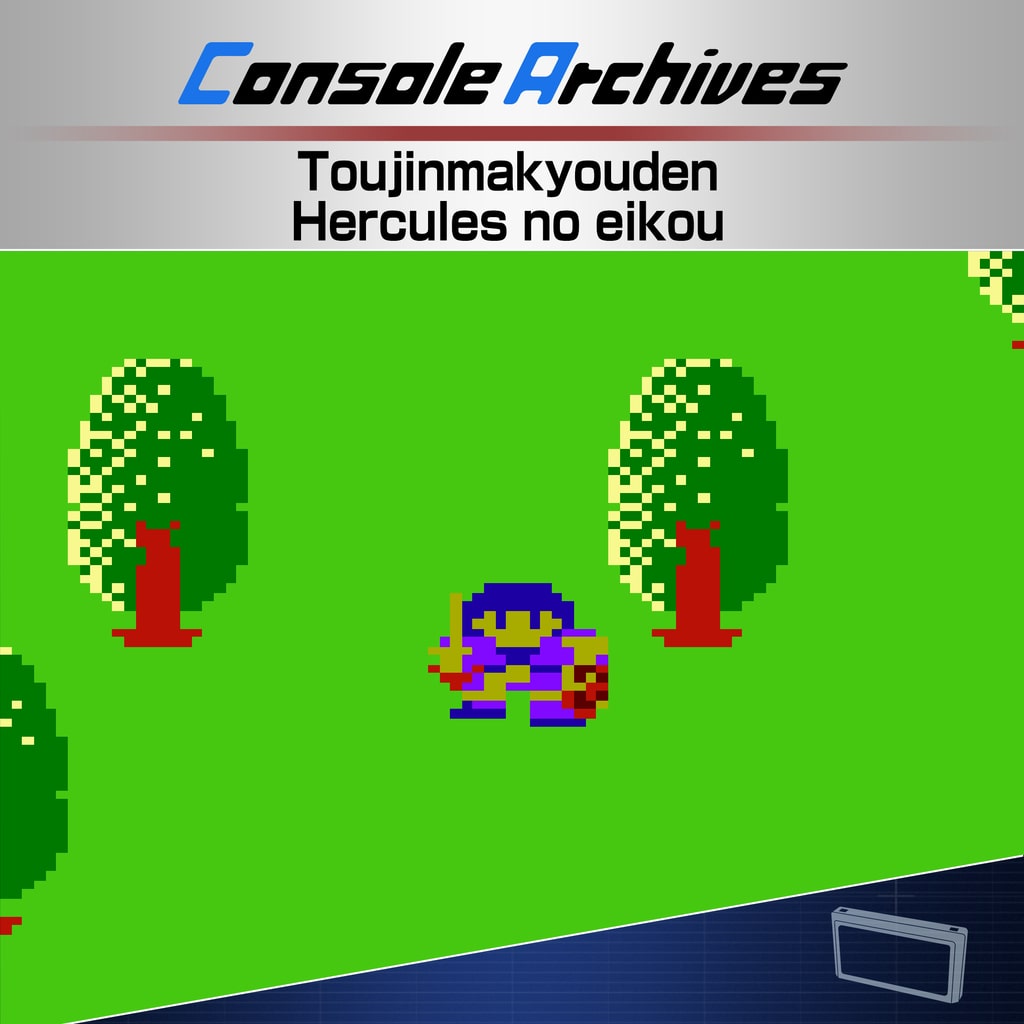
Visually, this is unmistakably an eight-bit RPG. Character sprites are small, environments minimal, and animations basic. Yet there is a handcrafted warmth to the presentation that still shines through. The art style feels like an old illustrated adventure book translated into pixels. Modern retro-inspired games often deliberately chase this aesthetic, which says something about how enduring it remains.
The soundtrack follows a similar path. Hardware limitations naturally keep things simple, but the melodies still carry personality. Many tracks have an infectious energy despite the technical restrictions. No, this will not rival legendary RPG soundtracks, but it contributes to the adventure’s charm.
More Historical Curiosity Than Lost Masterpiece
The most interesting thing about Heracles no Eikou is not how it plays today. It is what it represents. You can see genre foundations taking shape throughout the experience. Exploration loops, progression systems, heroic storytelling, and world traversal all feel like early versions of ideas future RPGs would refine and expand.
Playing it feels like watching evolution in motion. At the same time, this is not a forgotten masterpiece waiting to be rediscovered. It lacks the refinement and personality that elevated some contemporaries into classics. The pacing drags, mechanics repeat, and certain frustrations remain firmly rooted in its era. Players expecting a hidden gem may struggle. Players interested in gaming history will likely find far more value. That distinction is important because Console Archives Toujin Makyou Den: Heracles no Eikou succeeds primarily as preservation.
Final Verdict
Console Archives Toujin Makyou Den: Heracles no Eikou is neither a dramatic rediscovery nor an overlooked masterpiece. Instead, it stands as an intriguing piece of RPG history, preserved for a modern audience. Its age shows in repetitive systems and occasionally obscure progression, yet there is genuine charm in its straightforward hero’s journey.
For retro enthusiasts and RPG historians, this is an enjoyable trip into the genre’s formative years. For everyone else, it may feel more educational than essential. Still, there is value in remembering where these adventures began.