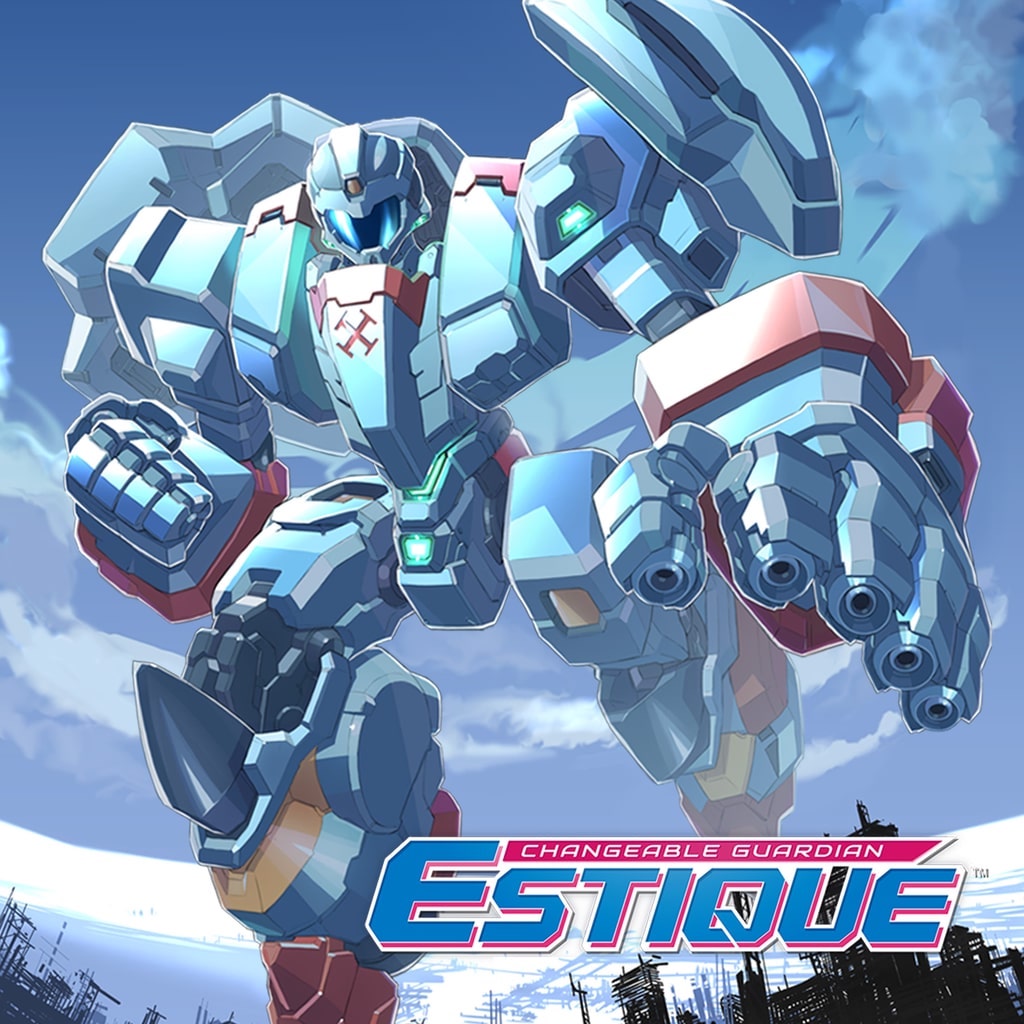
Retro gaming has become something of a balancing act. Some modern releases chase nostalgia with little understanding of what made the classics memorable, while others become so obsessed with authenticity that they forget modern audiences expect smoother design and fewer frustrations. Changeable Guardian’s ESTIQUE manages to walk that line with surprising confidence. Although it looks and sounds like a forgotten Famicom release from the late 1980s, beneath its deliberately old-school presentation lies a shooter designed with contemporary sensibilities.
That combination is what makes ESTIQUE so appealing. It embraces chunky sprites, limited colour palettes and straightforward mechanics without feeling trapped by them. Instead of recreating every inconvenience from the era, it asks a much simpler question. What if an 8-bit shooter had decades of design lessons behind it? The answer is a game that feels familiar from the opening moments yet remains engaging because of the smart ideas quietly working beneath its nostalgic exterior.
Gameplay
At first glance, ESTIQUE appears to follow the traditional side-scrolling shoot ’em up formula. You fly from left to right across six stages inspired by cities around the world, destroying waves of enemies before confronting large mechanical bosses. Veterans of Gradius, R-Type or Thunder Force will immediately recognise the rhythm. Enemies arrive in predictable formations, environmental hazards demand careful positioning, and success comes from memorising patterns rather than relying on luck.
The real hook comes from ESTIQUE itself. Rather than piloting a single ship, players control a transforming combat machine capable of switching instantly between Fighter Form and Robot Form. This isn’t simply a visual gimmick. Each form serves a very different purpose, and learning when to swap between them becomes the heart of the experience.
Fighter Form offers a slimmer vertical hitbox, making it the ideal choice for weaving through dense bullet patterns and navigating narrow spaces. Robot Form sacrifices some agility but completely ignores terrain damage and recovers health more efficiently. Suddenly, every section becomes a small tactical puzzle. Do you stay nimble to avoid enemy fire, or accept the larger profile in exchange for greater survivability?
It is a surprisingly elegant mechanic that constantly asks players to think rather than simply react. The transformation never feels forced because every stage naturally creates situations where each form excels. That balance keeps the gameplay feeling fresh long after the novelty of transforming wears off.
Accessible Without Losing Challenge
One of ESTIQUE’s smartest decisions is to remove the traditional power-up system found in many classic shooters. In countless older games, dying often meant losing every weapon upgrade, only to be thrown back into impossible situations with the weakest equipment imaginable. It created difficulty, but not always satisfying difficulty.
ESTIQUE avoids that frustration almost entirely. Health gradually regenerates over time, and the game focuses more on player skill than on collecting temporary upgrades. Every restart feels fair because you’re never punished with an underpowered loadout. If you fail, it usually feels like your positioning or timing was off rather than the game stacking the odds against you.
That philosophy makes the experience welcoming to newcomers without removing the challenge experienced players expect. Bosses still demand precision. Enemy formations still require concentration. The difference is that mistakes feel recoverable rather than catastrophic. It is an old-school game that respects your time, and that simple design choice makes an enormous difference.
Scoring Beyond Survival
Like any great arcade shooter, survival isn’t the only objective. High-score enthusiasts will quickly discover that the Super Weapon mechanic, activated by rapid firing, adds another layer to master.
Using this devastating attack effectively becomes a balancing act between survival and optimisation. Waste it too early and later encounters become harder. Save it for scoring opportunities and you’ll climb the leaderboards while unleashing spectacular bursts of destruction across the screen.
Players interested only in reaching the credits can comfortably ignore advanced scoring techniques, but those who enjoy replaying stages in search of perfection will find plenty to experiment with. It gives ESTIQUE longevity beyond a single completion. That depth feels remarkably authentic to arcade design, rewarding commitment without demanding it.
Presentation
Visually, ESTIQUE is exactly what it sets out to be. Rather than creating modern pixel art inspired by retro games, it genuinely resembles software running on original Nintendo hardware. Sprite animation is intentionally simple, colour choices mirror the era’s limitations, and backgrounds rely on clean, readable design rather than overwhelming detail.
The impressive part is how polished everything feels. Enemy silhouettes remain easy to read even during hectic encounters. Explosions are satisfyingly chunky, and bosses possess enough personality to remain memorable despite the limited graphical style.
The soundtrack follows the same philosophy. Bright chiptune melodies accompany every stage, delivering energetic compositions that could comfortably sit alongside genuine NES classics. None of the tracks become repetitive, and several melodies linger in your memory long after switching the game off.
Sound effects are equally authentic, with crunchy laser blasts, satisfying explosions and mechanical transformation noises that help reinforce the illusion that you’ve discovered a lost cartridge from gaming’s early years.
Modern Features Done Right
While ESTIQUE proudly embraces retro design, it wisely includes a collection of modern conveniences that make the experience significantly more enjoyable. Rewind is perhaps the standout addition. Difficult sections can be retried instantly without replaying entire levels, allowing players to learn enemy patterns naturally rather than through frustration. Quick saves provide similar flexibility, making shorter play sessions entirely practical on modern hardware.
CRT filters, display options and presentation settings allow players to customise the visual experience to personal preference. Whether you want razor-sharp pixels or nostalgic scanlines, the choice is yours.
The inclusion of both the Japanese and North American versions is another thoughtful touch. Regional differences may be subtle, but preservation matters, and having both editions available, alongside artwork and gallery content, transforms ESTIQUE into a small interactive museum celebrating its own development. These additions never interfere with the core experience. Purists can ignore them completely, while newcomers benefit enormously from their presence.
Longevity
With only six stages, ESTIQUE isn’t an especially long game. A skilled player could comfortably reach the ending in a single sitting. Fortunately, length has never been the defining characteristic of great arcade shooters.
Replay value comes from mastering routes, improving scores, experimenting with transformation timing and gradually refining each encounter. Each run becomes smoother as enemy patterns become familiar and boss strategies evolve.
It captures the addictive “one more run” mentality beautifully. Even after finishing the campaign, there’s always the temptation to attempt a cleaner run or push your score slightly higher. The museum content and dual regional versions also add welcome value, particularly for enthusiasts fascinated by gaming history.
Final Verdict
Changeable Guardian ESTIQUE succeeds because it knows exactly what experience it aims to deliver. Rather than chasing modern spectacle, it focuses on elegant mechanics, responsive controls and rewarding replayability. The transformation system is genuinely inventive, giving familiar side-scrolling action a fresh tactical layer that never overstays its welcome.
Its retro presentation will naturally appeal most to players who appreciate classic arcade shooters, but thoughtful quality-of-life improvements make it far more approachable than many of the games that inspired it. Rewind, quick saves and regenerative health remove unnecessary frustration while preserving the satisfaction of overcoming difficult encounters through skill.
Not every aspect breaks new ground. Six stages pass relatively quickly, and players seeking sprawling campaigns may wish for more content. Yet what is here has been crafted with obvious care, confidence and respect for the genre’s history.
In an era when many retro-inspired games simply imitate the past, ESTIQUE feels like it belongs there. It captures the spirit of the 8-bit era while quietly proving that even classic design can continue to evolve.