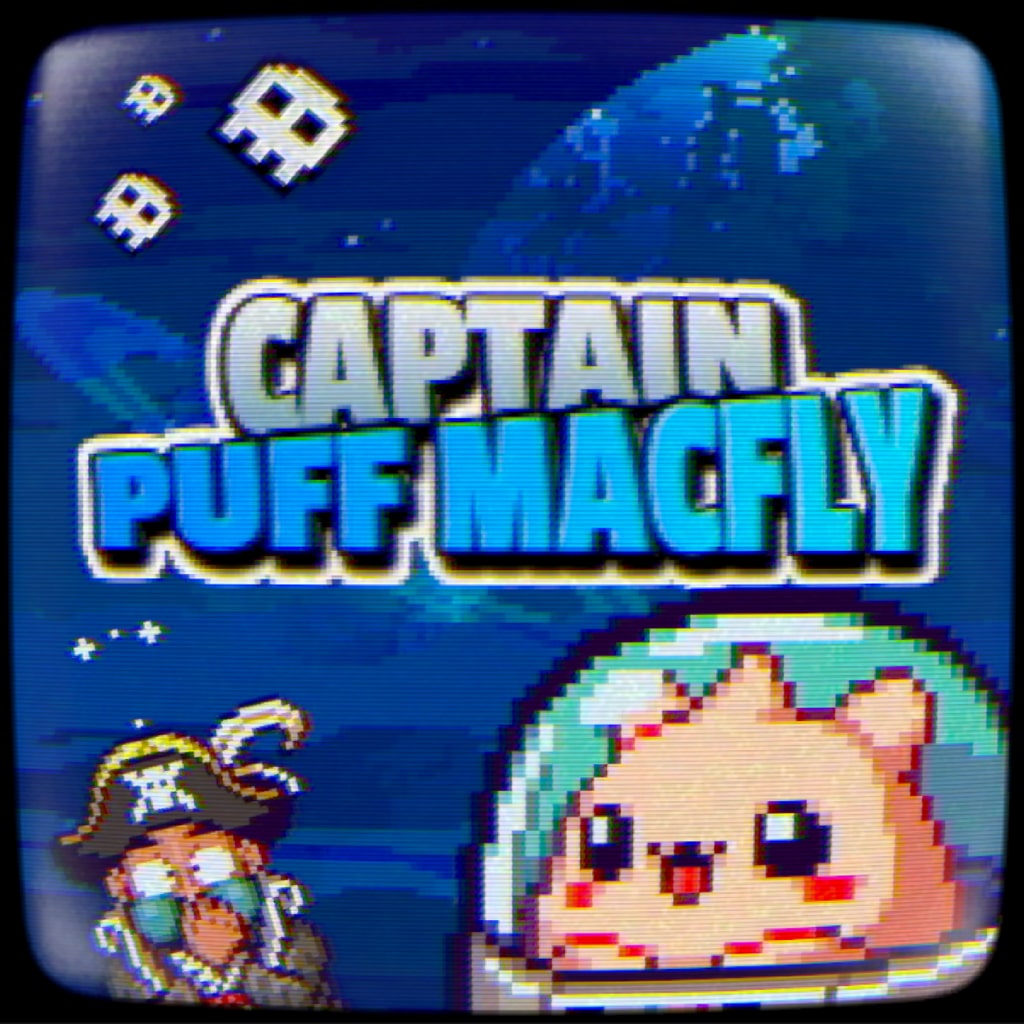
In an age where modern shooters often chase photorealism, cinematic storytelling, or multiplayer spectacle, Captain Puff MacFly takes a very different approach. Developed and published by MVCAO Studios and released on February 20, 2026 for Xbox Series X|S, Xbox One, PlayStation 5, and PlayStation 4, this compact indie title proudly plants its flag in arcade history. Marketed as a “farewell to the shmup,” it blends nostalgic 16-bit aesthetics with roguelite progression systems — attempting to bridge decades of design philosophy into one approachable package.
At just £4.99, expectations might lean toward a short novelty experience. Yet Captain Puff MacFly reveals surprising depth beneath its retro presentation. It may not redefine the shoot ’em up genre, but it demonstrates a clear understanding of why players fell in love with arcade shooters in the first place — and why those mechanics still matter today.
A Galaxy Built on Nostalgia
The premise is deliberately classic. The universe has fallen to an interdimensional pirate empire, leaving only the final stronghold of Netunia X12 standing. Enter Captain Puff MacFly, legendary pilot and last hope of the stellar fleet.
The narrative is intentionally light, serving mostly as thematic scaffolding rather than a driving force. Dialogue is minimal, lore is implied rather than explained, and the focus remains squarely on gameplay. This mirrors the storytelling philosophy of 80s and 90s arcade shooters, where context existed mainly to justify action.
What makes the setup effective is tone. The game never treats itself too seriously; character names, enemy designs, and visual flourishes lean into playful sci-fi absurdity. It feels less like a grim war story and more like flipping on a forgotten arcade cabinet discovered in a neon-lit corner of the past.
Classic Shmup Foundations
At its core, Captain Puff MacFly is a vertically scrolling shoot ’em up built on familiar principles:
- Dodge enemy bullet patterns
- Destroy waves of incoming ships
- Collect power-ups
- Survive escalating chaos
- Defeat massive screen-filling bosses
Movement feels tight and responsive, which is arguably the most important element for any shmup. Your ship reacts instantly to inputs, enabling the precision weaving required to navigate dense bullet formations.
Enemy design follows a steady escalation curve. Early stages introduce manageable threats before layering complexity through faster projectile speeds, angled attacks, and enemies that force positional awareness. The standout example is the “Angry Missiles,” seemingly harmless foes that subtly home in on the player, punishing tunnel vision — a clever early lesson in situational awareness.
Unlike many retro-inspired shooters that rely purely on nostalgia, Captain Puff MacFly ensures encounters feel dynamic rather than repetitive.
Roguelite Evolution: The Death Shop
Where the game modernizes its formula is through roguelite progression.
Death is inevitable — especially early on — but every failed run rewards currency that can be spent in the appropriately named Death Shop. Here, players unlock permanent upgrades such as:
- Increased firepower
- Improved survivability
- Enhanced mobility
- Passive bonuses affecting future runs
This system transforms frustration into motivation. Instead of restarting from zero, players feel tangible growth after each attempt. Gradually, runs become longer, encounters more manageable, and strategies more refined.
The roguelite structure also lowers the genre’s traditional barrier to entry. Classic shmups can feel brutally unforgiving to newcomers; Captain Puff MacFly softens that edge without sacrificing challenge for experienced players.
It’s a thoughtful compromise between arcade purity and modern accessibility.
Boss Battles That Steal the Show
Every stage culminates in a boss encounter, and these fights are easily the game’s highlight.
Bosses feature elaborate attack patterns that evolve mid-fight, demanding constant adaptation. The “BigMoon” battle, in particular, exemplifies the design philosophy — combining sweeping projectile arcs with sudden pattern shifts that force players to learn through repetition.
Victory rarely comes on the first attempt, but defeats feel fair. Patterns are readable, telegraphs clear, and success always feels earned rather than lucky.
Importantly, bosses avoid becoming endurance tests. Encounters are brisk, intense, and satisfying — closer to arcade pacing than modern bullet-hell excess.
A Love Letter in Pixels
Visually, Captain Puff MacFly embraces a vibrant 16-bit aesthetic that feels authentic without appearing dated. Sprites are colorful and expressive, explosions are exaggerated and satisfying, and enemy designs maintain strong readability even during chaotic moments.
A CRT filter option adds scanlines and subtle curvature effects, successfully recreating the look of classic arcade monitors. Unlike some retro filters that obscure visibility, this one enhances atmosphere without compromising gameplay clarity.
The art direction communicates affection for the genre rather than imitation. Everything feels handcrafted with enthusiasm rather than algorithmically retro.
Soundtrack and Audio Identity
Complementing the visuals is a high-energy synth soundtrack that channels the golden era of arcade shooters. Tracks pulse with momentum, pushing players forward through increasingly intense encounters.
Music dynamically reinforces pacing — calmer sections during early waves give way to energetic crescendos during boss battles. Sound effects are punchy and satisfying, particularly weapon fire and enemy destruction.
While the soundtrack may not reach iconic status, it consistently supports the adrenaline-driven gameplay loop.
Accessibility Done Right
One of the most commendable aspects of Captain Puff MacFly is its accessibility-first design.
Console versions include options that reduce physical strain, such as:
- No-hold firing options
- Simplified input configurations
- Reduced reliance on rapid button tapping
These choices make the game playable for a broader audience without diluting challenge. Difficulty still comes from spatial awareness and decision-making — not physical endurance.
It’s a small but meaningful example of inclusive design rarely seen in retro-inspired titles.
Where the Game Falls Short
Despite its strengths, Captain Puff MacFly does encounter limitations.
Limited Content Variety
Runs can begin to feel familiar after extended play. Enemy pools and environments, while well-designed, lack the diversity needed for long-term replayability compared to genre heavyweights.
Light Narrative Presence
The story provides flavor but little emotional investment. Players seeking deeper world-building may find the experience thin.
Roguelite Depth
The upgrade system works well but remains relatively shallow. Additional branching upgrades or build experimentation could have extended longevity significantly.
Performance and Technical Stability
Performance across consoles is excellent:
- Smooth framerate throughout intense battles
- Minimal loading times
- No noticeable input lag
- Stable visuals even during heavy projectile density
The game feels optimized and polished — essential qualities for a precision-focused genre.
Final Verdict
Captain Puff MacFly succeeds because it understands the spirit of arcade shooters rather than merely copying their aesthetics. By combining tight shmup mechanics with approachable roguelite progression and thoughtful accessibility options, MVCAO Studios delivers a compact but heartfelt tribute to a genre that shaped gaming history.
It won’t replace genre classics, nor does it aim to. Instead, it offers something equally valuable: a welcoming gateway for newcomers and a nostalgic comfort experience for veterans.
Short, stylish, and mechanically satisfying, Captain Puff MacFly proves that even in 2026, the arcade shooter still has life left in its engines.