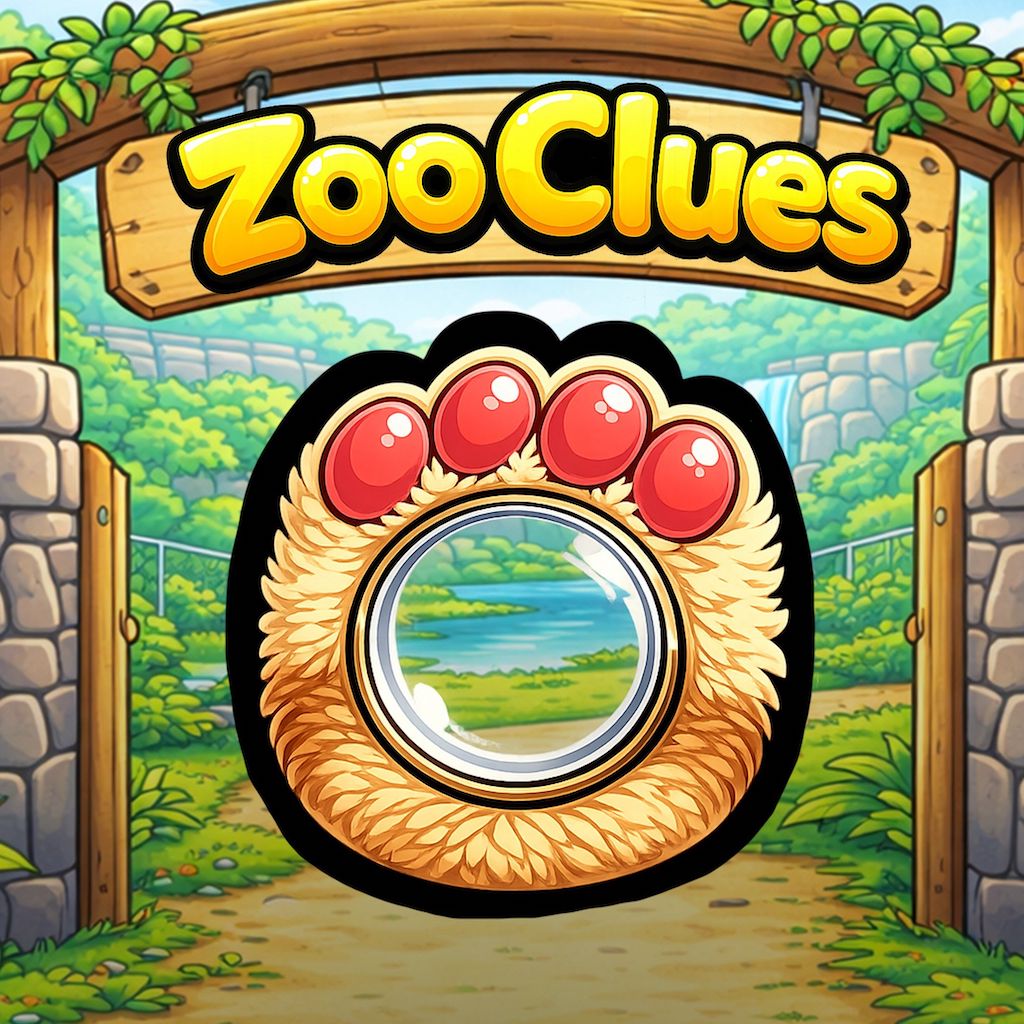
In an era where puzzle games increasingly chase complexity — layered mechanics, roguelike progression, or narrative twists — Zoo Clues, developed and published by Jolly Lobster Interactive, takes a refreshingly straightforward approach. Released on February 20, 2026 for Xbox Series X|S, Xbox One, and PC (Windows), this colorful anomaly-hunting title embraces simplicity with confidence, offering a family-friendly spin on the classic “spot-the-difference” formula.
At first glance, Zoo Clues looks like a lightweight budget release — and in many ways, it is. With a modest £3.29 price tag and a download size barely exceeding half a gigabyte, expectations might lean toward disposable entertainment. Yet after spending time within its vibrant animal habitats, it becomes clear that Zoo Clues succeeds precisely because it understands its purpose: delivering accessible, satisfying puzzle gameplay that anyone can pick up instantly.
It’s not trying to reinvent the genre. Instead, it polishes a familiar concept into something warm, welcoming, and surprisingly addictive.
A Classic Concept, Smartly Refined
The core gameplay loop is instantly recognizable. Each level presents two nearly identical zoo scenes placed side-by-side. Your objective is simple: locate a set number of differences between them.
These differences range from obvious visual changes to cleverly subtle alterations:
- A zebra missing a stripe
- A bird’s nest shifted slightly out of place
- Altered habitat colors
- Missing accessories or background elements
- Animals behaving differently between images
What elevates Zoo Clues beyond a basic children’s activity book adaptation is the careful pacing of difficulty. Early puzzles serve as onboarding, teaching players how the game “thinks.” Differences are large and playful, encouraging confidence rather than frustration.
As levels progress, however, the designers introduce increasingly nuanced anomalies. Shadows change direction, small props disappear, and environmental details require genuine scrutiny. The game gradually trains your observation skills without ever feeling punishing.
That balance — accessible but not mindless — becomes one of Zoo Clues’ greatest strengths.
Two Modes, Two Very Different Experiences
Zoo Clues offers two primary ways to play, each dramatically altering the tone of the experience.
Challenge Mode
This is where competitive players will spend most of their time. A ticking clock transforms relaxed observation into high-pressure scanning. Suddenly, hesitation matters. Your eyes dart between scenes, searching for inconsistencies before time runs out.
The tension feels surprisingly effective, especially during later puzzles where differences become microscopic. The timer introduces urgency without becoming oppressive, creating satisfying bursts of adrenaline rarely associated with this genre.
Casual Mode
Casual Mode removes all time constraints, turning Zoo Clues into a calm, almost meditative experience. Without pressure, players can explore scenes at their own pace, making it ideal for:
- Younger players
- Family sessions
- Relaxed evening gaming
- Accessibility-focused play
This dual-mode structure ensures the game appeals to both ends of the puzzle audience spectrum — those seeking challenge and those simply looking to unwind.
The Power of Presentation
Zoo Clues thrives visually thanks to its cheerful, high-saturation art style. Each zoo environment feels lively and inviting, filled with animated animals and playful environmental storytelling.
Habitats vary widely, including:
- Tropical enclosures
- Savanna exhibits
- Arctic animal zones
- Aquatic displays
- Jungle-themed habitats
Rather than static backdrops, scenes feel curated to encourage exploration. Animals are expressive without being distracting, and color palettes remain readable — an important factor for a game built entirely around visual comparison.
Crucially, clarity is prioritized over visual noise. Objects stand out cleanly against backgrounds, ensuring difficulty comes from observation rather than poor readability.
Sound design complements this approach with gentle ambient music and subtle environmental effects. The soundtrack never demands attention but contributes to the relaxed atmosphere, reinforcing the game’s approachable tone.
Accessibility and Family Appeal
Zoo Clues may be one of the most accessible puzzle releases this year.
Controls are intuitive across platforms:
- Mouse support on PC allows precise clicking.
- Controllers feel responsive on Xbox.
- Selection feedback is immediate and clear.
There are no complicated menus, skill trees, or confusing mechanics. Players understand the rules within seconds — a rarity in modern gaming where onboarding often overwhelms newcomers.
For parents, the game works exceptionally well as a cognitive training tool. Observation, attention to detail, and pattern recognition are constantly exercised without feeling educational or forced.
Importantly, failure never feels harsh. Even in Challenge Mode, restarts are quick and frustration minimal.
Achievement Hunting: A Hidden Hook
One unexpected aspect of Zoo Clues is its appeal to achievement hunters.
Each platform version offers a full Gamerscore set, and thanks to straightforward progression, players can earn rewards rapidly. The Xbox ecosystem allows completion across Series X|S, Xbox One, and Windows versions separately, creating substantial achievement value for completionists.
While this won’t matter to everyone, it adds surprising replay motivation — especially considering the game’s low entry price.
Where the Experience Falls Short
Despite its charm, Zoo Clues does have limitations.
Limited Mechanical Evolution
The gameplay rarely expands beyond its core premise. New environments appear, but mechanics remain largely unchanged throughout the campaign.
Players hoping for puzzle twists — rotating scenes, layered mechanics, or narrative progression — may find the experience repetitive over long sessions.
Longevity Concerns
While addictive in short bursts, extended play sessions reveal the formula’s simplicity. Zoo Clues works best as a “snackable” game rather than an hours-long marathon.
Minimal Narrative Context
The zoo setting is delightful but underutilized. A light progression system or thematic storytelling could have added stronger player investment.
Performance and Technical Stability
Technically, Zoo Clues runs flawlessly across platforms.
- Fast loading times
- Stable framerate
- Instant input response
- No noticeable bugs during testing
Given its modest scope, performance excellence is expected — but still appreciated.
Final Verdict
Zoo Clues succeeds by understanding exactly what it wants to be: a joyful, accessible puzzle game that prioritizes clarity, charm, and instant satisfaction over complexity.
It doesn’t revolutionize the spot-the-difference genre, nor does it attempt to. Instead, it refines the formula into a polished, family-friendly experience that feels equally at home as a relaxing solo pastime or a shared couch activity.
Its vibrant visuals, dual gameplay modes, and approachable design make it an easy recommendation — particularly at its budget price point. While repetition and limited mechanical depth prevent it from achieving long-term mastery, the game excels as a bite-sized puzzle experience perfect for quick sessions.
Sometimes, simplicity done well is more valuable than ambition done poorly. Zoo Clues understands that — and thrives because of it.