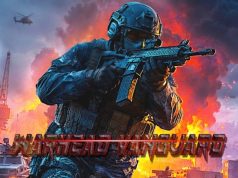
Call of Warfare – FPS Modern Shooter aims to position itself among the prolific ranks of contemporary first-person shooters. Its ambition is straightforward: deliver fast-paced, online-driven combat that appeals to competitive players and casual gunplay enthusiasts alike. On paper, it checks many of the right boxes — varied maps, diverse weapons, progression systems, and multiple game modes — but in practice it both benefits and suffers from the weight of its influences.
The game evokes strong echoes of genre pillars like Call of Duty, Battlefield, and other military shooters. In many respects, that familiarity is an asset: players who enjoy saturated shooter meta will feel instantly at home. Yet this familiarity also exposes the game to direct comparison with higher-budget titles that have refined systems, polished movement, and tightly balanced combat over years of iteration.
Call of Warfare succeeds when it leans into its strengths — responsive gunplay and team dynamics — but it struggles to distinguish itself meaningfully in areas where its contemporaries have set high expectations.
Core Gameplay: Responsive Gunplay, Predictable Patterns
At its heart, Call of Warfare delivers an experience that feels mechanically sound. Shooting feels responsive, recoil patterns are recognisable and learnable, and classes or loadouts offer clear roles in combat. Weapon handling adheres to modern shooter conventions: aim down sights for precision, manage reload timing, and choose engagements strategically.
The movement system — sprint, strafe, crouch, jump — is functional and predictable. Players familiar with traditional FPS mobility will find little to learn here, which is both a comfort and a limitation. There is no radical traversal mechanic, no momentum-based parkour, and no physics-driven combat novelty. Instead, the focus remains squarely on shooting fundamentals.
Combat pacing is brisk. Typical matches emphasise quick engagements, repeated respawns, and objective turnover. Players are rewarded for map knowledge and tactical positioning, but individual skill remains the primary determinant of success. There are few safety nets for novice play, yet the learning curve is not punitive — it encourages incremental improvement rather than punishing beginners outright.
Where the game shines is in gunfeel. Weapons carry satisfying impact, with perceptible feedback on hit registration and sound design that reinforces punch and consequence. Audio cues — distant footsteps, gunfire directionality — contribute to tactical awareness and augment the gameplay loop.
However, this strength is balanced by a lack of distinctive mechanical identity. Weapon classes behave professionally but generically. Special abilities or class perks — if present — rarely alter the fundamental combat flow in dramatic ways. Players seeking unique mechanics or genre innovation may find the gameplay loop comfortably familiar but predictably homogeneous.
Maps and Modes: Strategic Variety Meets Routine Design
Maps in Call of Warfare are crafted with competitive balance in mind. They feature multiple sightlines, varied verticality, and tactical choke points that reward coordination and strategic deployment. Objective-oriented modes — such as Domination, Team Deathmatch, and Capture-the-Flag variants — function predictably and deliver consistent match flow.
Visual diversity among maps ranges from urban cityscapes and desert compounds to industrial facilities and forested perimeters. Environments are serviceable and readable, ensuring players can navigate key routes and potential ambush sites without constants confusion.
That said, map design seldom surprises. Many layouts lean heavily on symmetrical balance and predictable lane patterns rather than creative architecture or emergent strategic spaces. Matches tend to evolve within familiar corridors of engagement rather than giving rise to unexpected tactical innovations. This predictability benefits players seeking clarity and consistency, but it also underlines the game’s overall comfort-zone design approach.
Modes adhere to genre expectations without significant deviation. Players familiar with objective capture, domination zones, or elimination matches will find the rules intuitive and the objectives clear. However, there are few moments where the game introduces novel twists to these templates. The result is competent but conventional multiplayer content.
Progression and Customisation
Progression in Call of Warfare adheres to established online shooter paradigms. Players earn experience points (XP) through matches, completing objectives, and securing kills or assists. This XP unlocks new weapons, attachments, cosmetic options, and — in some systems — class or perk upgrades.
Weapon customisation offers depth in attachments and loadout tuning. Players can tailor recoil patterns, sight systems, ammunition types, and handling characteristics to suit personal playing style. This system provides a meaningful avenue for player expression and incremental performance optimisation.
However, the progression system sometimes gravitates toward grind. Unlocked rewards are paced to encourage extended play, which may feel rewarding for veterans but potentially monotonous for casual players who prefer rapid variety. The balance between incentive and repetition is delicate here — enough to foster engagement for many, but sometimes thin on novelty for those who seek frequent milestones.
Visuals and Audio: Functional Rather Than Flourish
In terms of presentation, Call of Warfare aims for clarity over spectacle. Visual fidelity is solid — environments are detailed, character models are distinct, and weapon animations are clean and readable. However, the game rarely leverages visuals to deliver memorable ambiance or dramatic world-building.
Lighting, shadowing, and effects such as muzzle flashes or environmental debris are well executed without being particularly striking. The aesthetic is effective for gameplay readability — crucial in competitive shooters — but lacks the visual identity or ambience that distinguishes premium titles in the genre.
Audio design is a key strength. Gunfire, reloads, footsteps, and spatial cues are distinct and tactically useful. Music — when present — supports pacing without overwhelming player focus. Sound design reinforces not just immersion but gameplay efficacy, allowing players to orient themselves strategically through auditory feedback.
Community, Performance, and Connectivity
Online performance is generally stable, with matchmaking systems that aim to balance player skill and latency. Most servers maintain smooth frame rates and minimal lag, which is essential for an FPS that depends on responsiveness and timing.
However, connectivity experiences can vary with player density and regional servers. Occasional matchmaking delays or uneven team compositions surface during off-peak hours. These are not catastrophic but are worth noting for players prioritising competitive consistency.
Community features such as clans, friend lists, or in-game events are present but modest. There is room for deeper engagement tools — for example, in-game tournaments, community challenges, or richer social integration — that would support long-term retention and competitive scene growth.
Where It Stumbles
Despite its numerous strengths, Call of Warfare – FPS Modern Shooter is not without drawbacks:
Lack of Innovation:
The game leans heavily on genre conventions without offering substantial mechanical novelty.
Repetitive Loop:
Extended play sessions can feel familiar quickly, as modes and maps settle into repetitive rhythms.
Progression Grind:
Reward pacing alternates between satisfying and sluggish, depending on play frequency and appetite for unlocks.
Visual Identity:
Presentation is functional but not striking — it serves gameplay but rarely impresses.
These issues do not cripple the experience, but they do frame it as competent rather than distinctive among modern shooters.
Final Verdict
Call of Warfare – FPS Modern Shooter is a solid, serviceable multiplayer shooter that delivers the essentials of competitive gunplay without unnecessary complication. Its responsive mechanics, accessible design, and reliable audio feedback make it a comfortable choice for fans of the genre seeking familiar battlefield rhythms.
However, in a landscape dominated by high-budget titles that have defined and refined multiplayer shooter mechanics for years, this game feels comfortably derivative. It does many things well, but few things memorably. Players who relish twitch-tight combat and team-based objectives will find enjoyment here. Those seeking innovation or standout personality in the genre may find it less compelling.