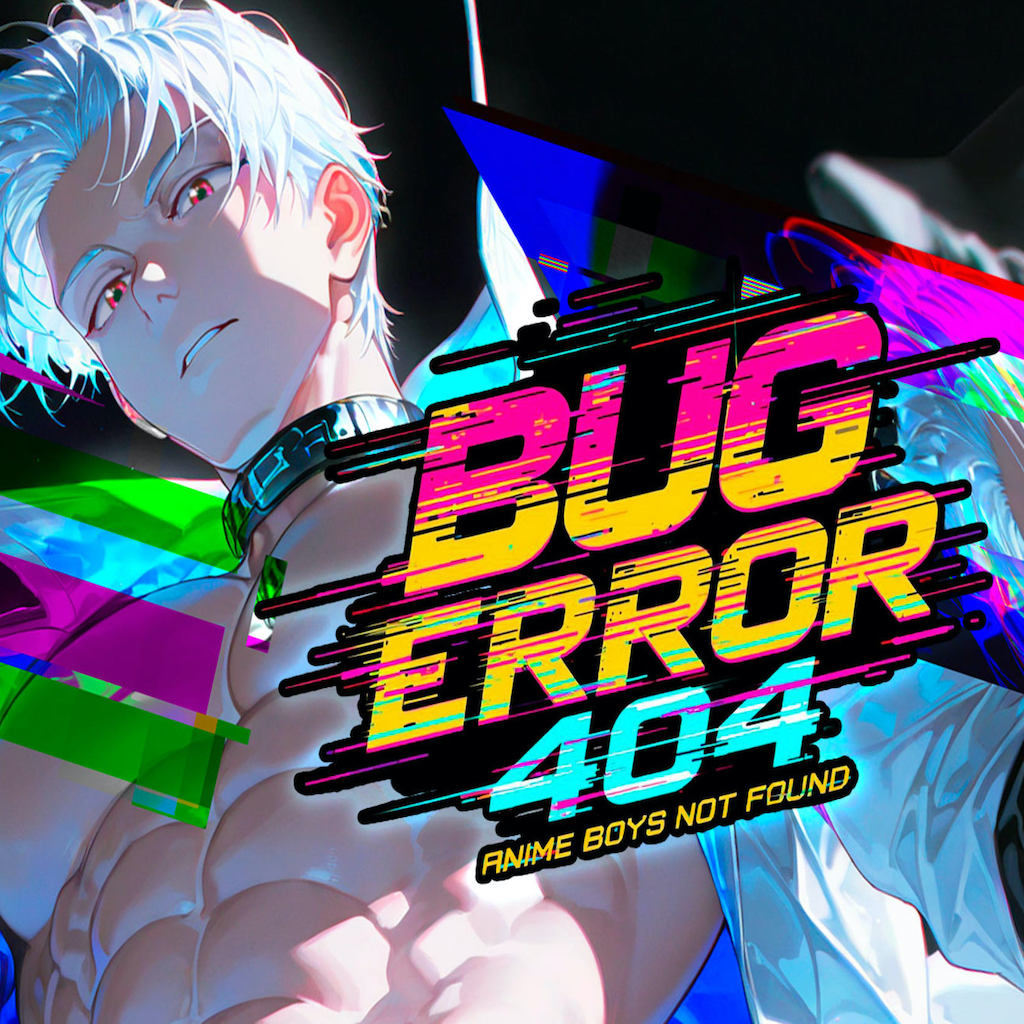
The dreaded 404 error is the sort of thing that makes you sigh, refresh the page and wonder whether your internet connection has decided to ruin your day. Bug Error 404: Anime Boys Not Found takes that familiar frustration and asks a rather more interesting question. What if the thing you were looking for really did not exist, but something that definitely should not exist suddenly appeared on your screen instead?
Developed and published by Red Fables, Bug Error 404: Anime Boys Not Found is a wonderfully peculiar visual novel that blends romance, minigames, digital obsession and deliberately broken technology into one colourful package. Rather than simply sitting back and reading a traditional dating story, you are expected to interact with the corrupted world around you, complete a collection of minigames and gradually uncover the mysterious characters hiding behind the errors. It is an unusual approach, but then this is hardly a game that was ever interested in doing things conventionally.
The premise immediately establishes the game’s playful attitude. Something has gone wrong with the system. Anime boys are appearing where they should not be, and the only sensible thing to do is apparently fix everything while becoming increasingly attached to the glitches. If that sounds ridiculous, it absolutely is. Thankfully, Bug Error 404 knows exactly how ridiculous it is.
Welcome to the Glitch
At its heart, Bug Error 404 is still a visual novel, but it refuses to let the traditional format define the entire experience. Instead, the story is broken up with a variety of minigames that represent your attempts to repair the corrupted system. Successfully completing them allows you to progress and unlock more of the characters and their stories.
That structure works surprisingly well because it gives you something to do rather than simply clicking through endless dialogue boxes. Visual novels can sometimes struggle with pacing, particularly when a story expects you to read large amounts of text before anything particularly interactive happens. Here, the minigames provide a welcome change of rhythm and make progression feel more like repairing a malfunctioning piece of software.
The variety is important too. Bug Error 404 does not simply throw the same challenge at you repeatedly and hope you will not notice. The different minigames are designed to test different skills, giving the experience a more arcade-like quality than you might initially expect. Some are straightforward distractions, while others can become surprisingly engaging once you realise that completing them helps reveal another piece of the mystery.
The Boys Behind the Broken Code
Of course, the real attraction is the characters. Each anime boy has effectively glitched his way into your game, and they are not interchangeable faces waiting for you to select the correct dialogue option. They each have their own personalities, quirks and reasons for being there.
That gives the game a useful sense of unpredictability. You never quite know what personality will emerge from the next corrupted file, and the fact that these characters are essentially anomalies within the game’s own world gives their interactions an extra layer. They know something is wrong, you know something is wrong, and yet everyone seems remarkably willing to carry on as though this is perfectly normal.
The fourth-wall-breaking nature of the premise is where Bug Error 404 has some of its most entertaining moments. The characters are not merely part of a fictional world. They are effectively trapped inside your game, and the distinction between character, software and player becomes increasingly blurred. It is hardly the most subtle approach to storytelling, but subtlety is clearly not what Red Fables is going for.
Romance With a Side of System Failure
There is an interesting tension at the heart of the game, as the romance centres on something that should not technically be possible. These characters are glitches, errors and corrupted files, yet the game encourages you to care about them. The more you learn about them, the harder it becomes to think of them as simple pieces of broken software.
That gives your choices weight. Multiple endings mean your decisions can determine who remains online and who disappears for good. The idea is hardly new in interactive fiction, but tying it directly to the game’s digital premise makes it feel more appropriate here.
It also raises some surprisingly interesting questions beneath all the colourful anime artwork. If something inside a computer can communicate with you, develop a personality and seemingly form an attachment, what exactly makes it less real? Bug Error 404 does not necessarily attempt to provide deep philosophical answers, but it has enough awareness of its own concept to keep those questions lingering in the background.
Unlocking More Than Just Pictures
Progression is closely tied to the game’s gallery system. Completing minigames and progressing through the various character routes gradually unlocks additional artwork, giving you another reason to keep pushing forward. For fans of visual novels, collecting CG images is hardly unfamiliar territory, but the way the gallery is integrated into the broken software concept gives it a little more personality.
Every successful challenge feels like cracking open another part of the corrupted system. It is a simple reward structure, but one that fits the theme nicely. You are not simply collecting pictures because the game says so. You are supposedly restoring pieces of data and uncovering what lies beneath the error.
That sense of discovery helps keep the experience moving. Even when a particular minigame is not especially memorable, there is usually the promise of another character interaction or gallery unlock waiting on the other side. It creates a straightforward but effective reason to keep playing.
Question 150
Then there is the mysterious hidden moment at Question 150.
I am deliberately not going to spoil what happens, because the whole point of a secret like this is discovering it for yourself. The game makes it clear that something is buried deep within its corrupted code, and reaching that point becomes almost a challenge in itself.
Secrets like this can be hit or miss, but here it fits the concept particularly well. Bug Error 404 constantly pretends that something has gone wrong behind the scenes, so having an actual hidden sequence tucked away within the experience feels completely appropriate. It encourages the sort of curiosity that visual novels do not always inspire.
A Digital World With Plenty of Personality
Visually, Bug Error 404 embraces its anime roots while giving everything a deliberately corrupted edge. Character artwork is colourful and expressive, while glitches, static effects and broken interface elements remind you that this is not supposed to be a normal visual novel.
The contrast works particularly well. Bright anime artwork sits alongside system errors and corrupted screens, creating a strange mix of cheerful romance and digital unease. It never becomes genuinely frightening, but there is enough weirdness in the presentation to make the player wonder what might happen when the next error appears.
The audio complements the concept nicely, too. Electronic and chiptune-inspired sounds give the game a suitably digital identity, while corrupted audio effects help sell the idea that the software itself is struggling to keep everything together. It is not an enormous production, but the presentation has a consistent style and knows exactly what atmosphere it wants to create.
Not Quite Like Anything Else
One of Bug Error 404’s biggest strengths is that it feels like someone actually had fun making it. There are plenty of visual novels and dating games available, many of which follow familiar structures with different characters and settings. Red Fables has instead taken the idea of a broken dating game and built the entire experience around that concept.
It will not appeal to everyone. Players who want a traditional visual novel with hours of uninterrupted character development may find the minigames distracting, while those expecting a substantial arcade experience may find the individual challenges relatively lightweight. The game sits somewhere between those two worlds, and that middle ground is both its greatest strength and its biggest limitation.
For the right audience, though, the combination works. The minigames break up the reading, the characters provide the emotional hook, and the glitching presentation gives everything a distinctive personality. It is difficult to accuse Bug Error 404 of being forgettable, which is already quite an achievement in a crowded genre.
Final Verdict
Bug Error 404: Anime Boys Not Found is a quirky, colourful and surprisingly inventive visual novel that refuses to simply follow the usual dating game playbook. Its mix of minigames, branching choices, gallery unlocks and digital glitches gives it a personality all of its own, while the central idea of characters breaking into your game provides plenty of opportunities for fourth-wall humour.
It is not perfect, and the minigames will probably appeal more to some players than others. Those looking for a deeply traditional romance visual novel might also find the constant interruptions a little frustrating. Yet there is something undeniably charming about a game that takes such a silly concept and commits to it so enthusiastically.
Most importantly, the characters give the experience a reason to keep digging. Once you start wondering why these boys are there, what they want and whether they can really be considered glitches, the game has successfully got its hooks into you. Suddenly that little 404 message is not an error you want to close. It is an invitation to find out what is hiding behind the broken code. And really, who said a computer error could not be romantic?