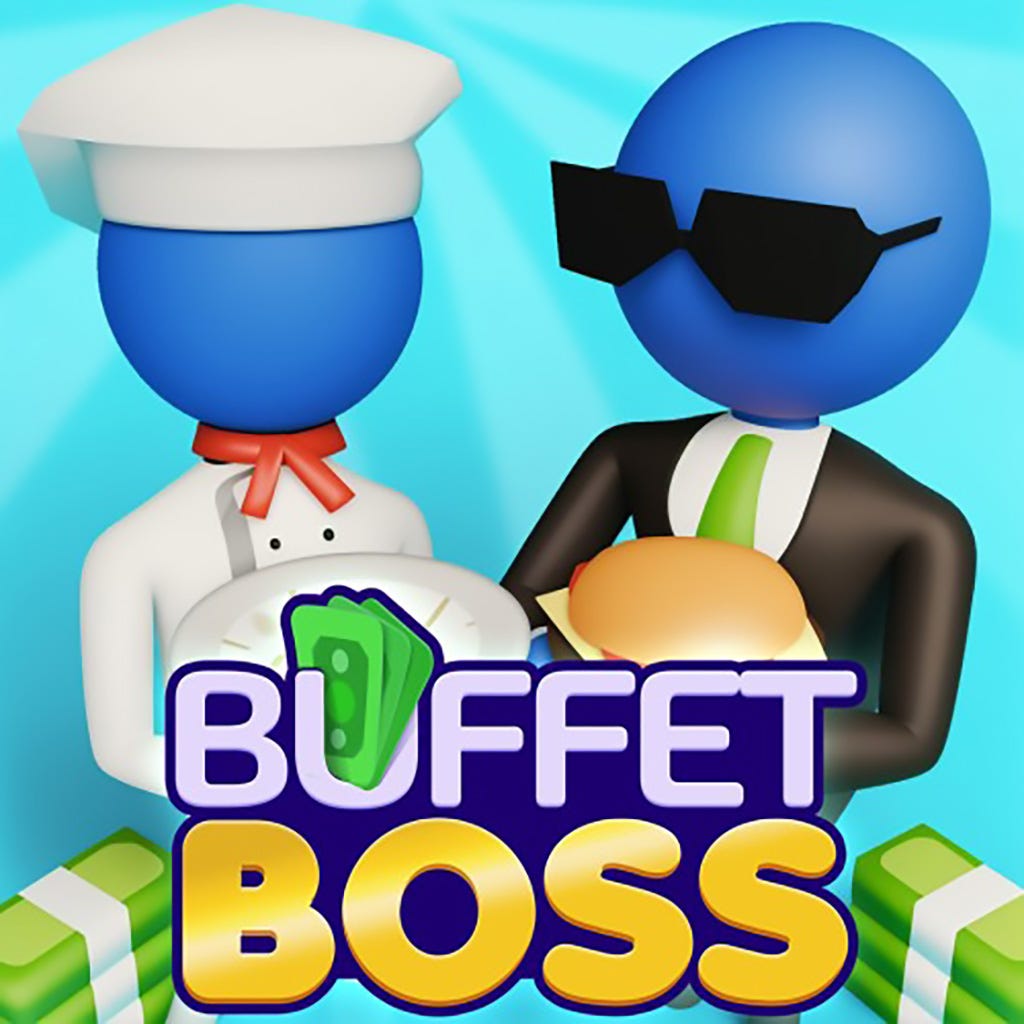
In a genre dominated by management simulations that focus on theme parks, cities, or empire-building, Buffet Boss offers a refreshingly specific and thoroughly engaging premise: run the ultimate all-you-can-eat buffet empire. At first glance, the idea might seem whimsical — customers endlessly grabbing plates of roast, sushi, desserts, and beverages in an ever-busy dining hall — but beneath that buffet counter lies a surprisingly deep strategy experience that blends resource management, customer psychology, staff optimisation, and smart growth.
Buffet Boss doesn’t aspire to reinvent the wheel. What it does is take a familiar framework — the business simulation — and refine it with smart systems, vibrant presentation, and gratifying feedback loops. The result is a game that feels approachable in short bursts yet rich enough to merit long sessions.
Concept and Premise: Deliciously Strategic
You start with a modest dining hall, a handful of dishes, and a simple goal: feed your customers, keep them happy, and ensure the tills ring. But like any solid management sim, Buffet Boss gradually reveals layers of complexity. Early moments are deceptively relaxed, a stage that teaches you the basics: placing food stations, managing queue flow, and balancing budgets. Once you unlock more cuisine options, staff roles, and upgrade paths, the game blossoms into a genuinely compelling strategic challenge.
The buffet microcosm — where every patron’s satisfaction impacts your reputation and revenue — is cleverly executed. Patrons aren’t generic; they have preferences, patience thresholds, and expectations that vary with service, food variety, and ambience. Getting a handle on these human factors is as important as balancing your books.
Gameplay Loop: Harmony Between Customers and Cuisine
At its core, Buffet Boss is about resource allocation and customer flow. You decide what food stations to offer — from familiar comfort dishes to more exotic fare — and then empower your staff to keep everything running smoothly. Choosing the right mix of dishes impacts demand, customer satisfaction, and even length of stay.
Customer Psychology:
One of the smartest structural choices in Buffet Boss is how it simulates customer behaviour. Patrons arrive with specific appetites and patience levels. Some families want quick, affordable eats; others linger for premium desserts and drinks. If food runs out, queues grow, or stations are poorly staffed, satisfaction drops. Poor satisfaction translates not just into fewer repeat customers, but also reduced tips, slower revenue growth, and diminished reputation. This adds a human factor that elevates Buffet Boss above many management sims that treat customers as numbers rather than stakeholders.
Menu Management:
Your buffet menu isn’t static. You continually unlock and experiment with new dishes as you earn money and invest in upgrades. Each dish has its cost, preparation time, and appeal rating. Balancing high-profit but labour-intensive items with staples that keep queues moving requires thought. There’s a satisfying tension in prioritising new exotic entrees versus keeping basics well-stocked. Too many high-maintenance items and your kitchen staff can’t keep up; too few choices and customers lose interest.
Staff and Efficiency:
Staff management is another layer of Buffet Boss that rewards attention. Chefs, servers, bussers, and cleaners all have specific roles, and their individual skill levels, energy, and morale shape your buffet’s efficiency. Assign too few staff to a busy station and watch queues grow; overstaff and your payroll eats into profits. Training and scheduling staff becomes a strategic puzzle in itself, especially when demand peaks during special events or seasonal surges.
Presentation: Colourful, Stylish, and Functional
Visually, Buffet Boss strikes a pleasant balance between clarity and charm. The art style is bright and lively, with an aesthetic that feels both inviting and functional. Patrons have clear, expressive icons indicating hunger and patience; food stations light up distinctly when busy; and menus and interfaces are clean, well-labelled, and easy to navigate.
The top-down isometric camera gives you a comfortable vantage point, letting you monitor foot traffic, queue position, and station bottlenecks with ease. Users can zoom in for details or zoom out to survey the entire restaurant floor. Visual feedback during service rushes — customers cheering when served quickly or murmuring when kept waiting — adds personality without clutter.
Audio design complements the visuals. A light, upbeat soundtrack underscores the restaurant ambience without ever becoming intrusive. Sizzling pans, clinking plates, and cheerful chatter round out the atmosphere. While not groundbreaking, the audio design reinforces immersion without ever detracting from strategic focus.
Pacing and Progression: Steady Growth With Occasional Hiccups
The pacing in Buffet Boss is generally well balanced. Initial levels are generous with guidance and funds, allowing players to experiment with layouts and food mixes. As you expand into bigger restaurants and unlock deeper systems, the challenge scales organically. Buffet upgrades, new dishes, and tougher customer expectations give a sense of progression that never feels arbitrary.
That said, there are occasional pacing frustrations. In middle stages, resource spikes and sudden demand surges can outpace your ability to respond, forcing abrupt re-planning rather than incremental optimisation. For some players, this can feel jarring — not because the challenge is unfair, but because it interrupts the otherwise smooth strategic flow. A little more gradual introduction of demand spikes or clearer early warnings might improve the overall flow.
Depth and Replay Value: Plenty to Chew On
Where Buffet Boss earns its long-term appeal is in its layered mechanics and emergent scenarios. Because customer types, menu unlocks, and manager decisions interact in non-linear ways, no two runs feel identical. Strategic variety comes from experimenting with dish combinations, staff arrangements, pricing strategies, and restaurant layouts that suit different crowd dynamics.
There’s also a satisfying loop of unlocking new areas, fresh food categories, and advanced kitchen tools that deepen tactical considerations. The temptation to replay earlier restaurants with new strategies or optimisation goals adds replay value beyond the main campaign.
Although Buffet Boss doesn’t offer competitive multiplayer or scenario challenges beyond the single-player progression, its systems are rich enough to sustain players who enjoy optimisation and strategic planning.
Shortcomings: Minor Gripes in an Otherwise Tasty Experience
No management sim is without rough edges, and Buffet Boss is no exception. Some players may find the challenge spikes abrupt, and while staff AI generally behaves well, occasional pathfinding quirks can lead to inefficient movement or delayed service. Menus and indicator icons are mostly clear, but a few tooltips could be more descriptive during complex stages.
Additionally, customers’ patience mechanics — while integral to strategic play — can feel punishing if not communicated clearly. Better early tutorials or more feedback during peak hours might help reduce this friction for players new to deep management sims.
Final Verdict: A Rich Buffet of Strategy and Fun
Buffet Boss is a delightful blend of strategic depth and accessibility. It is a business simulator that rewards thoughtful planning, smart staffing, and careful balancing of customer satisfaction against operational efficiency. While not revolutionary in every respect, it executes its focused premise with polish, personality, and genuinely engaging systems.
For players who enjoy business sims, strategy titles with human-centric mechanics, or even those curious about what makes a virtual buffet tick, Buffet Boss serves up a satisfying plate of tactical management.