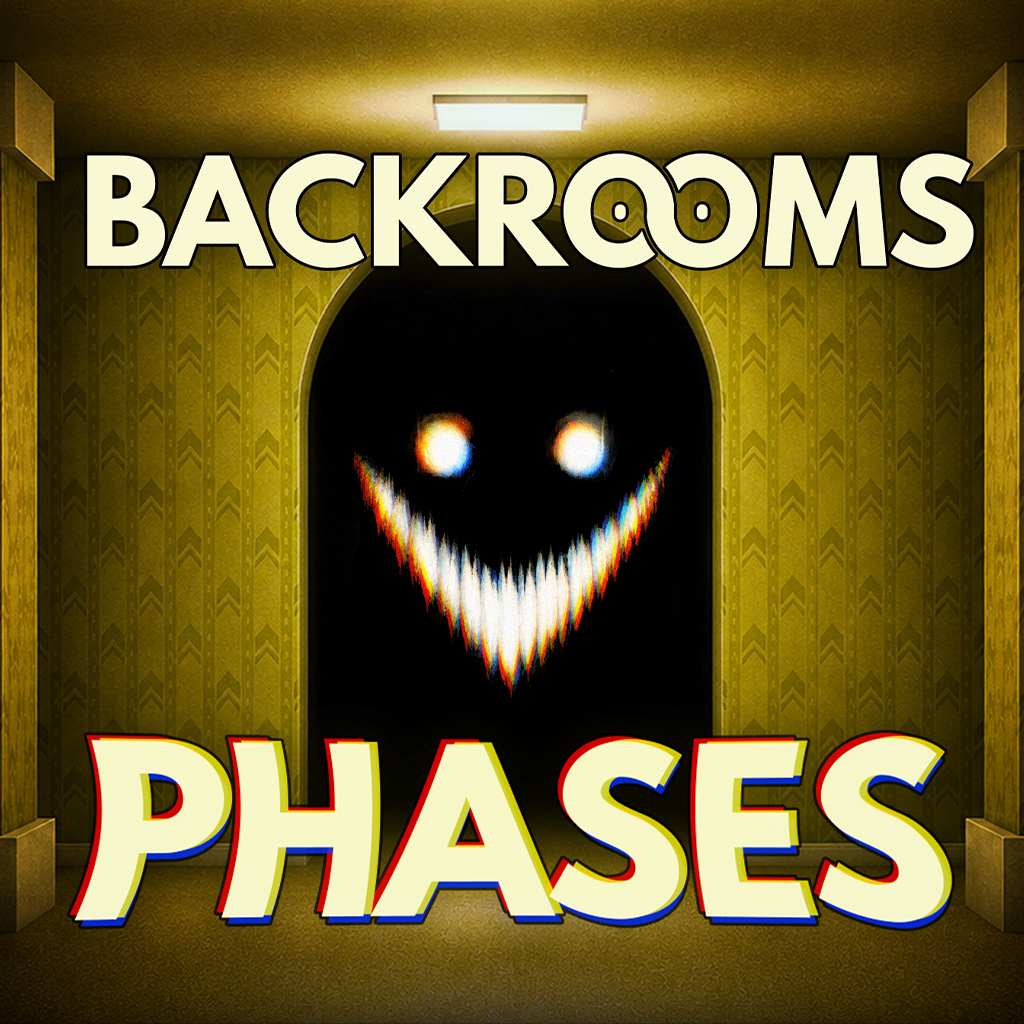
The Backrooms phenomenon has become one of modern horror’s most recognisable internet-born creations. What began as a simple image of endless yellow hallways has evolved into a sprawling mythology filled with strange entities, impossible architecture, and the creeping fear of being trapped in a place that feels familiar yet fundamentally wrong. The challenge for game developers has always been to translate that unsettling concept into an experience that feels more substantial than wandering empty corridors waiting for a jump scare.
RandomSpin’s Backrooms Phases enters that crowded space with a clear mission. Rather than relying solely on the iconic yellow rooms, it attempts to create a journey that continually mutates as players descend deeper into the nightmare. Through changing environments, handcrafted monsters, environmental puzzles, and an emphasis on sound-driven tension, it seeks to push beyond the familiar formula. The result is an atmospheric horror experience that often gets under your skin, even if some of its gameplay ideas never reach their full potential.
A Place That Shouldn’t Exist
The setup is simple, but simplicity works in horror’s favour. You noclip out of reality and awaken in an endless maze of yellow corridors. The carpets are damp. The fluorescent lights buzz overhead. Every hallway seems to stretch further than logic should allow.
At first, the environment appears almost mundane. There are no immediate monsters, no dramatic introductions, and no lengthy exposition dumps. Instead, Backrooms Phases trusts the environment to tell the story. It understands that one of the most powerful aspects of Backrooms mythology is uncertainty. You are never entirely sure where you are, why you’re there, or what might be waiting around the next corner.
That uncertainty remains one of the game’s strongest assets throughout its runtime. The deeper you venture, the less recognisable the world becomes. Familiar hallways twist into increasingly surreal spaces, creating the feeling that reality itself is gradually deteriorating around you. While the narrative remains intentionally sparse, the environmental storytelling is enough to keep curiosity alive from beginning to end.
Sound Is the Real Monster
Many horror games talk about atmosphere. Backrooms Phases genuinely understands how to build it. The audio design carries much of the experience on its shoulders. The constant electrical hum becomes a companion you grow strangely dependent on. When it suddenly disappears, the silence feels almost violent. Every distant creak, metallic clang, or unexplained footstep immediately commands your attention.
Playing with headphones transforms the experience. Sounds often arrive before visual confirmation, forcing you to interpret threats through audio cues alone. Sometimes you hear movement without ever discovering its source. Other times, a faint sound becomes the only warning that something dangerous is nearby.
What makes the audio particularly effective is its restraint. Rather than overwhelming players with constant stingers and loud shocks, the game frequently allows tension to build naturally. The result is a lingering sense of unease that persists even during quieter exploration segments.
Creatures Worth Fearing
One area where Backrooms Phases deserves genuine praise is its creature design. The horror genre has become increasingly reliant on familiar archetypes. Tall monsters. Pale faces. Distorted humanoids. While some of those influences remain visible here, RandomSpin has clearly invested effort in creating enemies with distinct identities.
Each entity has a distinct silhouette and behavioural pattern. Learning how different creatures operate becomes part of the survival process. Some stalk quietly. Others move unpredictably. A few are designed to exploit your growing paranoia.
The handcrafted nature of these monsters helps them stand out. They feel like inhabitants of this strange reality rather than generic horror assets dropped into a map. Their visual designs contribute significantly to the game’s oppressive atmosphere and help create several genuinely memorable encounters.
The first few sightings are particularly effective because the game understands that anticipation often matters more than confrontation. Catching a glimpse of movement at the far end of a corridor can be far more frightening than an outright attack.
Exploration Under Pressure
While atmosphere drives the experience, gameplay centres on exploration and puzzle-solving. Locked passages, missing tools, hidden objects, and environmental interactions form the backbone of progression. Players frequently find themselves searching rooms, connecting clues, and activating mechanisms while trying to avoid hostile entities.
The concept works well on paper because it injects tension into otherwise simple objectives. Finding a key becomes significantly more stressful when something might be hunting you. Searching a room for clues suddenly feels dangerous when every second spent standing still increases vulnerability.
At its best, Backrooms Phases creates moments where puzzle-solving and survival horror blend seamlessly. You might finally discover the item you’ve been searching for only to hear footsteps approaching from nearby. Those moments generate genuine panic and often produce the game’s strongest sequences. Unfortunately, the puzzle design doesn’t always match the quality of the surrounding atmosphere.
When The Fear Begins To Repeat
The game’s biggest weakness emerges once its systems become familiar. Despite introducing new phases and changing environments, the underlying gameplay loop remains largely unchanged. Exploration leads to object hunting. Object hunting leads to puzzle solving. Puzzle solving opens the next area. Repeat.
The issue isn’t that the formula is inherently bad. Many successful horror games rely on similar structures. The problem is that Backrooms Phases rarely evolves those ideas in meaningful ways as the experience progresses.
Several puzzles feel closer to extended fetch quests than genuine brain teasers. You search for an item, use it elsewhere, and move forward. While tension from nearby threats helps elevate these moments, the actual problem-solving often lacks complexity.
Navigation can occasionally become frustrating as well. Some transitions between areas feel intentionally disorienting, which fits the theme but can also result in aimless wandering. There is a fine line between creating confusion as a horror mechanic and simply leaving players lost. The game occasionally crosses that line.
A Short Journey Through A Long Nightmare
One aspect that may divide players is the overall length. Backrooms Phases is not a lengthy horror adventure. Most players will likely see everything it has to offer in a single sitting. While shorter horror experiences can absolutely succeed, the brief runtime means the game never fully explores some of its more intriguing ideas.
The phase system, in particular, feels ripe for greater experimentation. Each new area introduces fresh visual concepts and distinct threats, but there remains a sense that the game only scratches the surface of what those mechanics could become.
That said, the concise structure also prevents the experience from overstaying its welcome. The atmosphere remains effective because the game concludes before repetition completely erodes the tension.
Final Verdict
Backrooms Phases succeeds because it understands the core appeal of liminal horror. It captures the unsettling sensation of existing in a place that feels fundamentally wrong. Its exceptional sound design, strong environmental atmosphere, and genuinely memorable creature designs create moments that horror fans will appreciate.
The game struggles somewhat when judged purely as a gameplay experience. Puzzle design remains fairly basic, navigation occasionally becomes frustrating, and the overall runtime leaves several promising ideas underdeveloped. Yet even with those shortcomings, RandomSpin has crafted an experience that consistently sustains a sense of dread.
For players who enjoy atmospheric horror, environmental storytelling, and the unsettling mythology of the Backrooms, there is plenty here to enjoy. It may not redefine the genre, but it delivers enough tension, mystery, and unease to justify the descent.