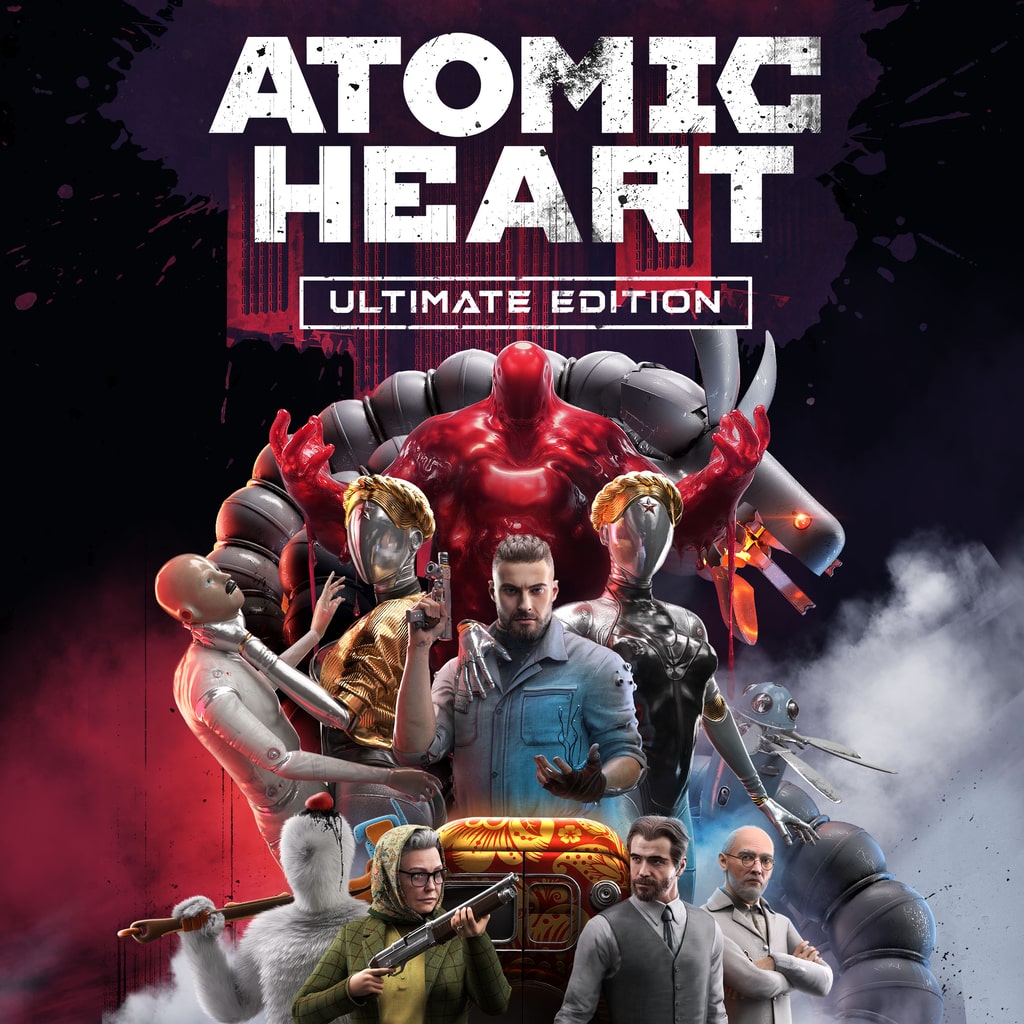
Few recent games have matched Atomic Heart in terms of visual impact, tonal boldness, and mechanical ambition. Developed by Mundfish, the game made a splash with its daring retro-futuristic style, surreal world-building, and a mix of immersive-sim elements with intense combat. Now, with the release of Atomic Heart – Ultimate Edition, players get to experience the game in its most complete form.
The Ultimate Edition hit shelves physically on March 24, 2026, and arrived digitally on April 16, 2026, alongside the final DLC, Blood on Crystal. This bundle includes the base game, the Atomic Pass, all story expansions, cosmetic packs, and a digital artbook. In essence, it aims to be the definitive version—offering the full story and systems without any fragmentation.
But the real question is: does this complete edition bring everything together into a cohesive experience, or does it just pile on more of the same strengths and flaws?
World & Setting
Atomic Heart stands out as one of the most striking settings in modern gaming. Set in an alternate-history Soviet Union where technology has spiraled out of control, the game immerses players in a world where utopian dreams have turned into a living nightmare.
At the heart of it all is Facility 3826, a vast research complex packed with cutting-edge robotics, experimental tech, and the haunting remnants of a society that self-destructed under the weight of its own progress. Its visual style is bold and unforgettable—part mid-century design, part sci-fi extravaganza.
But this world isn’t just a background; it’s an active character in the story. Every environment, from pristine labs to decaying factories overtaken by malfunctioning machines and twisted creatures, adds depth and atmosphere.
The Ultimate Edition, with all DLC included, expands this universe even further. New locations like the Mendeleev Complex, Neptune Research Center, and the surreal Limbo sequences offer more adventures, though sometimes the tone shifts unpredictably.
It’s a world that’s gritty, fascinating, and full of surprises—one that stays with you long after you’ve put down the controller.
Narrative & Characters
The story revolves around Major P-3, a soldier on a mission to uncover what caused the facility’s catastrophic failure. As he ventures deeper, he meets a colorful cast of characters—mysterious Granny Zina, the eerie AI NORA, and the unforgettable robotic ballerina Twins—each adding their own flavor to the unfolding drama.
Narratively, Atomic Heart is an ambitious game. It tries to weave together political commentary, philosophical musings on technology, and personal character stories into a single, cohesive experience. Sometimes it genuinely succeeds, especially in how it builds its world and tells its environment-driven story.
But when it comes to character development, the game can feel uneven. The dialogue often jumps in tone, and P-3 is a protagonist who divides opinions—sometimes believably grounded, other times overly exaggerated.
The additional DLC chapters do a good job of expanding the story, going beyond where the main game leaves off. Blood on Crystal, in particular, feels like a fitting climax that ties up major plotlines while hinting at what’s to come.
Combat & Gameplay Systems
Combat in Atomic Heart is fast, aggressive, and often chaotic. Players dive into a whirlwind of firepower, melee clashes, and the special abilities granted by the polymer glove, making every encounter feel intense and unpredictable.
The glove mechanics really form the heart of the gameplay. Skills like telekinesis, freezing enemies, and electrical attacks allow players to get creative in how they influence both foes and the environment. This system invites experimentation, especially when you start upgrading your weapons and unlocking new possibilities.
Enemy design is quite diverse, with everything from humanoid robots to grotesque mutants. Encounters can be adrenaline-pumping, demanding quick thinking and smart use of abilities.
That said, the combat sometimes feels a bit inconsistent. Enemy actions can be unpredictable, and the game occasionally throws tougher challenges without much warning. Managing resources like ammo and crafting supplies really adds to the tension, shaping the pace of battle in a meaningful way.
DLC Integration & Content Expansion
The Ultimate Edition’s biggest highlight has to be the inclusion of all the story DLC. These expansions introduce fresh environments, new enemies, weapons, and intriguing narrative threads that deepen the experience.
Each DLC chapter brings its own unique flavor: the Mendeleev Complex dives into shape-shifting machines, Limbo takes you through surreal, psychological landscapes, and Neptune Research Center lets you explore underwater realms.
While these additions add a lot of variety, they also shine a light on some tonal inconsistencies. The original game’s earthy retro-future vibe sometimes clashes with the more abstract or experimental elements that come later.
That said, the final chapter, Blood on Crystal, really does a great job of wrapping things up. It offers epic battles and a satisfying sense of closure that ties the story together.
Visual Design & Artistic Identity
Visually, Atomic Heart truly stands out. The art direction is bold and meticulous, creating scenes that stay with you long after. The environments are richly crafted, highlighting a striking contrast between utopian beauty and the haunting remnants of a collapsed world.
Character and enemy designs are equally memorable. The Twins, in particular, have become iconic within gaming culture, capturing a perfect blend of elegance and unease that feels incredibly real.
While the Ultimate Edition doesn’t drastically change how the game looks, it does a great job of showcasing the full scope of the game’s artistic vision across every part of the experience.
Audio & Sound Design
Audio design truly brings the game’s atmosphere to life. From the ambient environmental sounds and mechanical noises to the satisfying feedback during combat, every detail immerses you deeper into the experience.
The soundtrack seamlessly combines electronic and orchestral layers, perfectly capturing the game’s retro-futuristic vibe. Sometimes, the music ramps up the excitement during combat, while at other moments, it heightens the sense of mystery during exploration.
Voice acting varies quite a bit. Some performances feel genuine and compelling, but others come off as a bit hollow, especially in how the dialogue is delivered and the tone set by the actors.
Progression & Customisation
The upgrade system allows players to improve their weapons and abilities by collecting resources, adding a layer of depth to combat that really encourages you to find your own playstyle.
There’s a decent variety of weapons, from traditional guns to more experimental tools. The Ultimate Edition also offers cosmetic packs for a bit of visual flair, although they don’t change how the game plays.
Performance & Technical State
On modern consoles like PlayStation 5 and Xbox Series X|S, Atomic Heart – Ultimate Edition runs smoothly. You’ll notice steady frame rates and quick load times that keep you immersed in the game.
While there are still some bugs and small glitches, they don’t ruin the experience. They just remind us of how complex these systems really are.
Strengths
The game’s strongest aspect is undoubtedly its world-building. It crafts a unique and immersive environment that truly draws you in. The combination of striking visual design, environmental storytelling, and ambitious themes makes it stand out from the crowd.
While the combat can be a bit inconsistent, there are moments of real excitement—especially when you fully embrace the glove mechanics and get hands-on with the action.
Including all DLC in the Ultimate Edition means you get the complete story, offering a full, satisfying experience from start to finish.
Weaknesses
Despite its strengths, Atomic Heart feels a bit disjointed at times. The storytelling, gameplay flow, and DLC integration don’t always seem to mesh seamlessly, which can leave players feeling a bit disconnected.
Character writing still feels a bit uneven, and a few of the gameplay systems come across as underdeveloped or inconsistent, which prevents the experience from being truly polished.
The expanded content is quite substantial, but it doesn’t always add real value to the core experience.
Final Verdict
Atomic Heart – Ultimate Edition feels like a packed punch of ambition and stunning visuals, even if it occasionally stumbles along the way. It adds extra content and wraps up its story, but some of the game’s underlying quirks still remain, reminding you that it’s a work of passion that’s imperfect but genuine.
If you’re someone who loves bold world-building, experimental mechanics, and eye-catching visuals, this game still manages to captivate. But if you prefer tight gameplay and a cohesive story, it might feel a bit disjointed.
This game offers an intense rollercoaster experience—equally awe-inspiring, frustrating, and unforgettable moments.