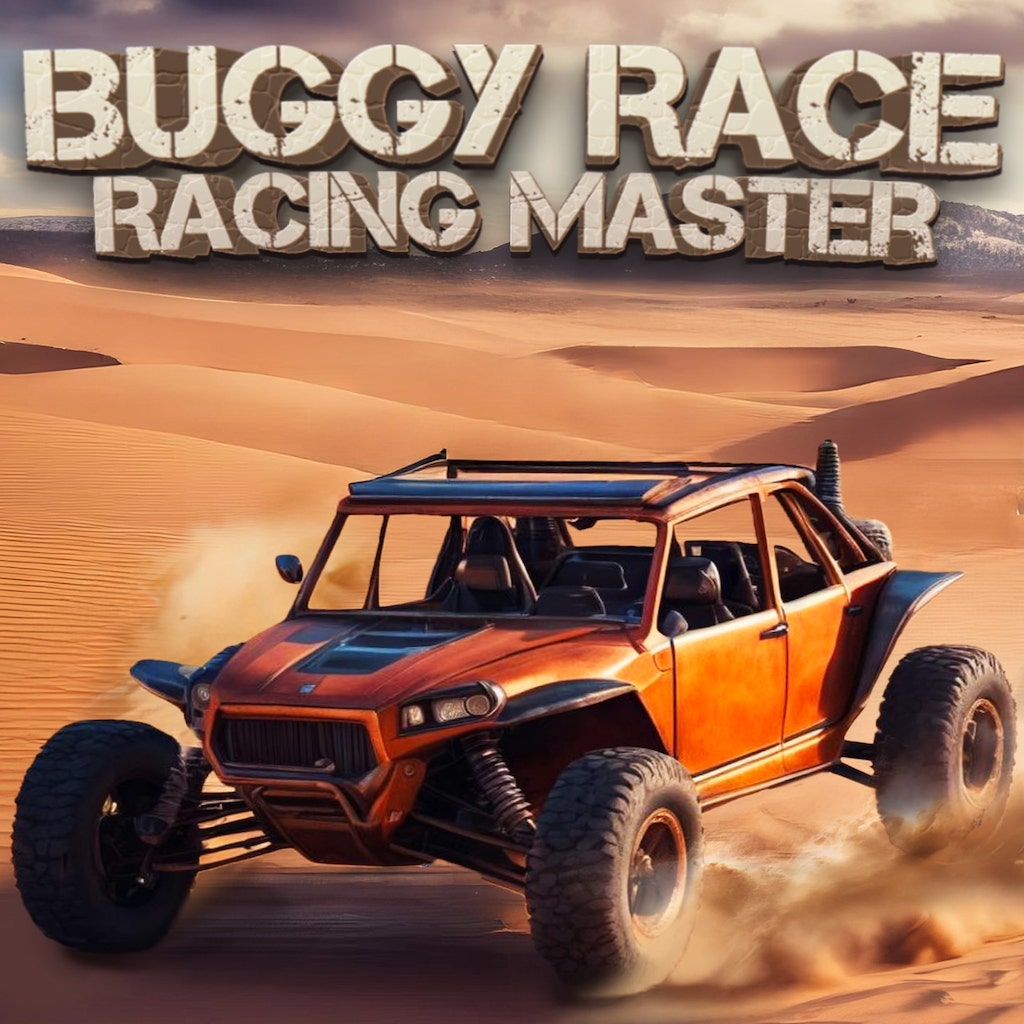
A scrappy, weapon-armed racer that tries to do everything at once but rarely stays on track. Buggy Race – Racing Master hits PlayStation with a straightforward pitch: fast buggy races, chaotic combat, and arcade-style leveling all packed into a small package. In reality, it’s a game full of good ideas hampered by uneven execution, where moments of fun are often cut short by rough edges.
Gameplay
At its core, Buggy Race – Racing Master is built around three main modes: Free Ride, Duel, and Timing Mode. Each aims to serve a different kind of racing fantasy, and, in concept, the variety is welcome. Free Ride focuses on traditional time-based racing, Duel introduces weapon combat against AI opponents, and Timing Mode strips things back to a pure solo challenge against the clock.
The problem is consistency. Free Ride is the most stable of the three, offering straightforward circuit racing with a decent sense of speed. The handling model is arcade-focused but not always predictable. Buggies feel slightly floaty, especially when cornering at high speed, which can make precision driving feel more like correction than control.
Duel mode is where the game tries to distinguish itself. Mounted weapons such as machine guns and miniguns turn races into chaotic shootouts, and there are moments when this works. When everything aligns, overtaking an opponent by blasting through an obstacle-filled stretch feels genuinely exciting. However, the balance between racing and combat is inconsistent. At times, weapons feel overpowered, reducing races to whoever lands the first sustained hit rather than who drives better.
Timing Mode is the most stripped-down experience and arguably the most honest. With combat removed, it becomes a pure test of track knowledge and control. Unfortunately, this also exposes the limitations of the driving physics. Tight sections can feel frustrating rather than challenging, especially when the collision response lacks refinement.
Progression is built around earning money from races to unlock new buggies, weapons, and upgrades. The system is straightforward and functional but not especially deep. Four unlockable buggies offer slight differences in handling and speed, though the distinctions between them are not always significant enough to dramatically change how you approach races.
Tracks and Design
Track design feels quite mixed. There’s a wide range of themes, with environments that include hazards like quicksand, explosive traps, and narrow, high-speed sections. These features make races visually engaging and mechanically interesting, but their implementation varies in quality.
Some hazards fit seamlessly into the track, encouraging players to pick their lines carefully or risk losing momentum. Others seem placed somewhat randomly, which can unfairly punish players instead of rewarding skillful adaptation. This inconsistency can slow the pacing, especially in longer races where repetitive obstacles become noticeable.
The way the game signals danger could also be better. Visual cues aren’t always immediately clear, making some failures feel more like bad luck than skill. Clarity is important in a combat racer, and this is an area where the game could have used more polish.
Combat and Strategy
The addition of weaponised racing is clearly intended as a defining feature. On paper, equipping machine guns or miniguns while maintaining top speed sounds like a strong hook. In practice, it is functional but rarely strategic.
Combat tends to dominate rather than complement racing. Once a player gains a lead and secures a weapon advantage, races can become one-sided. Defensive options exist, but they are not always responsive enough to counter sustained attacks. This creates a slight imbalance in which aggression is often rewarded more than smart driving.
That said, there are moments when the system clicks. Dodging incoming fire while navigating tight terrain, or timing an attack just before a critical turn, can create brief but memorable bursts of intensity. These moments hint at what the game could have been with tighter tuning.
Customisation and Progression
One of the best things about the game is its customization system. With more than 15 colors and paint options, players can really make their vehicles their own. The cosmetic options aren’t revolutionary, but they do give a nice feeling of ownership as you progress.
Performance upgrades are somewhat limited. While there are improvements to speed and handling, they don’t drastically change how the buggies feel. This helps keep the balance steady, but it also takes away some of the thrill of unlocking new parts. Progress feels more like small steps forward rather than a real transformation.
Unlocking new buggies and weapons does give you a reason to keep going, but with only a few options, the long-term variety feels limited. After a while, the sense of discovery starts to fade.
Visuals and Audio
Visually, the game is decent but nothing special. The tracks are colorful and easy to read, which helps with clarity, but the environmental details are pretty basic. Vehicle models are functional, though they’re not very detailed up close.
Explosions and weapon effects add some excitement, especially in Duel mode where the screen is filled with action. But over time, the effects repeat enough to make things look quite similar.
The sounds follow a similar pattern. The engine noises are fine, and the weapon sounds feel impactful, but there’s no clear identity to the overall audio. The music supports the gameplay without standing out—more like background noise than a memorable soundtrack.
Performance and Polish
Performance is generally stable, with smooth frame rates on both the PlayStation 4 and the PlayStation 5. Load times are reasonable, and input responsiveness is acceptable, though not razor-sharp.
The main issue is one of refinement rather than technical stability. Collision detection can feel inconsistent, especially when interacting with environmental hazards or other vehicles. Small frustrations accumulate over time, particularly on tighter tracks where precision is required.
Verdict
Buggy Race – Racing Master is a daring arcade racer that combines speed, combat, and progression into a simple, straightforward experience. It offers moments of chaotic fun, especially in its Duel mode, but gets a bit unruly when it comes to balance, accuracy, and lasting variety.
There’s a solid idea behind it—weaponised buggy racing sounds exciting—but the game is held back by uneven mechanics and a lack of polish. It’s fun in short bursts, perfect for players who love arcade chaos, but it struggles to keep that momentum over longer play sessions.