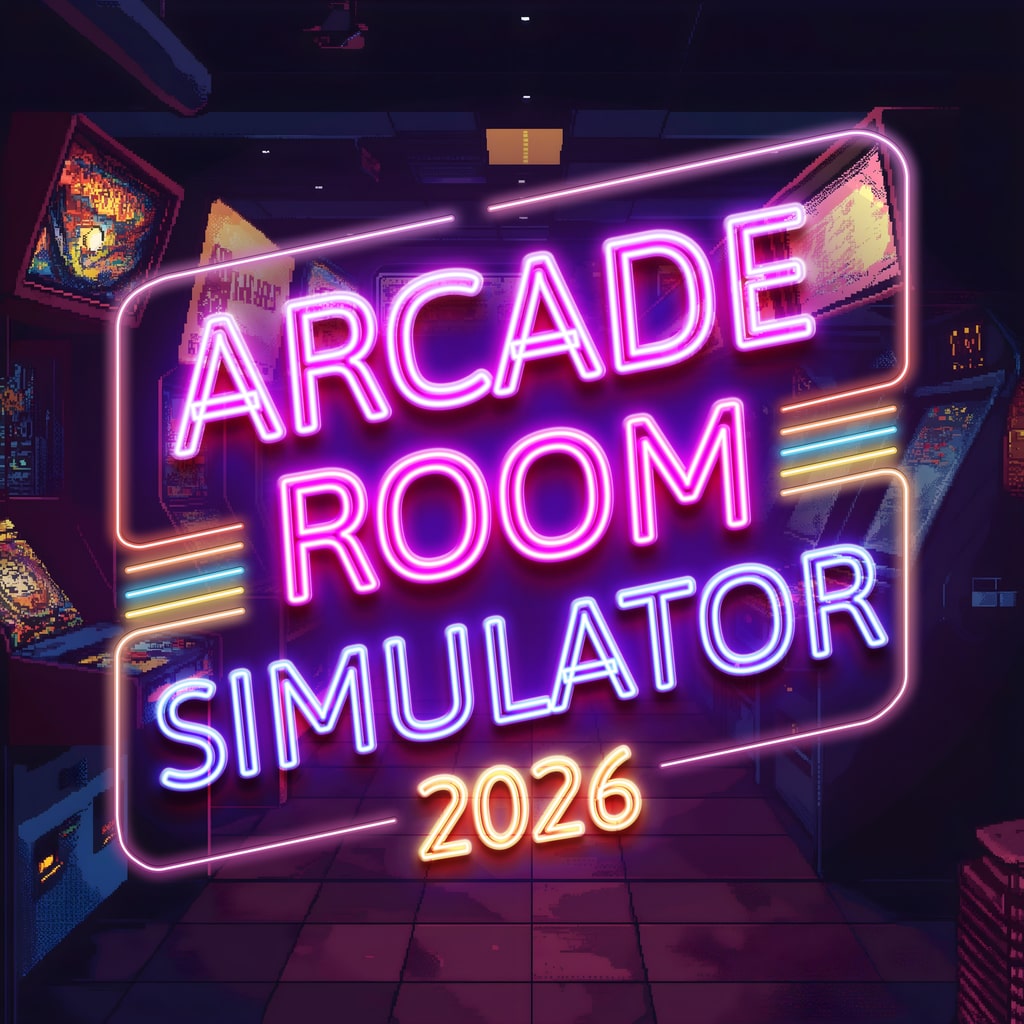
Arcade Room Simulator 2026 taps directly into a powerful vein of gaming nostalgia. The idea is immediately appealing: build, customise, and manage your own arcade space, filling it with machines inspired by classic eras of coin-op gaming. It promises not just management mechanics, but a celebration of gaming history filtered through simulation design. What emerges is a game with a clear passion for its subject matter, tempered by structural limitations and a narrow mechanical focus.
At its best, Arcade Room Simulator 2026 captures the quiet satisfaction of curation—placing machines, optimising layout, and slowly transforming an empty room into a personal arcade shrine. At its weakest, it exposes the fragility of simulation when depth gives way to repetition.
Core Concept and Player Role
Arcade Room Simulator 2026 positions the player as both business owner and curator. You are not simply managing profits; you are assembling an experience. Machines must be purchased, positioned, powered, and maintained, while the overall appeal of your arcade space influences visitor numbers and revenue.
This dual identity works well conceptually. The game understands that arcades are as much about atmosphere as functionality. Layout, spacing, lighting, and machine variety all feed into success. While the financial systems are straightforward, they are supported by an emphasis on presentation that elevates the experience beyond a simple spreadsheet simulator.
However, the game rarely challenges the player’s assumptions. There are optimal strategies that emerge early, and once discovered, they tend to dominate play rather than encourage experimentation.
Gameplay Systems and Management Depth
The core gameplay loop revolves around acquiring arcade machines, placing them effectively, managing income, and reinvesting profits into expansion or upgrades. Machines generate revenue based on popularity, condition, and placement, while maintenance ensures consistent performance.
These systems are intuitive and accessible, making Arcade Room Simulator 2026 easy to pick up. There is little friction in understanding how money flows or how success is measured. However, that accessibility comes at the cost of depth. The management layer rarely evolves meaningfully, and decisions tend to feel incremental rather than strategic.
There is limited tension in the economic model. Failure is unlikely unless the player actively ignores maintenance or expansion. As a result, the game lacks the push-and-pull dynamic that defines stronger simulation titles.
Arcade Machines and Interactivity
One of the most anticipated aspects of Arcade Room Simulator 2026 is the machines themselves. While the game features a variety of arcade cabinets inspired by classic genres—fighters, racers, shooters, and puzzle games—the interaction with these machines is largely superficial.
Players can activate machines, view them up close, and occasionally play simplified mini-games. These moments are charming but shallow. The novelty wears off quickly, and machines become more like decorative income generators than interactive centrepieces.
This design choice is understandable from a scope perspective, but it limits emotional engagement. The fantasy of running an arcade is strongest when players feel connected to the machines themselves, not just their revenue output.
Customisation and Creative Expression
Where Arcade Room Simulator 2026 shines is in customisation. The game offers a wide range of decorative options, from flooring and wall designs to lighting, posters, and furniture. These tools allow players to shape the identity of their arcade space, whether they lean toward retro authenticity or modern reinterpretation.
This emphasis on aesthetics reinforces the game’s curatorial identity. Watching an arcade evolve visually over time is genuinely satisfying, and the sense of ownership that emerges is one of the game’s most rewarding elements.
However, these cosmetic systems are not meaningfully tied to gameplay outcomes beyond minor popularity boosts. As a result, customisation feels expressive rather than strategic, which may disappoint players hoping for deeper simulation integration.
Presentation and Visual Style
Visually, Arcade Room Simulator 2026 adopts a clean, functional aesthetic. Environments are readable and well-lit, with machines clearly distinguished from decorative elements. The game does not aim for photorealism, instead favouring clarity and consistency.
Arcade cabinets are detailed enough to evoke their inspirations without risking licensing issues. Animations are modest but serviceable, reinforcing the game’s relaxed tone.
Performance is stable, though visual variety is limited. Over time, environments can feel repetitive, particularly once expansion options plateau.
Audio Design and Atmosphere
Sound design plays an important role in reinforcing the arcade fantasy. Ambient machine noises, coin sounds, and background hums create a convincing sense of place. The layering of these sounds as the arcade fills up is particularly effective, subtly communicating progress without explicit prompts.
Music is understated, often fading into the background rather than driving momentum. This restraint suits the game’s relaxed pacing, but it also means there are few memorable audio moments.
The lack of dynamic audio responses to player success or failure reinforces the game’s low-pressure identity, but also contributes to its limited emotional range.
Pacing and Long-Term Engagement
Arcade Room Simulator 2026 is best described as gently paced. Progression is steady, rarely spiking in difficulty or complexity. This makes it ideal for relaxed play sessions, but it also means that engagement relies heavily on player self-motivation.
Once the core systems are understood and expansion options exhausted, the game struggles to introduce new goals. There are no major late-game shifts, narrative arcs, or meaningful end-state challenges. Instead, players are left to optimise or decorate for its own sake.
For some, this sandbox-like openness will be appealing. For others, it will feel directionless.
Accessibility and Audience
The game is highly accessible, with clear menus, simple mechanics, and minimal fail states. It is well-suited to players who enjoy low-stress management experiences or nostalgia-driven creative play.
However, players seeking deep economic simulation, emergent complexity, or meaningful challenge may find Arcade Room Simulator 2026 lacking. The game prioritises comfort and familiarity over tension and risk.
Final Verdict
Arcade Room Simulator 2026 is a pleasant, thoughtfully themed simulation that succeeds in capturing the surface appeal of arcade culture. Its strengths lie in atmosphere, customisation, and accessibility rather than mechanical depth.
While it never fully realises the strategic potential of its concept, it offers a calm, nostalgic experience that values personal expression over optimisation. As a result, it feels less like a demanding management sim and more like a digital diorama—one that invites players to curate, decorate, and reminisce.
For players drawn to arcade nostalgia and relaxed creative systems, Arcade Room Simulator 2026 delivers an experience that is quietly satisfying, even if it rarely challenges or surprises.