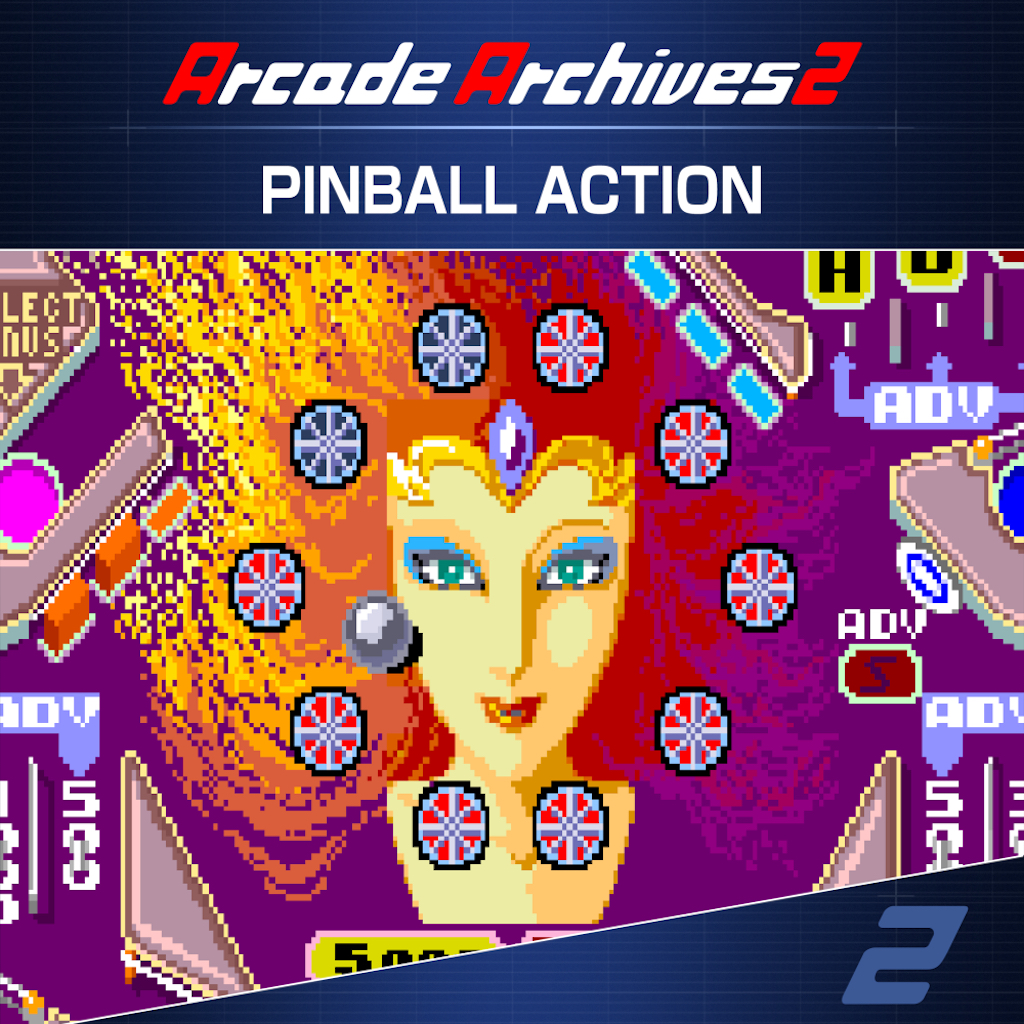
There is something wonderfully uncomplicated about the best arcade games. You put in your imaginary coin, take control, and within seconds you understand exactly what the game wants from you. Arcade Archives 2 PINBALL ACTION is very much in that school of design. Originally released by Tehkan in 1985, this pinball game does not bother with lengthy tutorials, sprawling progression systems or mountains of unlockable content. It simply drops a ball onto a table, hands you a pair of flippers and asks one very important question: how long can you keep it alive?
That simplicity is both the game’s greatest strength and the reason some modern players may find it difficult to fully embrace. PINBALL ACTION is unmistakably a product of its era, but there is a certain charm in experiencing an arcade game designed for short, repeatable bursts of play. Its cleverest idea is that this is not simply one pinball table played over and over again. Instead, successful play allows you to progress between four different tables, creating a miniature journey that gives each attempt a little more purpose. It may be a modest concept by today’s standards, but back in 1985 it gave players another reason to keep feeding the machine.
Back to the Arcade
The first thing that strikes you about PINBALL ACTION is how immediately playable it remains. There is no complicated setup and no fiddling with menus before getting started. The ball launches, the tables spring into action, and your fingers instinctively hover over the controls, waiting for the inevitable moment when the ball starts heading towards the drain. It is a wonderfully pure arcade experience, and while the presentation is obviously dated, the underlying concept remains easy to appreciate.
The objective is straightforward. You need to clear the various features and targets on the tables while keeping the ball in play for as long as possible. Hit the right targets and you can progress between the four tables, each offering another opportunity to build your score and extend your run. It gives the game a sense of progression without ever losing sight of its arcade roots, because everything ultimately comes back to keeping that little white ball alive.
What makes the game more interesting than its basic premise suggests is the sheer amount of activity packed into the tables. Drop targets, bumpers, spinners, rollovers and other classic pinball features are scattered across the playing areas, creating a constant stream of things to aim for. There is a satisfying rhythm to watching the ball ricochet around the table before making a desperate attempt to catch it with a perfectly timed flipper press. Sometimes you feel completely in control, and sometimes the ball seems to have developed a personal grudge against you.
Four Tables, One Big Challenge
The four-table structure is arguably PINBALL ACTION’s most interesting feature. Rather than offering four completely separate boards, the game encourages you to work through them as part of a single, overarching challenge. Completing objectives on one table lets you advance, giving a successful run a sense of momentum that a single-screen pinball game might otherwise lack.
The tables themselves are fairly similar when viewed through modern eyes, however. You will find familiar arrangements of bumpers, targets and lanes throughout the experience, and there is not the kind of dramatic mechanical variety that became commonplace in later pinball games. There are no elaborate ramps sending the ball through half the machine, no sprawling multiball sequences and no extravagant spectacle designed to make you stare at the screen with your jaw hanging open. Instead, PINBALL ACTION is about understanding the layout in front of you and learning how to make the most of every opportunity.
That makes mastering the game more important than simply reacting to it. Once you understand which targets matter and where the ball is likely to travel after certain shots, you can start playing with greater intention. The difference between blindly keeping the ball alive and actually controlling a run is surprisingly significant. There is a small but rewarding learning curve here, particularly when you start chasing high scores rather than simply trying to reach the next table.
Keeping the Ball Alive
Physics are inevitably one of the areas where age becomes most apparent. PINBALL ACTION does not attempt to reproduce the complexity or precision of a modern digital pinball simulation, and expecting it to would miss the point entirely. The ball movement is arcade-focused, with a predictable enough feel that you can learn its behaviour and begin making more confident decisions as you play.
That predictability is important because the game can be brutally unforgiving. A ball can bounce around the table several times before suddenly finding the narrowest possible route towards the drain. When that happens, there is usually a moment of disbelief, followed by the familiar arcade instinct to try again immediately. It is frustrating, but it is the kind of frustration that makes you want another attempt rather than walk away.
There is also a physicality to the way you interact with the tables. Shaking the table can be part of your strategy, allowing you to influence the ball when conventional flipper control is not enough. It is a simple mechanic, but it adds another layer to the experience and gives you one more tool to consider when things start going wrong.
The Arcade Archives 2 Treatment
As with other Arcade Archives releases, the real value is not merely having an old game available on modern hardware. Hamster has wrapped the original experience in a collection of features designed to make playing and learning these classics considerably more convenient. Save functionality, rewind options, screen settings and button customisation all help bridge the enormous gap between a 1985 arcade cabinet and a modern living room.
The addition of Time Attack Mode is particularly welcome. Traditional high-score chasing is obviously part of PINBALL ACTION’s DNA, but Time Attack shifts the objective, asking you to clear the game as quickly as possible rather than simply accumulating the highest score. It gives experienced players another way to approach a game they may otherwise have mastered, while also providing a useful challenge for anyone who enjoys leaderboard competition.
The familiar Original Mode, Hi Score Mode and Caravan Mode also return, giving the package plenty of competitive structure. Global online rankings are another welcome addition, because arcade games have always been about chasing somebody else’s score. There is something particularly satisfying about beating your own best performance, but knowing that someone somewhere has managed to squeeze another few thousand points out of the same machine adds another layer of motivation.
The inclusion of VRR support is also a nice touch for compatible displays. It is hardly going to transform the underlying game, but these small technical improvements are precisely what make the Arcade Archives releases feel more considered than simply dumping an old ROM onto a modern console.
A Relic Worth Revisiting
The biggest question is whether PINBALL ACTION remains interesting once the novelty wears off. The answer depends heavily on what you want from a retro game. If you are looking for a deep pinball simulation with elaborate tables, sophisticated physics and endless mechanical variety, this is not going to satisfy you. It is a compact arcade game from 1985, and its limitations are impossible to hide.
But judged on what it actually is, there is plenty to enjoy. The four-table structure gives the game more longevity than its straightforward presentation initially suggests, while the target-based progression creates a pleasing sense of purpose. The difficulty can be harsh, but it encourages experimentation and learning rather than relying entirely on luck. Most importantly, there is still that unmistakable arcade feeling of thinking you can do just one more run before suddenly realising that an hour has disappeared.
Final Thoughts
Arcade Archives 2 PINBALL ACTION is not going to reinvent digital pinball, nor should it. Its appeal lies in taking a small, focused piece of arcade history and presenting it in a way that feels comfortable on modern hardware. The four-table progression is clever, the action remains surprisingly addictive, and the new Time Attack Mode gives veterans another reason to return. It is a fascinating snapshot of how developers were experimenting with the pinball formula during the golden age of arcades.
There is certainly some repetition, and players accustomed to modern pinball games may find the tables rather basic. Yet there is an honesty to the experience that I found increasingly hard to resist. PINBALL ACTION knows exactly what it wants to be, and it does not waste a second pretending to be anything else. Sometimes that is all an arcade game needs.