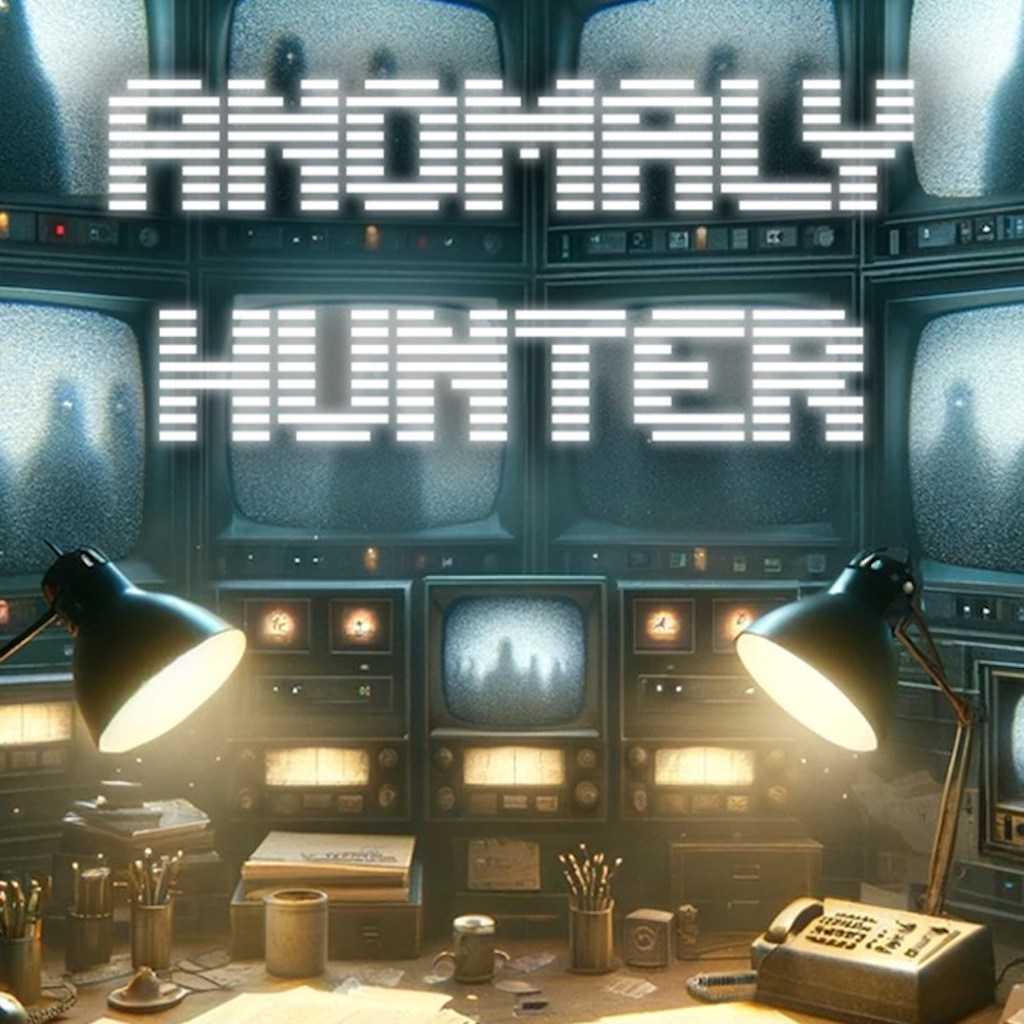
I don’t mind admitting I’d probably make a terrible security guard. Give me a bank of CCTV monitors to watch through the early hours of the morning, and I’d almost certainly start convincing myself that every flicker of a light was something sinister. Worse still, I’d probably spend so long questioning whether I’d actually seen something move that I’d miss the genuinely terrifying moment when it did. That is exactly the sort of paranoia Anomaly Hunter: Observation Duty thrives on, and it is surprisingly effective at getting under your skin. Rather than relying on endless jump scares or handing you a weapon to fight back, it asks you to do something much simpler and, in many ways, much more unnerving: pay attention.
The premise could hardly be more straightforward. You are the lone night-shift operator watching over a mysterious facility through a collection of security cameras. Your task is to memorise every room exactly as it appears and immediately report anything that changes. A chair that has shifted position, a painting that suddenly looks different, an object that has vanished, or something far more disturbing lurking in the background all count as anomalies. Miss too many of them, and whatever is haunting the building will eventually come looking for you.
It is an idea that has grown increasingly popular in recent years, yet there is a reason these observational horror games continue to find an audience. They prey on something surprisingly universal: our tendency to doubt our own memory. Was that cupboard always open? Did that lamp always sit in the corner? Is that shadow actually moving, or have I simply been staring at the screen for too long? Before long, the game has you questioning not only what you are seeing but also your own confidence.
Gameplay
Every shift begins with a welcome sense of calm. Several camera feeds show different rooms around the facility, each appearing completely ordinary. There are offices, corridors and storage areas that initially seem mundane, encouraging you to study every detail before the anomalies begin. Those first few minutes almost lull you into a false sense of security, and that is exactly what the game wants.
Once the first anomaly appears, the pace quietly shifts. You begin cycling between camera feeds, repeatedly searching every room for the smallest inconsistency. Some changes are obvious, such as missing furniture or doors opening where none existed before. Others require genuine concentration, with tiny movements or subtle alterations that can easily slip past unnoticed if your attention drifts for even a moment.
Whenever you notice something unusual, you must file a report by selecting both the correct location and the correct anomaly type. Choosing accurately removes the disturbance and restores the room to normal. Choosing incorrectly wastes valuable time while allowing the anomaly count to continue rising. It creates a constant balancing act between acting quickly and being absolutely certain that what you have seen is genuinely wrong.
The longer each shift lasts, the more intense everything becomes. Anomalies appear more frequently and often overlap across multiple rooms. Suddenly you are trying to remember whether you already checked a particular corridor, while another room appears to contain something equally suspicious. The pressure builds naturally, without needing scripted events or elaborate action sequences, making every successful report genuinely satisfying.
Atmosphere
One of the game’s greatest strengths is its willingness to embrace silence. There are long stretches when absolutely nothing happens, leaving you staring at motionless camera feeds as you wait for something, anything, to change. Those quiet moments become surprisingly uncomfortable as your imagination begins to fill the empty spaces long before the game does.
When an anomaly finally appears, it often catches you completely off guard, as it rarely announces itself dramatically. A doorway might suddenly lead somewhere impossible. A familiar room may now contain an unsettling figure standing perfectly still in the corner. Sometimes the changes are so subtle that you find yourself leaning closer to the screen simply to convince yourself that what you are seeing is real. That creeping uncertainty proves far more effective than constant loud scares.
The game also understands that less is often more. Rather than overwhelming players with grotesque monsters every few minutes, it allows ordinary environments to become increasingly unfamiliar. Watching somewhere safe slowly become wrong is an incredibly effective way of building tension, especially when your own memory becomes unreliable.
Presentation
Visually, Anomaly Hunter: Observation Duty adopts a deliberately modest presentation. The CCTV perspective naturally limits detail, but that works in the game’s favour because the grainy images make spotting subtle differences significantly harder. Every room feels believable enough to study carefully, even if none of them are especially impressive from a technical standpoint.
Lighting plays an equally important role in maintaining the atmosphere. Dark corners, flickering lights and muted colours create an environment where almost anything could be hiding just beyond your vision. The limited visibility constantly forces you to examine every corner of the screen, making routine surveillance feel surprisingly nerve-racking.
Sound design deserves just as much praise. Rather than relying on dramatic orchestral music, the game fills the building with distant mechanical hums, electrical buzzing and long periods of unsettling silence. Every unexpected noise immediately makes you wonder whether an anomaly has appeared somewhere, encouraging you to frantically cycle through every camera in search of evidence.
What Holds It Back
As compelling as the central idea remains, the experience inevitably becomes repetitive during longer sessions. While the anomalies themselves are varied enough to sustain interest for a while, the core gameplay loop changes very little from beginning to end. Once you understand the formula, the excitement comes almost entirely from hoping to encounter new anomaly variations rather than from discovering fresh mechanics.
The environments could also have benefited from greater diversity. Although each room serves its purpose mechanically, many share similar layouts and visual styles. Introducing more distinctive locations would have made memorisation more interesting and reduced the feeling that later shifts begin to blend together.
The reporting system occasionally causes unnecessary frustration as well. Spotting an anomaly only to accidentally select the wrong category feels more annoying than frightening, especially when you knew exactly what had changed. It is not a constant issue, but it can briefly interrupt the otherwise carefully maintained tension.
Final Verdict
Anomaly Hunter: Observation Duty does not reinvent surveillance horror, but it understands exactly why this style of game has become so appealing. By focusing almost entirely on memory, observation and psychological tension, it creates an experience that feels refreshingly different from more traditional horror titles. There are no elaborate combat systems or complicated mechanics to get in the way of its central idea, allowing the creeping sense of paranoia to remain the true star of the show.
Its modest production values and repetitive structure prevent it from reaching the heights of the very best games in the genre, but there is still plenty here to enjoy. Every successful shift feels earned because victory comes through patience, concentration and careful observation rather than quick reflexes. Few horror games make players distrust their own eyes quite so effectively.
If you enjoy slow-burn horror that rewards attention to detail, Anomaly Hunter: Observation Duty is well worth investigating. It captures the uncomfortable feeling of never being completely certain about what you have just seen, and that lingering doubt remains with you long after the shift has finally ended.