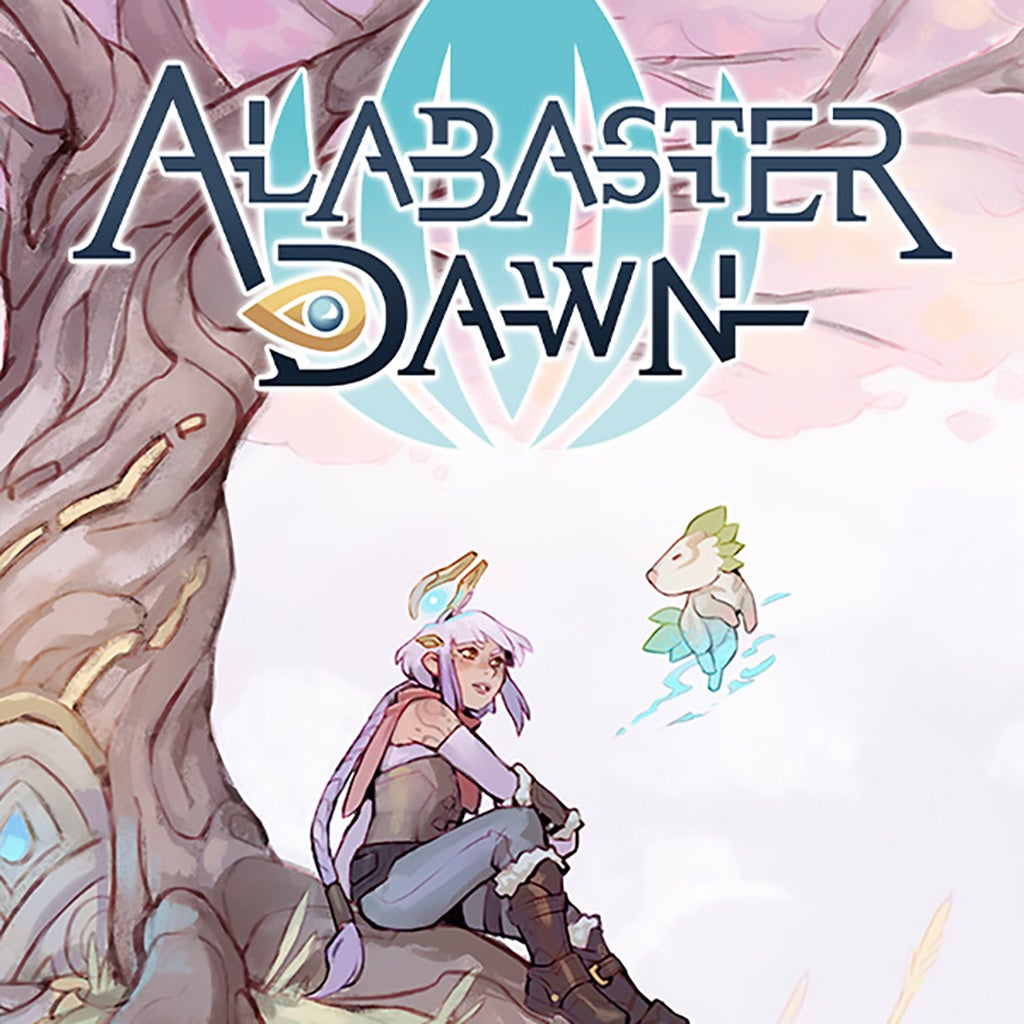
Following up a cult hit like CrossCode requires a certain confidence, not just in mechanics but in identity. What comes next has to justify itself while still respecting what came before. Radical Fish Games clearly understands that pressure, because Alabaster Dawn does not feel like a cautious sequel. It feels like a studio pushing outward in every direction at once, determined to see how far its systems, world, and combat can stretch before they snap. The answer, for the most part, is impressively far.
World and Story
The world of Alabaster Dawn opens in silence. Not the comforting kind, but a heavy silence that suggests something once vast has been stripped away. Gods are gone. Civilisations are fractured. Nature itself seems to be holding its breath. Into this quiet ruin steps Juno, the Outcast Chosen, who wakes with no guidance other than the task set before her. Heal the world. Restore humanity. Confront Nyx, the shadow that has rewritten everything.
It sounds familiar in outline, but the execution leans into atmosphere rather than exposition. The world of Tir-Na-Nog does not rush to explain itself. Instead, it lets you piece things together through environmental storytelling, abandoned structures, and the slow revival of settlements you help rebuild.
That rebuilding is not just narrative texture either. It is structural. Communities physically change as you progress, opening new paths and systems. A broken town becomes a functioning hub. A quiet camp turns into something closer to a living city. It gives the sense that progress is not just about personal power, but about collective recovery.
It is also where the game finds its emotional core. Juno’s journey is not about becoming a chosen hero. It is about convincing a broken world that it is still worth saving.
Combat
If CrossCode was already known for tight, demanding combat, Alabaster Dawn builds on that foundation, adding layers of flexibility that can feel overwhelming at first.
The Prism system allows instant swapping between elemental weapon sets, each with multiple loadouts and skill trees. In practice, this makes combat a constant negotiation between aggression, positioning, and preparation. You are never locked into a single style. You are expected to adapt constantly.
Encounters feel more like a rhythmic dance than a standard action RPG loop. Enemies telegraph attacks clearly, but mistakes are punished swiftly. Success depends on reading patterns while maintaining offensive momentum. The Focus system reinforces this by rewarding consistent hits with energy for high-impact Arts. These abilities land like punctuation marks in otherwise chaotic fights.
There is a satisfying push and pull here. Play too cautiously and you lose rhythm. Play too recklessly and you are overwhelmed. When it clicks, though, it becomes something close to improvisation.
Boss encounters deserve special mention. They are lengthy, multi-phase battles that test not only reaction time but also understanding of your entire toolkit. Few games this dense still manage to feel readable in motion, but Alabaster Dawn pulls it off more often than not.
Exploration
Exploration is where the game quietly expands beyond expectations. The world is built for vertical movement. Grappling, gliding, and platforming are woven into environmental puzzles that often require returning later with new abilities. This creates a satisfying loop of discovery and recontextualisation. Places that once felt inaccessible slowly become routine routes.
There is also a constant sense of hidden structure. Secrets are everywhere, but rarely signposted. Instead, curiosity is rewarded through experimentation. A strange wall might hide a shortcut, and a distant ledge might conceal an entire optional encounter.
This is supported by a surprisingly robust quality-of-life layer. Fast travel is clean and intuitive, while the map allows personal marking and reminders. It reduces frustration without removing the satisfaction of getting slightly lost in the world.
Systems and Progression
Where Alabaster Dawn risks losing some players is in its sheer density of systems. Weapon skill trees, elemental modifiers, gem crafting, cooking systems, and character builds all interact in ways that are mechanically satisfying yet occasionally exhausting. There is always another layer to engage with, another optimisation path to consider.
Cooking is a surprisingly meaningful system rather than a side distraction. Meals provide buffs and expand long-term progression through Palate Level growth. Even resting becomes an opportunity to refine your build or strengthen your party.
Gems and equipment customisation add further depth. You are constantly tweaking stats, adjusting resistances, and refining your combat identity. The freedom is impressive, though it occasionally tips into overload.
Presentation
Visually, Alabaster Dawn is a striking evolution of the studio’s earlier work. The blend of pixel-art characters within fully 3D environments creates a layered visual identity that feels nostalgic yet modern. Lighting plays a major role, with ruined landscapes shifting dramatically as time passes or as systems are restored.
The soundtrack supports this tone with restrained yet emotional composition. It never overwhelms scenes, instead reinforcing the sense of quiet rebuilding that defines much of the experience.
Final Verdict
Alabaster Dawn is not a small step forward for Radical Fish Games. It is a significant expansion of ambition. It takes the mechanical precision of CrossCode and layers it with more systems, greater narrative weight, and a world that feels genuinely reactive to your presence.
UThat ambition is both its strength and its challenge. At times, the game threatens to overwhelm with systems vying for attention. The early hours, in particular, can feel like drinking from a firehose of mechanics and terminology. But patience pays off. Once its rhythms settle, the experience becomes deeply engaging, even absorbing. This is a game about restoration in every sense. Of people. Of places. Of understanding how all these systems connect. It may not always be elegant, but it is alive in a way few RPGs manage.