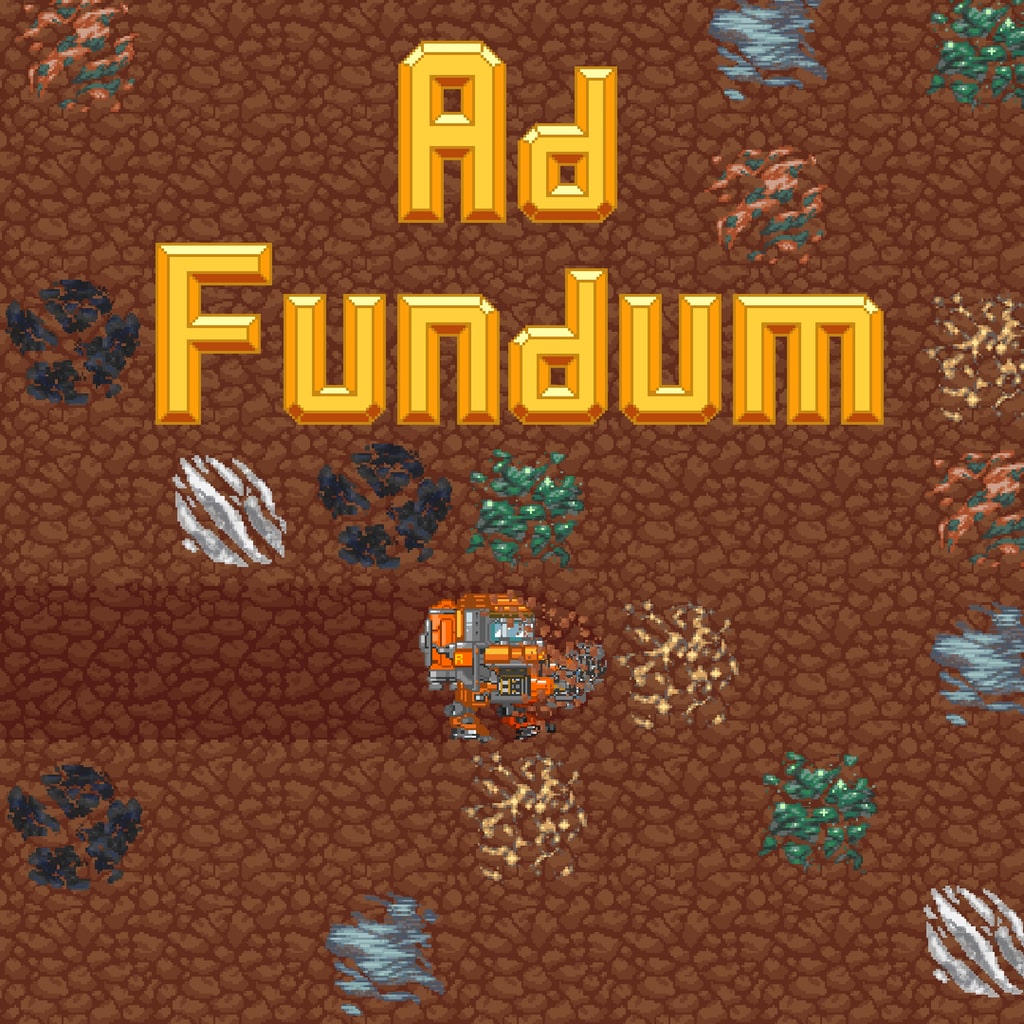
At a glance, Ad Fundum presents itself as a modest indie title built around a simple idea: dig deeper. But beneath that straightforward premise lies a surprisingly methodical experience that blends precision platforming, environmental puzzles, and a steady rhythm of risk versus reward. It’s a game that values patience and spatial awareness over spectacle, asking players to master its systems through repetition, careful movement, and a willingness to learn from failure.
Ad Fundum is not an experience designed to rush players along. Instead, it embraces a deliberate pace, encouraging thoughtful play and a measured approach to progression. For some, that restraint will feel refreshing. For others, it may test patience. Either way, it establishes a clear identity early on — one rooted in control, consequence, and quiet satisfaction.
A Descent With Purpose
The core premise of Ad Fundum is elegantly simple: descend ever deeper into a vertical world by navigating hazardous terrain and overcoming environmental obstacles. Rather than sprawling horizontal levels, the game focuses on downward momentum, turning gravity into both a tool and a threat.
Each new layer introduces subtle variations in layout and challenge. Platforms shift, hazards multiply, and the margin for error tightens. What begins as a relatively forgiving introduction gradually transforms into a test of precision, where every jump, drop, and correction matters.
There is no traditional narrative driving the descent. Instead, the game relies on atmosphere and progression to convey meaning. The deeper you go, the more isolated and hostile the environment feels. This minimalist approach to storytelling works well, reinforcing the theme of descent — both physical and mental — without the need for overt exposition.
Gameplay: Precision Over Power
Mechanically, Ad Fundum is built around tight movement and careful timing. Controls are responsive, but intentionally unforgiving. Momentum plays a significant role, and misjudged inputs can quickly spiral into costly mistakes.
Movement feels weighty but fair. Jumps require commitment, drops must be calculated, and recovery options are limited. This design ensures that success feels earned rather than accidental. When you make progress, it’s because you’ve learned the terrain and adapted your approach — not because the game gave you generous margins.
Environmental hazards are varied without being overwhelming. Spikes, crumbling platforms, shifting obstacles, and narrow passages demand constant attention. The game rarely introduces entirely new mechanics; instead, it layers existing ones in increasingly complex ways. This incremental complexity keeps the challenge engaging while reinforcing mastery.
However, this emphasis on precision also means that mistakes are punished harshly. There are moments where a single misstep can undo minutes of careful progress, and while checkpoints are present, they are spaced deliberately to maintain tension. For players who enjoy high-stakes platforming, this will be a highlight. For others, it may feel frustrating rather than motivating.
Level Design: Vertical Ingenuity
One of Ad Fundum’s strongest aspects is its level design. The vertical structure is used creatively, forcing players to think not just about where they’re going, but how they’re getting there. Routes often offer multiple paths, each with its own risks and rewards. Safer routes may be longer or more mechanically demanding, while quicker descents carry greater danger.
This risk-reward dynamic adds depth to what could otherwise be a linear experience. Players are constantly making decisions: do you take the risky shortcut or play it safe? Do you drop quickly and trust your reflexes, or descend slowly and conserve control?
Environmental variety helps maintain engagement. While the aesthetic palette remains cohesive, small changes in layout and hazard density prevent levels from feeling repetitive. Still, some sections lean heavily on familiar patterns, and players may occasionally feel they’re navigating variations of the same challenge rather than entirely new ideas.
Visuals: Minimalism With Intent
Visually, Ad Fundum opts for a restrained, minimalist style. Environments are clean and readable, prioritising clarity over visual flair. This approach serves gameplay well, ensuring that hazards and platforms are always clearly distinguishable.
Colour usage is subtle but effective. As players descend, the palette shifts slightly, reinforcing progression and mood without dramatic changes. Lighting is used sparingly, often to draw attention to key elements or to heighten tension in more dangerous areas.
While the presentation lacks the visual spectacle of higher-budget platformers, it compensates with coherence. The world feels unified, and the lack of visual noise helps players focus on precision — a crucial consideration given the game’s demands.
Audio: Quiet Tension
Audio design in Ad Fundum is understated but purposeful. Ambient soundscapes dominate, with low, atmospheric tones reinforcing isolation and depth. Music is minimal, often fading into the background or disappearing entirely during intense sequences.
Sound effects are crisp and functional. Footfalls, impacts, and environmental cues provide essential feedback without overwhelming the senses. This restraint enhances immersion, allowing tension to build naturally rather than relying on dramatic musical cues.
The result is an audio experience that complements the game’s pacing rather than driving it. Silence becomes part of the design, making moments of sound feel more impactful.
Difficulty and Learning Curve
Ad Fundum does not shy away from difficulty. The learning curve is steady but firm, expecting players to adapt quickly and learn through repetition. Early sections serve as effective tutorials, introducing mechanics gradually and allowing room for experimentation.
As the descent continues, however, the margin for error narrows significantly. The game assumes mastery of earlier concepts and builds upon them without additional guidance. This confidence in the player is admirable, but it may alienate those who prefer more explicit instruction or adaptive difficulty.
There are no traditional difficulty settings, reinforcing the idea that Ad Fundum is a singular, authored experience. You either rise to the challenge or struggle against it. This design choice aligns with the game’s philosophy but limits its accessibility.
Replayability and Longevity
Replayability in Ad Fundum is tied closely to mastery. Players who enjoy refining their performance, optimising routes, or attempting cleaner descents will find plenty of reasons to revisit earlier sections. Speedrunning potential exists, thanks to the game’s precise mechanics and multiple viable paths.
However, for players who complete the descent once and move on, there is limited incentive to return. There are no alternate modes, branching narratives, or unlockable modifiers to dramatically change the experience. Longevity depends largely on how satisfying players find the core loop.
Final Thoughts
Ad Fundum is a focused, disciplined platformer that values precision, patience, and player responsibility. Its vertical design and deliberate pacing create a tense, engaging experience that rewards mastery and thoughtful play. While its minimalist presentation and punishing difficulty won’t appeal to everyone, they give the game a strong sense of identity.
It’s not a title that seeks mass appeal or instant gratification. Instead, it offers a measured challenge for players willing to commit to its systems and embrace its restraint. When it works, Ad Fundum delivers moments of genuine satisfaction — the kind that come from overcoming adversity through skill rather than luck.