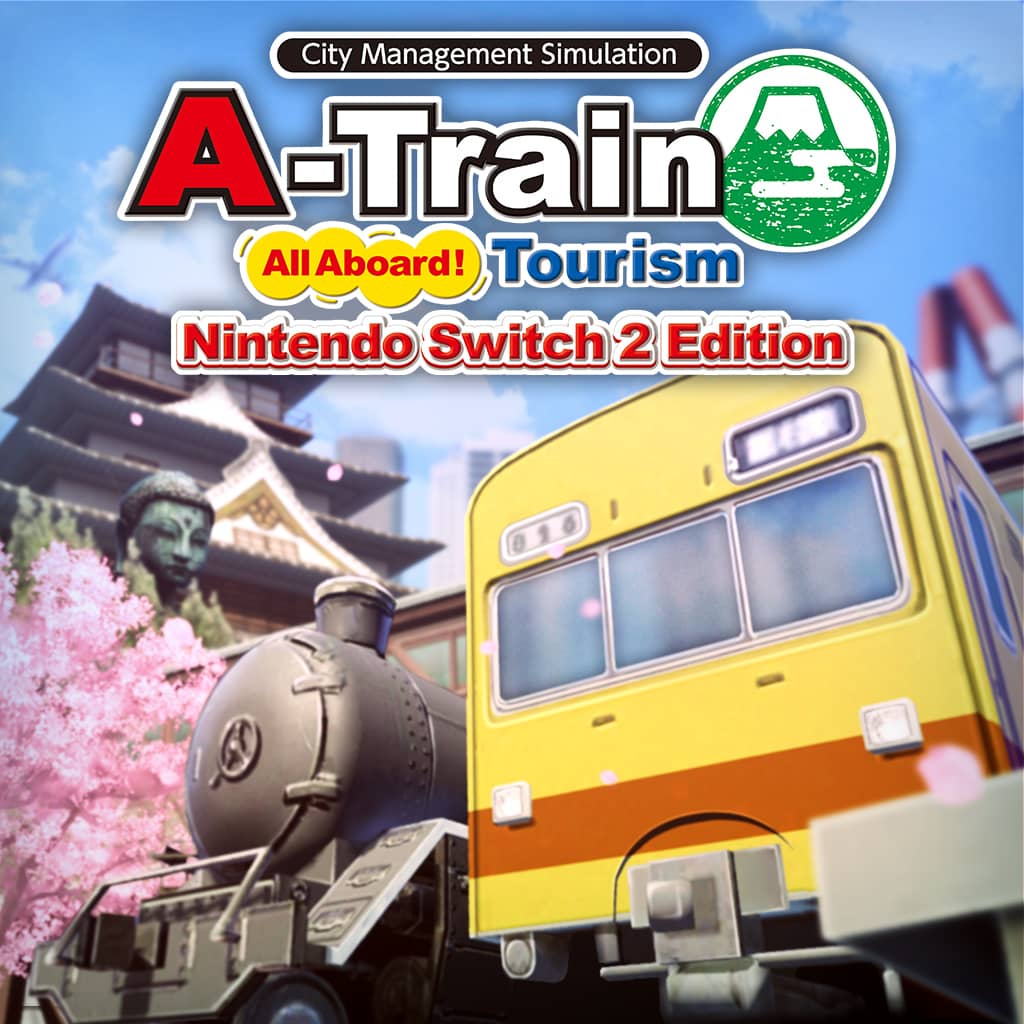
A-Train: All Aboard! Tourism – Nintendo Switch 2 Edition is the latest iteration of a venerable simulation franchise that has spent decades exploring the intricacies of urban planning, transportation networks, and economic growth. On Nintendo’s newest hardware, this edition aims to marry the depth and systemic complexity of the series with new levels of graphical fidelity, interface flexibility, and expanded transportation options. The result is a simulation that feels both familiar to long-time fans and more approachable than ever before—without relinquishing the strategic depth that defines the series.
For players seeking a thoughtful, long-form strategy experience where progress is measured in carefully balanced transportation networks, economic throughput, and urban growth, A-Train delivers. It does not rush; it develops.
First Impressions: Power, Clarity, and Presence
The most immediate impact of the Nintendo Switch 2 Edition enhancements is visual and operational. Improved graphics and smoother frame rates lend a newfound clarity to the game’s sprawling tile-based environments. Terrain variation, cityscapes, and transit connections are now rendered with a level of polish that makes it easier to read and respond to systemic feedback. Whether in dockside industrial zones or dense urban cores, the visual upgrades make early recognition of patterns and problems more intuitive.
Another welcome addition is native support for mouse input, in combination with traditional Joy-Con controls. This hybrid approach suits the genre exceptionally well: planning and placement benefit from pointer precision, while movement and macro navigation function comfortably via controllers. Combined with the larger and more stable screen real estate of the Nintendo Switch 2, this results in an interface that rarely feels constrained or contorted.
Auto-save and Game Chat integration are pragmatic quality-of-life improvements. They reduce the friction of long-session play and make collaborative discussion (or broadcasting progress) more seamless.
Core Design and Strategic Depth
At its foundation, A-Train remains a transportation and urban management simulator. The core loop involves constructing transport infrastructure—starting with railways, stations, and vehicles—and then balancing that with the demands of land development, tourism inflows, zoning, and economic sustainability.
Where many modern simulation games simplify transport mechanics to streamline accessibility, A-Train embraces complexity. Train timetables, vehicle types, depot placement, and connection angles are all variables with tangible consequences. Every new line introduces both opportunity and obligation: more passengers, more scheduled obligations, and more systemic load. It is not simply about laying down rail; it is about ensuring that each segment contributes positively to throughput and growth.
Tourism plays a central role in this edition, and its integration is more than cosmetic. Tourist destinations create dynamic fluctuations in demand, and they require careful coordination between transport and ancillary infrastructure—hotels, parking, local transit, and service nodes. This adds a layered economic texture that separates A-Train from purely commuter-focused simulators.
Transportation Systems: Precision and Observation
Transportation in A-Train is not merely about connection; it is about rhythm and throughput. Trains must be placed with an understanding of trajectory, gradient, station placement, and time cost. Trains that idle too long at stations reduce overall network efficiency. Excessive overlap of routes can create congestion that echoes across the network.
The new mode allowing placement of numerous trains and vehicles is a powerful expansion of strategic options. Planners can saturate critical lines, design express services, and tailor routing to peak tourism seasons. This becomes particularly satisfying in larger maps, where multiple focal points require orchestration rather than simple settlement servicing.
The Nintendo Switch 2 Edition’s auto-save encourages experimentation. Early in the franchise’s history, simulation games of this scale were unforgiving: a single misplaced track could cascade into hours of systemic imbalance. The convenience of unobtrusive persistence allows players to test hypotheses—add a line here, reroute a terminus there—without crippling penalty.
Urban Growth and Economic Interdependence
A-Train understands that no transportation system exists in isolation. Its economic simulation links transport efficiency to residential growth, commercial development, and tourism investment. As transportation speeds increase and connectivity expands, adjacent zones become more desirable for settlement and investment.
Yet this is not linear progression. Tourism booms can strain local infrastructure, residential demand can outpace supply, and industrial output can overwhelm transport arteries unless proactive planning is implemented. This tension between growth and capacity is the engine of sustained engagement.
Monitoring these multifaceted relationships—population demographics, timetables, tourism flows, and industrial throughput—can be daunting at first. The user interface, aided by the Switch 2’s enhanced processing, visual clarity, and mouse support, helps by providing layered information that is both navigable and actionable. Economic indicators, transport loads, and systemic alerts can be overlaid on the map, allowing players to act with precision rather than guesswork.
Pacing and Accessibility
A-Train is not an autofocus experience. Its pacing is deliberate: early stages encourage foundational understanding, midgame challenges stabilise growth, and later phases confront players with systemic bottlenecks that can reverberate without swift action. This pacing is a double-edged sword.
For players who enjoy deep strategic engagement and long-term planning, it is ideal. Each session feels purposeful, and there is a visceral satisfaction in witnessing a well-balanced network hum with efficiency.
However, for newcomers or players accustomed to quicker loops, the learning curve remains non-trivial. Tutorial systems are helpful but not overbearing, leaving players responsible for exploration and mastery. This design respects player agency but may intimidate those expecting more guided progression.
Visual and Audio Presentation
Graphically, A-Train’s enhanced edition improves readability and aesthetic coherence. Cities feel more alive, terrain feels more legible, and transit lines are easier to follow visually. The improved frame rate contributes directly to comfort during extended play—something that cannot be understated in games that invite hours of planning and adjustment.
Audio design is utilitarian. Ambient urban noise, vehicle sounds, and interface clicks provide feedback without overdosing on character. Music reinforces pacing—gentle and supportive rather than intrusive.
In a game where sustained attention matters, this restraint works well; it complements rather than distracts from strategic focus.
Final Verdict
A-Train: All Aboard! Tourism – Nintendo Switch 2 Edition is one of the most complete, cohesive transportation simulations available on a handheld-capable platform. It marries systemic depth with accessibility improvements that make the franchise’s ambition approachable without diluting complexity. The Nintendo Switch 2 Edition’s enhancements—mouse support, expanded vehicle placement, improved graphics, and auto-save—elevate the experience meaningfully and make long-form play comfortable.
This is not a game for every player. Its deliberate pacing, layered systems, and requirement for sustained engagement position it for strategy enthusiasts rather than casual commuters of gaming. Yet for players willing to invest time understanding its networks and economic rhythms, it provides a deeply rewarding simulation that blends transport management, urban evolution, and tourism economics with genuinely emergent outcomes.