Survival isn’t about zombies. It’s about remembering your medication.
There are countless survival games built around apocalypses, alien invasions, and radioactive wastelands.
Yayos, developed by Pigeon-G, takes a far more terrifying approach:
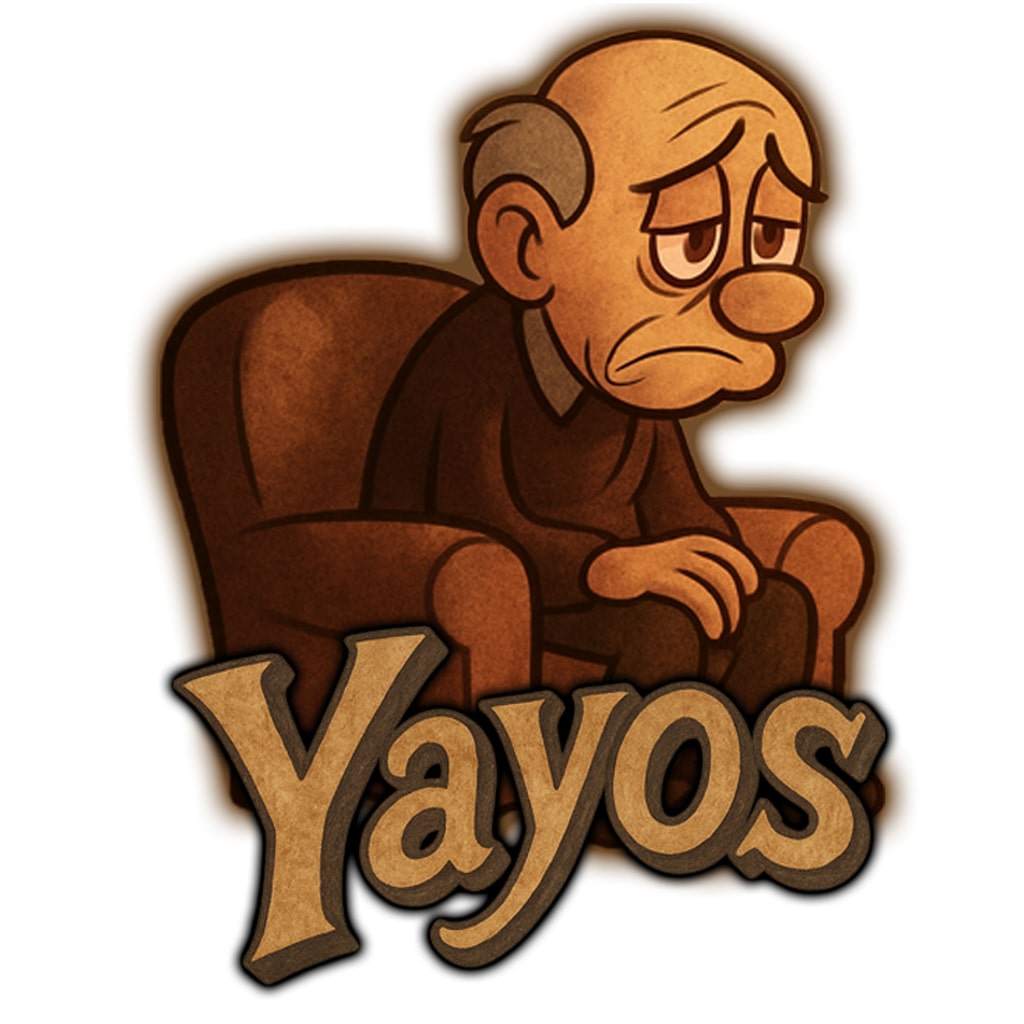
You’re an old man.
And everyday life is trying to kill you.
After launching in Early Access on January 9, 2026, the full PC version officially released on January 20, 2026. The PlayStation 5 version followed on February 13, 2026, bringing its chaotic “grandpa survival” concept to a wider audience. A Nintendo Switch release is expected in March.
At £9.79, Yayos positions itself as a comedic life-sim with survival elements — but beneath the slapstick humour lies a surprisingly tense management game about time, routine, and the fragile balancing act of ageing.
The Grandpa Survival Loop
In Yayos, you play as a lovable but fragile elderly man attempting to survive each day in a suburban neighborhood.
There are no monsters.
No boss fights.
Just:
- Hunger
- Energy
- Mood
- Medication timers
- Financial instability
- The constant threat of exhaustion
Every day is a new survival attempt. You wake up, assess your needs, plan your routine, and try not to collapse before sunset.
Forget your medication? Health plummets.
Skip meals? Energy crashes.
Overexert yourself? Nap time becomes mandatory.
And if you push too hard — well, that’s a run over.
This is survival stripped of spectacle. The enemy isn’t chaos. It’s mismanagement.
Planning as Gameplay
The core tension in Yayos comes from routine planning.
You need groceries — but walking to the store drains energy.
You need money — but gambling could wipe out your savings.
You need happiness — but watching TV wastes valuable daylight.
Each decision feels small.
But together they determine whether you make it to tomorrow.
There’s a fascinating quiet anxiety here. The game forces you to think ahead:
- Do I buy extra food now, or risk a midweek trip?
- Do I gamble for quick happiness?
- Do I nap early and sacrifice productivity?
It becomes clear quickly: this is not about optimization.
It’s about compromise.
Medication: The Ticking Clock
Perhaps the most clever mechanic is the medication timer.
Throughout the day, alarms remind you to take pills. Miss the window, and your health begins to decline.
The system adds a layer of real-time tension. You might be mid-shopping trip when the alarm hits.
Do you rush home?
Do you hope you’ll survive a few minutes late?
That tension transforms mundane tasks into high-stakes moments.
And it’s oddly effective.
Retirement Vices
Yayos doesn’t shy away from humor.
The game features “retirement vices” that boost happiness but risk long-term stability:
- Slot machines at the local bar
- Watching daytime TV
- Listening to nostalgic radio
The slot machines are particularly dangerous. Win big, and you feel invincible.
Lose, and you’re suddenly budgeting for canned soup.
These systems prevent the survival loop from becoming sterile. They inject temptation into what could otherwise feel purely mechanical.
Grandpa Upgrades
Progression comes through purchasing upgrades:
- Faster walkers
- Higher-capacity shopping carts
- Home improvements
These upgrades meaningfully alter pacing. A better walker reduces travel fatigue. A larger cart minimizes grocery trips.
They feel earned.
Not flashy — but practical.
And practicality is everything in Yayos.
Chaotic Co-Op
The surprise standout feature is online co-op.
Playing solo is tense and introspective.
Playing co-op is controlled chaos.
You and a friend must coordinate daily tasks. One shops while the other cooks. One cleans while the other monitors medication timers.
Or you sabotage each other.
Because yes — you can absolutely gamble away the household savings while your partner tries to budget responsibly.
The co-op transforms Yayos from a quiet management sim into a hilarious domestic survival sandbox.
It’s not mechanically deep, but it’s socially chaotic in the best way.
Tone & Atmosphere
Despite its survival framing, Yayos maintains a cozy suburban aesthetic.
Soft color palettes.
Friendly neighbors.
Gentle background music.
There’s no grim darkness.
No cynicism.
Instead, the humor carries a slightly irreverent but affectionate tone. It pokes fun at aging without feeling cruel.
The neighborhood feels lived-in. You can wander, chat, and exist at your own pace — assuming you’ve balanced your stats correctly.
Where It Stumbles
For all its charm, Yayos does show its indie limitations.
The task variety can become repetitive after several in-game weeks. The core loop — shop, cook, clean, medicate — doesn’t evolve dramatically over time.
There are no major narrative arcs or story developments. While that keeps sessions accessible, it also limits long-term depth.
The UI, while functional, occasionally feels clunky during high-pressure moments — especially when juggling medication timers and shopping simultaneously.
And although co-op adds chaos, it doesn’t introduce new mechanics — just shared responsibility.
Still, at its $12.99 price point, expectations should remain grounded.
Platform Performance
On PC, the game runs smoothly with minimal load times and stable performance.
The PlayStation 5 version performs equally well, with responsive controls and stable framerates. It is not a graphical showcase, but it doesn’t need to be.
A Nintendo Switch version is scheduled for late March 2026. Given the stylized visuals and modest technical demands, performance concerns should be minimal.
Important Distinction
Despite the name, Yayos has nothing to do with the 2005 mobile title G-Unit: Free Yayo. This is purely a suburban grandpa survival simulator — not a hip-hop tie-in.
The name overlap is coincidental, not thematic.
Final Verdict
Yayos is one of the most creatively absurd survival concepts of 2026.
But beneath the humor lies something surprisingly thoughtful.
It turns everyday routine into mechanical tension.
It makes grocery shopping stressful.
It makes medication alarms dramatic.
It makes slot machines dangerous.
It isn’t deep in a traditional sense.
It doesn’t reinvent life simulation.
But it commits fully to its concept — and that commitment carries it far.
Solo, it’s quietly tense.
In co-op, it’s hilariously chaotic.
For players looking for something genuinely different — a survival game without zombies, but with prescription schedules — Yayos is a charming, oddly compelling experiment.