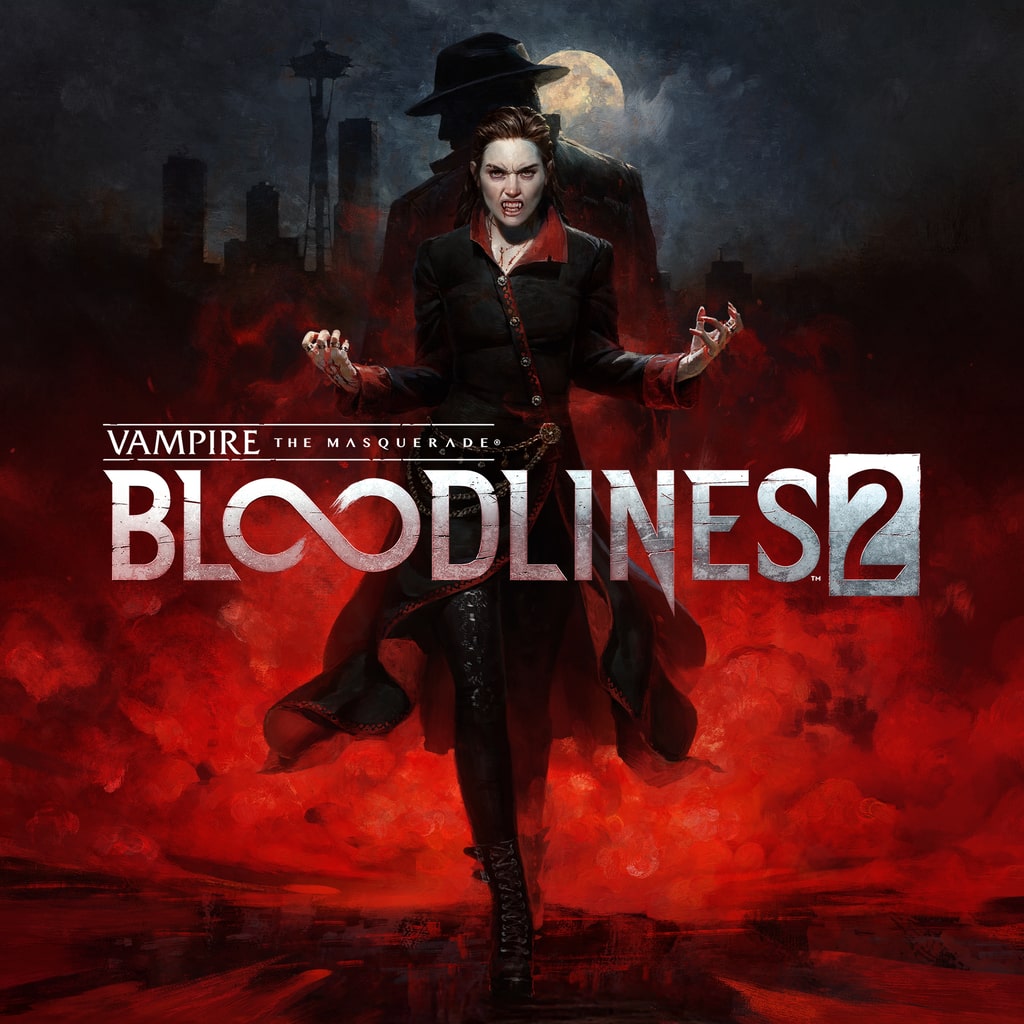
From the moment you awaken in the snow‑bound streets of Seattle, Bloodlines 2 casts itself as a dark, bruising descent into vampiric politics, power and betrayal. You play Phyre, an elder vampire thrust into the machinations of rival factions, the Camarilla and Anarchs, amidst a secret war for control of the night. The original cult‑classic Bloodlines delivered its charm through role‑playing freedom, social stealth and hidden systems; this sequel instead opts for a tighter narrative, slicker presentation—and a more action‑oriented gameplay loop.
Story & Setting
The world here is rich in atmosphere. The developers have done a strong job of building mood: neon reflections on icy sidewalks, quiet clubs where whispered deals take place, brutal rooftop fights in the cold night air. The voice acting is excellent, and characters such as Fabian (your dark, cynical guide) and the wider cast bring the gothic intrigue to life. There are genuine moments of drama, manipulation and horror that pay tribute to the lore of the Vampire: The Masquerade universe.
Where it falters is in the promise of scale and player choice. The narrative often steers you down a confined path, the world eventually feels more constrained than expansive, and some flashback segments (where you play another character) sap momentum rather than enhance it. The feeling of having real power—of being a vampire shaping fate—is muted. The sequel wants to do big things, but at times it settles for smaller ones.
Gameplay & Mechanics
Here, Bloodlines 2 takes a different tack from the first game: you’re an elder from the start, with vampiric abilities, augmented traversal, and combat that mixes melee, discipline powers (telekinesis, shadow leaps) and traditional brawling. The rooftop glides are thrilling, the sense of descending into darkness and leaping across neon rooftops circles back to the vampire fantasy.
But there are notable trade‐offs. Many systems you’d expect in an RPG—character creation, deep stats, inventory complexity, hacking or lock‑picking minigames—are either pared down or removed entirely. Choices in dialogue often feel like tone options more than meaningful branches. Side missions tend to repeat similar beats: kill a rival, fetch something, infiltrate a club. Combat is serviceable, but lacks the variety and polish one hopes for in a grown‑up action‑RPG. Some fights feel repetitive; the progression curve peters out once your initial set of powers are unlocked.
Still, for what it aims to be—a narrative vampiric experience with action leanings—it accomplishes a fair amount. The feel of movement and power, the stealth bursts, the feeding mechanics: they all evoke stealthy predator fantasy. If you don’t mind the lighter RPG systems, there is fun here.
Visuals, Audio & Atmosphere
One of the strongest components of Bloodlines 2 is its aesthetic. The neon‑tinged alleys, the rain‑slicked streets, the grandeur of vampire society submerged beneath corporate and gangster facades—all of it looks compelling. Lighting design is often a highlight, as dark interiors, bars, rooftops and underground halls get a cinematic treatment. The soundtrack and ambient soundscape do a great job of reinforcing the mood: impatient club beats morph into quiet echoes in ancient vampire lairs.
Technically, however, the game has its troubles. Frame‑rate stutters, load‑time spikes and odd NPC behaviours have been documented across platforms. The empty feel of some zones—streets that look busy but seldom breathe—also weakens the illusion. For some players, the immersion frays when the visual polish clashes with mechanical thinness.
Pros & Cons
What works:
- The narrative tone is one of the better modern vampire‑games: serious, stylish, well‑voiced and full of intrigue.
- Movement, traversal and vampiric powers feel satisfying in their mid‑section; climbing, leaping, attacking from the shadows all deliver on fantasy.
- The world aesthetic is compelling: Seattle as a nocturnal hunting ground, the mix of menace and glamour, the vampire underworld.
What doesn’t:
- The RPG depth is significantly reduced compared to expectations: fewer stats, fewer customization options, less branching consequence.
- The side‑missions and open world feel under‑cooked: empty spaces, repetitive objectives, a sense of padding.
- Combat and progression can feel uninspired after the initial novelty wears off.
- Technical issues impact some players’ experience: stutters, bugs and under‑utilised NPC environments weaken immersion.
Audience & Legacy
If you loved the first Bloodlines for its freedom and systems, this sequel will feel like a different beast entirely. It trades breadth for focus, role‑play for narrative and spectacle. It might not satisfy fans longing for deep character‑build systems, but it will appeal to players who are drawn to vampire stories, moody worlds and cinematic action.
As a standalone game, it’s a worthwhile ride for those willing to accept its compromises. As a sequel, it doesn’t quite match the promise of its predecessor—but it may still carve out its own niche.
Overall Verdict
Vampire: The Masquerade – Bloodlines 2 is ambitious and stylish, and for long stretches it delivers the experience of being a potent vampire in a troubled city. The story is strong, the mood seductive, the world visually striking. But the stripped‑down RPG systems, repetitive missions and technical flaws hold it back from greatness. If you go in expecting a full return to the original’s depth you’ll likely be disappointed; if you’re looking for a moody vampire action‑RPG with narrative flair, you’ll find moments to savour. It may not be perfect—but night still has its shadows, and there are thrills in the darkness.