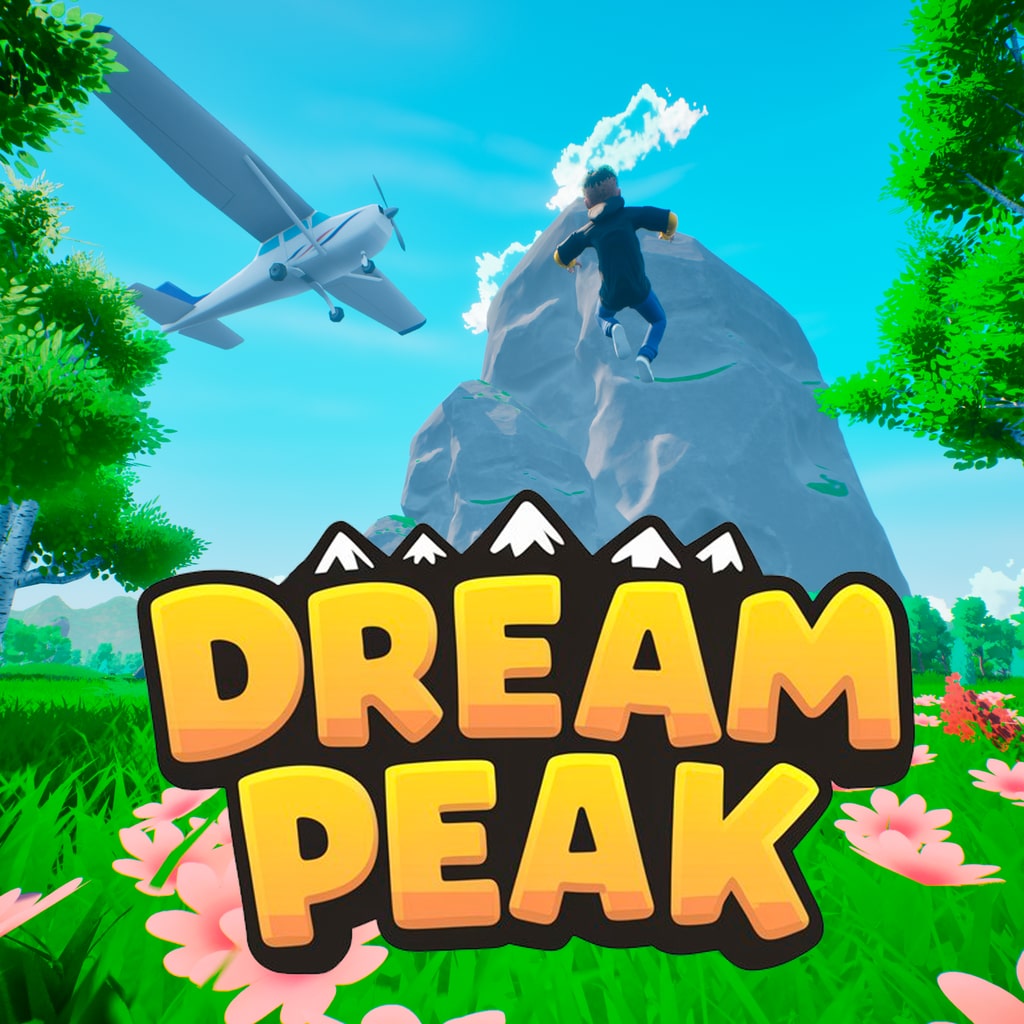
There is a quiet confidence to Dream Peak, a game that refuses to shout for your attention or escalate its stakes through conflict. Developed and published by Jes Games, Dream Peak positions itself as a “warm adventure,” and unlike many games that use that phrase as marketing shorthand, it genuinely earns it. This is a story about courage without combat, progress without destruction, and hope that grows not from triumph over enemies, but from learning how to move forward when you are lost.
In an industry where even the gentlest games often fall back on violence as shorthand for challenge, Dream Peak stands out simply by declining to do so.
A Journey That Begins with Loss of Control
The premise is immediately disarming. You play as a young boy whose journey is interrupted by an emergency landing in the wilderness. There is no villain responsible, no conspiracy lurking in the background—just the sudden, frightening realization that you are alone, far from home, and surrounded by terrain that does not care whether you succeed or fail.
From the opening moments, Dream Peak establishes its tone. The wilderness is beautiful, but indifferent. Mountains loom not as obstacles to be conquered, but as realities to be respected. Rivers rush with power that demands patience rather than force. The game’s central challenge is not survival in the traditional sense, but orientation—finding your place, understanding your surroundings, and choosing the right path forward.
This framing immediately sets Dream Peak apart. The question is never “How do I defeat this?” but “How do I get through this?”
Navigation as the Core Mechanic
At the heart of Dream Peak lies its compass. This is not a minimap replacement or a glowing objective marker. Instead, it functions as a thematic and mechanical anchor, offering subtle guidance rather than explicit direction. You are encouraged to read the environment, notice landmarks, and align your movement with both the compass and your intuition.
This approach fosters a sense of genuine exploration. You are not being shepherded from puzzle to puzzle; you are finding your own way. When you make progress, it feels earned not because the game tested your reflexes, but because it trusted your judgment.
This trust extends throughout the experience. Dream Peak never assumes incompetence. It allows players to wander, to make mistakes, and to correct them without penalty.
Non-Violence as a Design Philosophy
Dream Peak’s commitment to non-violent gameplay is not just a thematic choice—it shapes every system in the game. There are no enemies, no health bars, and no combat mechanics hidden behind metaphor. Instead, challenge comes from terrain, physics, and environmental puzzles.
Gliding on the wind becomes one of the game’s most expressive mechanics. Catching air currents feels freeing, but never reckless. You must read the landscape, understand elevation, and time your movements carefully. It’s a mechanic that reinforces the game’s central message: progress comes from harmony with nature, not dominance over it.
Building bridges and navigating broken paths introduces problem-solving without pressure. These puzzles are friendly by design, encouraging experimentation rather than punishment. Failure doesn’t mean death or reset—it simply means trying a different approach.
Nature as Companion and Challenge
Dream Peak treats nature not as a backdrop, but as an active participant in the journey. Weather shifts subtly, wind patterns influence movement, and terrain changes demand adaptability. Yet the game never feels hostile. Even its most demanding moments carry a sense of fairness.
There’s a palpable respect for the natural world in how these systems interact. Rivers aren’t blocked by artificial gates; they flow where they will. Mountains aren’t climbed through skill trees; they are navigated through observation and patience. The game communicates that the wilderness is not something to be mastered—it is something to be understood.
This philosophy lends Dream Peak a rare emotional texture. You don’t feel embattled against the world. You feel small within it, and that humility becomes the source of the game’s quiet power.
A Story Told Through Movement
Narratively, Dream Peak is restrained. Dialogue is minimal, exposition almost nonexistent. The story unfolds through motion, environment, and atmosphere. Every step forward reinforces the boy’s resilience, every successful crossing a reminder that courage often looks like persistence rather than bravado.
The absence of overt narrative beats allows players to project their own feelings onto the journey. For younger players, it’s a story about bravery and getting home. For older ones, it can read as a metaphor for uncertainty, transition, or personal growth.
This openness is a strength. Dream Peak doesn’t tell you what to feel—it gives you space to feel it.
Presentation: Softness with Purpose
Visually, Dream Peak favors warmth over spectacle. Colors are gentle, lighting is naturalistic, and the world feels inviting even when it is challenging. The art direction supports clarity, ensuring players can read the environment easily without sacrificing beauty.
The audio design is similarly restrained. Ambient sounds—wind through trees, distant water, subtle environmental cues—do more work than any sweeping score could. When music does appear, it’s understated, reinforcing moments of calm or discovery without overwhelming them.
This cohesive presentation strengthens the game’s meditative quality. Dream Peak feels like a place you want to spend time in, not rush through.
Who Dream Peak Is For
Dream Peak will not appeal to players seeking adrenaline or high-stakes drama. Its pacing is deliberate, its challenges gentle, and its rewards emotional rather than mechanical.
But for players who value atmosphere, exploration, and non-violent problem-solving, it offers something increasingly rare. It’s a game that can be enjoyed by children and adults alike, not because it compromises complexity, but because it focuses on universal experiences: getting lost, finding direction, and trusting yourself to keep going.
Final Verdict
Dream Peak is a quietly confident adventure that proves tension does not require conflict, and progress does not require force. By centering navigation, environmental understanding, and gentle puzzle-solving, it creates an experience that feels both calming and meaningful.
It may not linger in your memory through dramatic twists or grand set pieces, but it leaves something more subtle behind: a sense of reassurance. That even when you’re lost, even when the path forward isn’t clear, moving with care and intention is enough.
In a medium often defined by noise, Dream Peak’s softness feels radical.