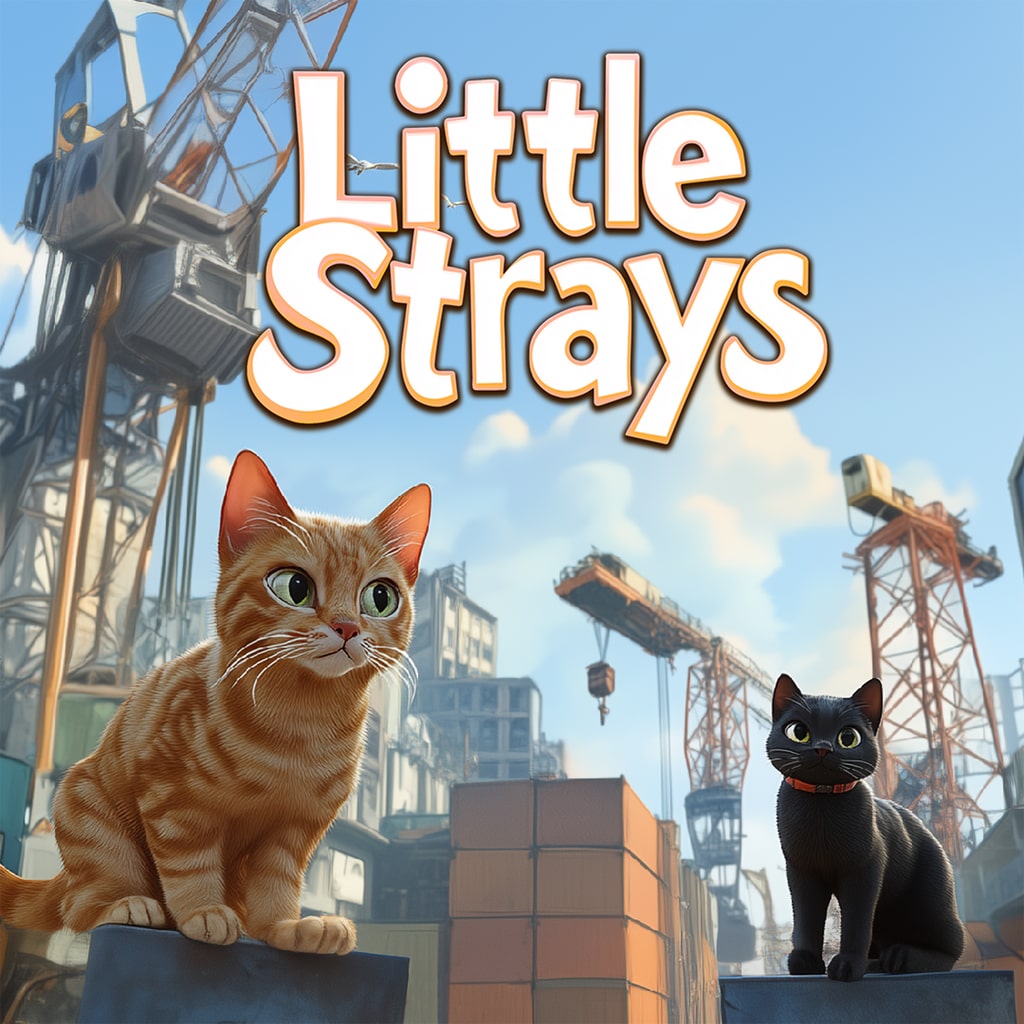
The end of the world has been imagined through countless lenses—soldiers, survivors, robots, even the occasional heroic goose. But Little Strays 2 dares to see the apocalypse from ground level, through the eyes of a small, scrappy cat padding across a city that has forgotten how to breathe. What Commando Panda delivers isn’t just another post-collapse adventure; it’s a tender, quietly tense journey about responsibility, companionship, and the surprisingly heavy weight of a bowl of scavenged tuna.
A City Without Humans
The premise is simple and immediately effective. Humanity is gone—or at least absent—and the ruins have been inherited by insects, feral dogs, and the scattered communities of stray cats trying to survive between them. You play as one such cat, tasked with rescuing lost kittens, delivering food to vulnerable strays, and slowly rebuilding a fragile network of hope.
Where the first Little Strays was more of an exploratory vignette, the sequel expands dramatically in scope. The world is darker, more dangerous, and far more interactive. Streets that once felt like atmospheric backdrops are now layered with patrol routes, environmental puzzles, and hidden stories told through clawed graffiti and overturned bowls. The game’s greatest strength is how naturally it communicates stakes without a single line of spoken dialogue. A flickering streetlamp, a dog’s distant bark, the skitter of insect legs—these are the narrative.
Co-op With Claws
The headline addition is full two-player co-op, and it transforms the experience. Playing solo, Little Strays 2 is a thoughtful stealth adventure; with a partner, it becomes a heartfelt buddy drama where every decision is negotiated with purrs and frantic meows. One player can distract a patrolling dog by knocking over bottles while the other sneaks a kitten through a broken vent. Supplies can be shared, puzzles solved collaboratively, and narrow escapes celebrated like genuine victories.
The co-op design is refreshingly organic. There are no glowing “Player 2 stands here” prompts—just systems that encourage communication. Carrying a heavy food tin slows you down; having a friend scout ahead suddenly feels essential. When one cat is cornered, the other can create a diversion, turning stealth into a tense duet. It’s some of the most charming cooperative play since Untitled Goose Game, but with a softer, more emotional core.
Life as a Small Creature
Mechanically, the game blends light stealth, exploration, and puzzle solving. Cats can squeeze through vents, climb ivy, push objects, and perform short bursts of speed. None of this is revolutionary, yet it’s implemented with tactile care. Jumping onto a wobbling fence has a sense of weight; knocking a can off a ledge produces a satisfyingly clumsy clatter.
Enemies are used sparingly but effectively. The swarm-like insects behave almost like environmental hazards, flooding alleys and forcing you to reroute. The dogs, meanwhile, are genuine threats—fast, unpredictable, and terrifyingly loud compared to your fragile paws. Encounters are less about combat (there is none) and more about reading behavior, learning safe paths, and sometimes making the heartbreaking choice to retreat.
Resource management adds further tension. Food is limited, and every rescued kitten means another mouth to feed at your hideout. Do you use your last sardine to lure a dog away, or save it for the shivering stray near the canal? These small moral calculations give the game unexpected emotional bite.
Seven Chapters of Quiet Dread
The campaign spans seven story-driven levels, each with its own identity. A flooded sewer filled with glowing larvae contrasts sharply with a derelict laboratory where robotic arms still twitch with leftover electricity. None of the areas are huge, but they’re dense with secrets—alternate routes, optional rescues, and scraps of environmental storytelling that hint at what happened to the humans.
Visually, Little Strays 2 punches above its weight. Commando Panda’s art direction mixes painterly lighting with grounded urban decay. Neon reflections shimmer on wet asphalt, while dust floats through abandoned apartments like lazy constellations. The cats themselves are wonderfully animated—ears twitch at distant noises, tails puff in fear, and the simple act of curling up to sleep feels strangely moving.
The ambient soundtrack deserves special mention. Gentle piano themes swell when a kitten is found, while low drones creep in during insect swarms. The audio design does much of the emotional heavy lifting, turning otherwise simple objectives into moments of genuine feeling.
A Few Fleas in the Fur
Not everything lands gracefully. Controls, while generally solid, can feel imprecise during platforming, especially when timing jumps under pressure. Occasional AI quirks cause dogs to spot you through questionable angles, leading to restarts that feel unfair rather than earned.
The game is also on the short side—roughly five hours for a thorough playthrough. Replay value exists in hidden collectibles and alternate co-op approaches, but those hoping for a sprawling adventure may wish for more.
Heart Over Heroics
What lingers after the credits isn’t challenge or spectacle, but mood. Little Strays 2 understands that courage doesn’t always roar; sometimes it meows from a cardboard box. The act of guiding a trembling kitten across a ruined street feels more heroic than toppling any monster tower.
Commando Panda has created a sequel that is gentler yet braver than its predecessor—an apocalypse where kindness is gameplay and survival is communal. It’s not about saving the world; it’s about saving each other, one careful paw step at a time.
Final Score
Little Strays 2 is a beautifully restrained adventure that turns stealth and cooperation into acts of compassion. Minor control hiccups and a brief runtime can’t overshadow its warmth, atmosphere, and inventive co-op design. A quiet triumph that proves even at the end of the world, there’s room for hope—and for cats.