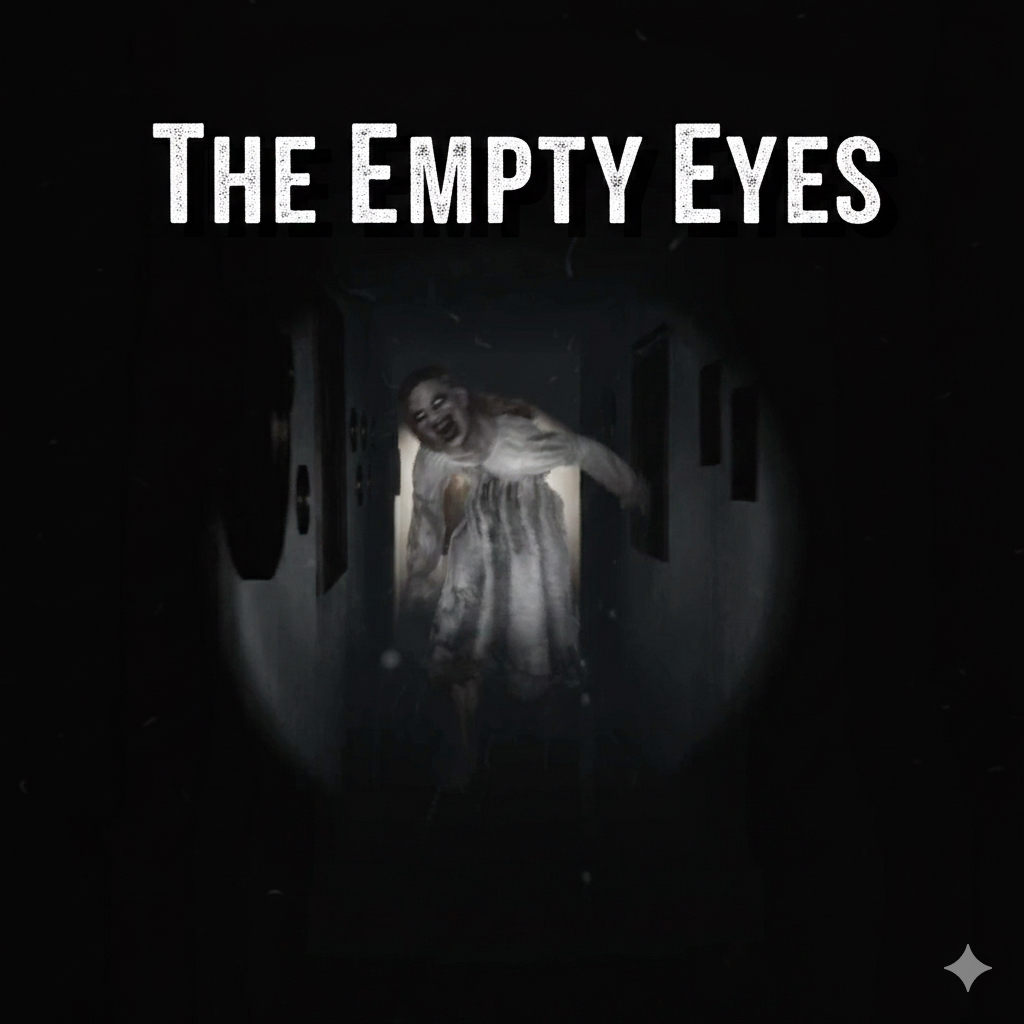
In an era where horror games often resort to loud shocks and overt violence to elicit fear, The Empty Eyes takes a refreshing approach: it terrifies through atmosphere, tension, and psychological manipulation. You play as a private detective investigating the disappearance of a prominent lawyer, only to discover that the investigation is merely the surface of something far more sinister. The game’s brilliance lies in how it blurs reality and imagination, creating a pervasive unease that lingers long after the screen goes dark.
Exploration & Environment
The game’s environment is its core strength. You are confined to a house that feels simultaneously vast and claustrophobic. Endless hallways twist and turn, rooms seem to shift subtly as you explore, and architecture itself becomes a source of anxiety. Every corner hides a subtle detail: a shadow that seems slightly too dark, a painting that feels like it’s following your gaze, or furniture arranged in ways that feel unnatural.
Unlike traditional horror games that rely on sudden scares, The Empty Eyes relies on sustained tension. The house is an entity in itself. Sound design is pivotal here — the faint creak of floorboards, whispers of wind through unseen cracks, and distant, inexplicable noises combine to create a constant, low-level dread. The absence of threat is often more terrifying than its presence.
Every object and document in the environment serves the narrative. Letters, files, photographs, and symbols reward careful observation, turning exploration into an act of deduction. The house tells its story gradually, revealing the lawyer’s dark secrets and the mysterious disappearances that surround him. This environmental storytelling is subtle yet powerful, keeping players invested as they piece together the larger puzzle.
Psychological Horror
The Empty Eyes excels at creating psychological tension. The central mechanic — an unseen entity that watches your every move — ensures that you’re never entirely comfortable. Its presence is never overtly threatening in a physical sense, but the sense of surveillance is oppressive, provoking anxiety and paranoia.
The horror comes from anticipation rather than action. You feel constantly vulnerable, and the game uses this vulnerability to its advantage. Visual distortions, shifting lighting, and moments of disorientation reinforce the sense that the house is alive and aware of your intrusion. These subtle cues make each step forward feel deliberate and weighty.
The game’s pacing contributes to its horror. Unlike many modern titles that rush players through scripted scares, The Empty Eyes allows for moments of silence and stillness. These quiet periods are unnerving, forcing you to confront the weight of solitude and the eerie sensation of being observed.
Narrative & Investigation
The story is revealed gradually through exploration. The lawyer’s role in previous disappearances comes to light through scattered clues, documents, and environmental storytelling. The narrative rewards patience and attention to detail — it isn’t handed to you; you must earn it by observing, investigating, and interpreting subtle hints.
Choices in investigation are mostly interpretive rather than mechanical, but they shape your understanding of the story and heighten the sense of immersion. Every discovery carries weight, pulling you deeper into the house’s mysteries. The psychological impact of uncovering these truths is often more disturbing than any traditional jump scare could achieve.
The progression is deliberate, encouraging players to absorb the atmosphere, scrutinize objects, and anticipate threats. It’s a form of storytelling that trusts the player, rewarding attentiveness with a layered, haunting narrative that lingers.
Visuals & Audio
Graphically, The Empty Eyes leans into dark, gothic aesthetics. Shadows dominate, colors are muted, and subtle distortions give the impression that the house itself is breathing. Rooms seem alive, corridors feel endless, and visual cues constantly unsettle. Disturbing symbolism and surreal architectural choices create a sense of alienation and tension.
Audio design is where the game truly shines. Every creak, whisper, and ambient noise is carefully placed to amplify the sense of unease. There is no need for loud, startling effects; the combination of silence, minimalistic sound, and environmental audio cues is enough to keep players on edge. The soundtrack, when present, is sparse and atmospheric, enhancing immersion without ever distracting from the horror of your surroundings.
Strengths
- Psychological Horror: Thrives on tension, paranoia, and anticipation rather than cheap jump scares.
- Environmental Storytelling: The house and its objects narrate the story, rewarding careful exploration.
- Immersive Atmosphere: Audio and visuals create a suffocating, unsettling world.
- Gradual Narrative Unfolding: The investigation slowly reveals the lawyer’s dark secrets, creating suspense and engagement.
- Subtle but Effective Design: Distortions, lighting, and architectural anomalies contribute to a persistent sense of unease.
Weaknesses
- Slow Pacing: Players expecting constant action may find the deliberate pacing too slow.
- Limited Interactivity: While environmental storytelling is strong, gameplay mechanics are mostly exploration and observation-based.
- Potentially Intense for Sensitive Players: The psychological tension, oppressive atmosphere, and themes of isolation may be too intense for some.
Overall Experience
The Empty Eyes is a triumph of subtle psychological horror. It demonstrates that fear does not need to scream; sometimes the most terrifying games are the ones that whisper, that make you question your surroundings, your senses, and even your sanity. Exploration, environmental storytelling, and the sense of being watched create a layered, immersive experience that rewards patient and observant players.
The combination of hand-crafted, eerie environments, careful sound design, and a progressive, mystery-laden narrative elevates the game beyond traditional horror tropes. It’s not merely a game about surviving a haunted house — it’s about navigating paranoia, piecing together a sinister puzzle, and confronting the invisible yet omnipresent horror of The Empty Eyes.
This is a game for fans of slow-burning horror, investigative gameplay, and atmospheric tension. While it may not appeal to players seeking constant action or jump scares, its masterful use of environment, narrative, and psychological stress makes it a standout in modern horror gaming.
Final Verdict
The Empty Eyes delivers a tense, immersive, and psychologically unsettling experience. Its reliance on subtle horror, atmospheric design, and environmental storytelling creates a memorable journey through a house that feels alive and malevolent. Patience and attention to detail are rewarded, making it a must-play for fans of cerebral, atmospheric horror.