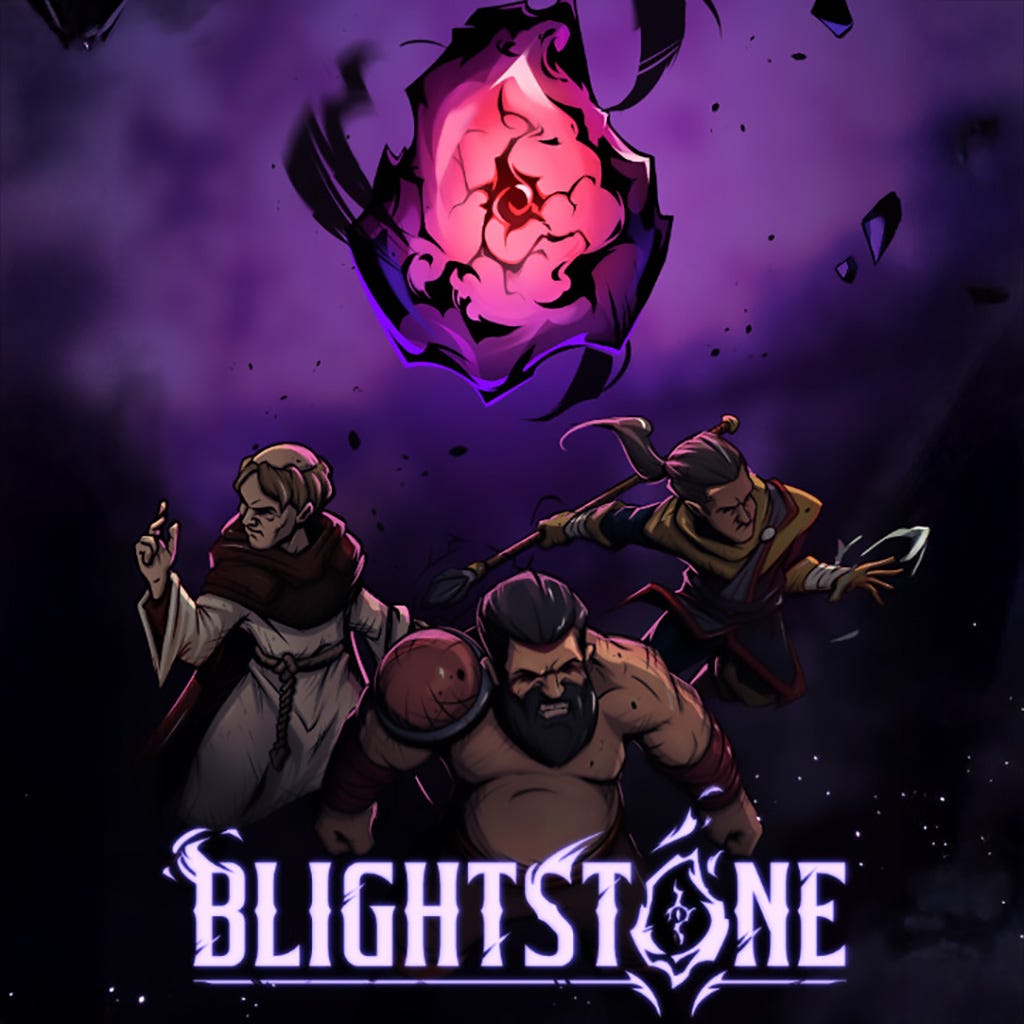
In a genre crowded with sprawling open worlds and cinematic spectacle, Blightstone takes a more focused, refined approach. It doesn’t overwhelm you with filler; instead, it presents a compact but dense world filled with secrets, danger, and nuance. Everything about the game — from its combat to its progression systems — feels intentionally crafted to reward patience, thought, and adaptability.
If you’re looking for another hand‑held, hand‑held, rinse‑and‑repeat action title, this isn’t it. But if you want an experience that challenges you to learn enemy patterns, optimise builds, and face consequences with every misstep … Blightstone delivers.
Let’s dive in.
A World Wounded by Blight
Right from the opening moments, Blightstone sets a tone that’s grim without being grimdark for the sake of it. The world is fractured, its once‑vibrant landscapes now tainted by a creeping corruption that has twisted life and leveled societies. Cities lie in ruin. Enemies roam with eerie persistence. And at the heart of it all is the eponymous blight — a force that not only threatens the world’s flesh, but its very soul.
The narrative isn’t spoon‑fed. There are no voice‑overs narrating every step. Instead, the world itself tells its story through environment, encounters, and written fragments scattered across the land. You’ll interpret much of it yourself, and that’s the point. This isn’t a casual stroll through a fantasy world — it’s a peeling back of layers, where lore and history are rewards for those who explore rather than treadmill through objectives.
Combat That Demands Respect
The backbone of Blightstone is its combat system, and here the game shines. If you’ve ever enjoyed Souls‑like combat — reluctant steps forward, careful strikes, precise timing — you’ll feel right at home. But while many games borrow the vibe of Dark Souls or Sekiro, Blightstone takes inspiration without imitation.
Direction, Timing, and Positioning
Combat isn’t about spamming dodge and attack. It’s about reading enemy tells, managing stamina, and positioning yourself so that every strike counts. Enemies punish sloppiness without feeling unfair — a sign of excellent tuning. A misread step can spell disaster, but the game gives you the tools to learn and improve.
Weapon Variety & Build Freedom
From swift shortswords to crushing great axes, every weapon category feels distinct. Each hits with a satisfying weight, and combos flow in ways that constantly encourage experimentation. You can specialise or hybridise — dual blades for rapid jabs, heavy arms for staggering blows, or a mix that keeps enemies guessing.
What elevates Blightstone above many combat systems is how it handles progression. Weapons don’t just get stat boosts — they grow with you. Some adopt new attacks at higher levels. Others gain unique effects when paired with specific skills or gear. This makes experimentation genuinely rewarding.
Skills, Magic, and Synergies
Magic exists, but it isn’t a catch‑all solution. It complements melee rather than eclipsing it. Spells are powerful but costly; mismanaging mana or spacing can leave you vulnerable. Combining spellcasting with physical combat — perhaps buffing your blade with a fire rune, then following up with a storm spell — feels organic and tactical.
Level Design — Compact, Clever, Connected
Unlike sprawling “open worlds” where six hours of travel yields three minutes of interesting content, Blightstone favours connected, purposeful spaces.
Each region dovetails into the next with visual and thematic continuity. Secrets aren’t hidden behind invisible walls or arbitrary puzzles; they make sense in context. You’ll find shortcuts, secret paths, and optional minibosses that reward exploration rather than pad the playtime.
The world is dangerous, but it’s fair — an important distinction. There’s a rhythm to progression: challenge, reward, and then choice. Do you press forward into unknown territory or return to a safe hub to level up and regear?
Progression & Reward Systems
Progression in Blightstone isn’t binary — it’s incremental, meaningful, and contextual.
Leveling and Attributes
Every victory earns you experience, but levelling up isn’t just a stat bump. You allocate points into attributes that meaningfully shape your playstyle. Want to be a glass‑cannon spellfighter? You can — but expect glass‑like survivability. Want to be an unshakeable tank? That comes with slower mobility. Your choices matter.
Gear and Crafting
Gear isn’t simply “better or worse.” Each piece carries traits that suit particular builds. Crafting allows refinement, but it isn’t a shortcut to raw power. More often than not, it’s about synergy — matching gear to combat roles, tweaking resistances, or optimising attributes for specific encounters.
Boss Progression
Bosses are checkpoints, yes — but they’re also lessons. Each major encounter teaches something new about timing, movement, and strategy. Defeating them grants not just loot, but understanding. And sometimes, that’s the real reward.
Presentation: Grainy, Atmospheric, Intentional
Visually, Blightstone embraces a style that’s both rugged and haunting. Textures aren’t slick or glossy — instead, they lean into earth tones, weathered stone, ruined cities, and scorched landscapes that reflect the narrative’s stakes.
Enemies look lived‑in, as if sculpted from nightmare fragments. They don’t just appear scary — they move with purpose. A hulking brute doesn’t lurch aimlessly; it methodically hunts you. A swift assassin doesn’t dash randomly; it anticipates your movement.
Animation is fluid, with combat flowing smoothly from idle to attack to dodge without jarring transitions. Camera work supports combat rather than complicating it — a design choice that pays dividends in hectic confrontations.
Sound design further seals the atmosphere: sharp clangs of steel, the echo of distant winds in barren halls, and music that swells at key moments without overwhelming. Silence becomes a tool just as much as noise.
Strengths
- Focused, Rewarding Combat: Tough but fair, deep yet intuitive.
- Connected Level Design: Compact, clever regions that reward exploration.
- Rich Progression: Meaningful builds and gear systems with genuine choice.
- Atmospheric Presentation: Art and audio that reinforce tone and danger.
- Rewarding Exploration: Secrets feel earned, not arbitrary.
Weaknesses
- Steep Learning Curve: Beginners may feel overwhelmed early on.
- Pacing Lulls: Mid‑game segments can feel slower between major encounters.
- Accessibility Options: A broader suite of difficulty/customisation options would help a wider audience.
Overall Experience
Blightstone is a game that respects your time, your intelligence, and your desire for meaningful challenge. It doesn’t dazzle with spectacle, but it impresses with depth. Combat isn’t shallow, progression isn’t arbitrary, and exploration isn’t directional.
It’s a game that asks you to learn, adapt, and master. And when you do, the satisfaction is palpable.
This is the kind of action RPG that stays with you — not because of momentary thrills, but because every victory feels hard‑earned and every loss teaches something.
If you appreciate games that challenge without punishing unfairly, that reward patience and tactical thinking, and that build tension with purpose and payoff, Blightstone is a title worth digging into.
Final Verdict
Blightstone is a finely tuned action RPG that blends thrilling combat, atmospheric exploration, and meaningful progression into one of the most compelling experiences in the genre. It’s not an easy game — nor should it be — but for players willing to embrace challenge and strategy, it delivers one of the most satisfying journeys in recent memory.