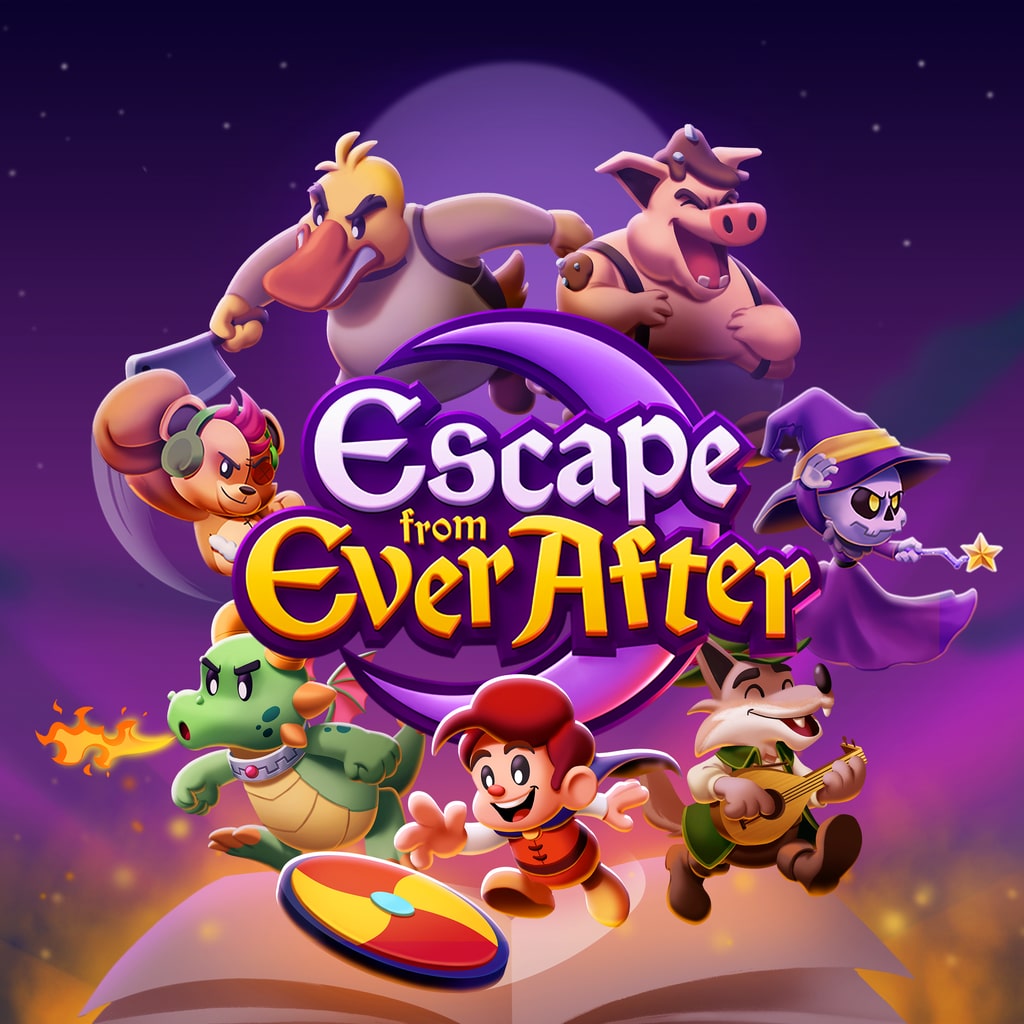
Once upon a time — quite literally — Escape from Ever After invites players into a world where fairy tales never ended and now refuse to let go. The premise is irresistibly intriguing: the classic stories that once thrilled children and adults alike have warped into a surreal, perpetual “Ever After” where characters are trapped in loops of their own narratives, unable to escape their destined fates. As the protagonist — a wanderer drawn into this world by mysterious means — you must help them break free from cycles of repetition, discover hidden truths buried beneath familiar tropes, and ultimately find your way out of a realm that never wanted you to leave.
It’s a concept that both celebrates and subverts familiar storytelling, and while the execution isn’t flawless, the experience is consistently engaging, thoughtful, and emotionally resonant.
Narrative & World Building
Where Escape from Ever After excels most is its storytelling. The developers have crafted a narrative that feels like an interwoven tapestry of familiar fairy‑tale motifs — enchanted forests, cursed castles, whimsical characters — all given unexpected depth and complexity.
What sets the game apart is its meta layer: these aren’t just characters from fairy tales, they are beings painfully aware of their own stories. They recognise curses, patterns, and loops, and they turn those recognitions into conversations. Some plead for liberation, others fight observations with defiance born of centuries stuck in repetitive arcs. These interactions elevate the narrative beyond simple fantasy and into something genuinely reflective about the nature of storytelling itself.
Dialogue is well‑written and frequently witty, with characters that range from melancholic to mischievous, tragic to comedic. The emotional shifts are effective without ever feeling forced, and the game wisely uses silence and atmosphere to let moments breathe. Rather than bombarding the player with exposition, Escape from Ever After reveals its secrets gradually — each journal entry, whispered aside, and interrupted conversation adding layer upon curious layer.
Gameplay & Mechanics
At its core, Escape from Ever After is a hybrid of exploration, narrative choice, and light puzzle solving. There’s no combat to speak of; instead, your interactions with the world are based on curiosity and observation. Players will find themselves:
- Exploring interconnected regions — from dew‑glazed forests to spired castle corridors.
- Solving environmental puzzles that range from logic‑based riddles to perception challenges.
- Interacting with fairy‑tale figures trapped in narrative loops.
- Collecting fragments of stories and rebuilding narrative sequences to uncover hidden truths.
While exploration is freeform, the game cleverly guides you with environmental cues, subtle lighting changes, and character hints — never forcing direction, but gently encouraging forward momentum.
The puzzles strike a smart balance. They’re rarely obtuse — instead leveraging thematic consistency with the world. Solving them feels like unravelling a story rather than jumping through arbitrary hoops. Some puzzles are built around pattern recognition, others require players to interpret character dialogue or piece together narrative fragments to reveal the next step.
While this focus on narrative puzzle design is commendable, it’s worth noting that players seeking mechanical complexity or intense challenge won’t find it here. Puzzles are thoughtfully designed, but they serve the story rather than demanding hardcore strategy or reflex‑based solving.
Level Design & Exploration
The world of Escape from Ever After unfolds in beautifully crafted regions, each with its own aesthetic and emotional tone. Early areas — lush woodlands and sunlit meadows — feel inviting and curious. Later zones — crumbling citadels and moonlit briar paths — evoke mystery and unease.
What’s particularly effective is how these regions intertwine. Paths previously inaccessible become open as you learn new insights, and looping corridors reveal hidden alcoves once narrative conditions are met. This design reinforces the game’s central motif — that the world itself is a story in flux.
The pacing of exploration is thoughtful. Short bouts of traversal are consistently rewarded with discovery, and backtracking — far from feeling tedious — becomes a tool for deeper understanding, as earlier clues often echo into later revelations.
However, Escape from Ever After occasionally falters when exploration slows too much in service of exposition. Extended sequences of dialogue or monologue can interrupt the narrative’s forward momentum, leading to pacing dips that might feel slow for players craving constant interaction.
Visual & Audio Design
Visually, the game is striking. The art direction combines painterly environments with vivid colour palettes that shift dramatically from one realm to another. Each biome feels distinct — from soft, pastel‑lit glades to storm‑tossed crags under violet skies. Character models are expressive, and subtle animation flourishes bring life to both scenery and interaction.
The lighting plays a crucial role in establishing mood. Warm hearthlight invites approach, while shadowed corridors whisper of half‑remembered tales. The visual language of Escape from Ever After constantly reinforces its overarching themes of memory, repetition, and unravelled narratives.
Audio design is equally attentive. The soundtrack blends ethereal motifs with more dramatic orchestral swells, shifting tone to match the emotional cadence of the story. Ambient soundscapes — rustling leaves, distant chimes, soft echoes — enrich the sense of presence without ever overwhelming narrative focus. Voice acting is generally strong, with emotive performances that elevate key interactions and deepen attachment to the cast.
Strengths
Narrative Depth: The game’s storytelling is thoughtful, reflective, and genuinely original — not just retelling fairy tales, but examining the very notion of narrative imprisonment.
Atmospheric World: Stunning environments and layered audio create a world that feels alive, mysterious, and emotionally resonant.
Puzzle Integration: Puzzles are woven into the narrative and world, enhancing immersion rather than feeling like separate game tasks.
Emotional Tone: Characters feel layered and expressive, with dialogue and interactions that range from whimsical to poignant.
Weaknesses
Pacing Fluctuations: Occasional lulls in exploration due to extended narrative sequences can disrupt momentum.
Light Mechanically: Players seeking deep mechanical challenge or action‑oriented gameplay may find the experience too gentle.
Limited Novelty Beyond Narrative: While the storytelling is strong, some players may feel the core mechanics don’t evolve significantly over time.
Overall Experience
Escape from Ever After is a game that succeeds most when it trusts your imagination. It doesn’t hold your hand, doesn’t rush you, and doesn’t simplify its thematic depth. Instead, it invites you to wander, wonder, and unravel a world where every corner feels like a story waiting to be told.
It’s a measured adventure — rich in atmosphere, narrative nuance, and environmental detail — and while its pacing may not suit everyone, its emotional resonance and thoughtful design make it a compelling journey. For players who value story, exploration, and thematic depth, it’s a memorable experience that feels more like reading a story than playing a game.
Final Verdict
Escape from Ever After is a beautifully crafted narrative adventure that reimagines familiar fairy‑tale tropes through a reflective, immersive lens. Its strengths lie in evocative world‑building, clever puzzle integration, and a story that lingers beyond the final scene. While its gentle pacing and light mechanics won’t appeal to all, those who embrace its narrative heart will find something truly special.