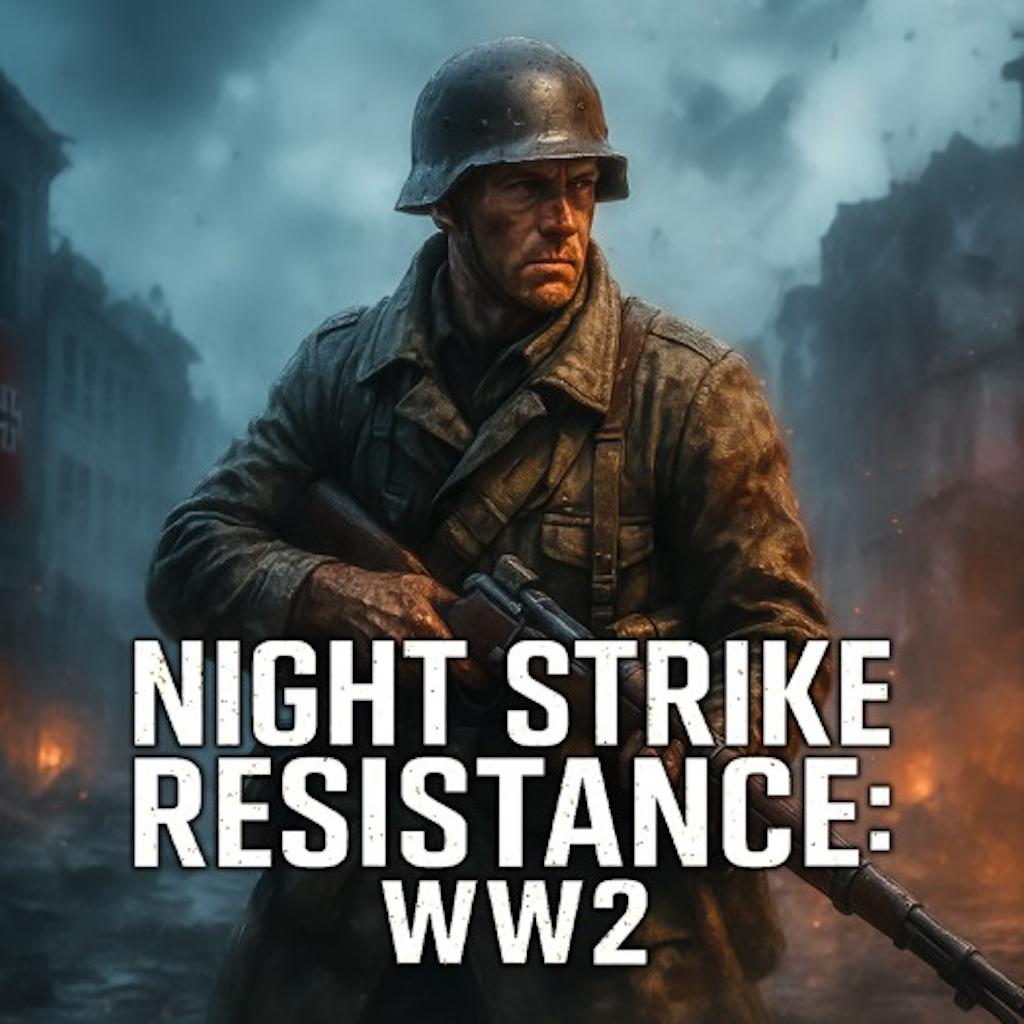
Few eras in gaming history are as mythic as World War II. Its battles, heroes, and tragedies have formed the backbone of countless shooters, strategy titles, and simulations. Yet in a landscape crowded with big-budget set-pieces and cinematic reenactments, Night Strike Resistance: WW2 (NSR: WW2) shoots for something more grounded: a tactical, tension-driven experience that thrusts you deep into the shadows of nocturnal resistance warfare. Developed by Vanguard Forge and released across PC and consoles, this title isn’t about blitzing through hordes of enemies; it’s about careful planning, stealthy execution, and the heavy cost of insurgent life under occupation.
It’s not always perfect — pacing can lag, and visuals are functional rather than stunning — but when Night Strike Resistance: WW2 hits its stride, it delivers a distinctive and compelling take on the WWII genre that’s both thoughtful and emotionally resonant.
A Different Kind of War Story
Rather than placing players in the boots of an elite commando or larger-than-life hero, NSR: WW2 casts you as a member of an occupied European resistance cell. Your objectives revolve around hit-and-run raids, sabotage operations, intelligence gathering, and rescuing captured comrades — all under the cover of darkness. There are no super-soldiers here, just ordinary people with extraordinary courage.
From the outset, the narrative focuses less on sweeping battlefield spectacles and more on the cost of resistance. Allies fear discovery. Resources are scarce. Every decision matters, and every failure comes with heavy consequences. Radio chatter, whispered strategising among patrols, and genuine fear in character voices lend the game a pervasive sense of peril, giving weight to every mission’s outcome.
The campaign weaves a slow-burn story of hope, sacrifice, and the fog of war — not sensationalised heroics, but the gritty reality of irregular fighters against a superior occupying force. It’s a bold narrative choice that pays off emotionally, and it sets NSR: WW2 apart from other WWII shooters that tend to prioritise adrenaline over introspection.
Stealthy Tactics Over Trigger Discipline
Gameplay in Night Strike Resistance: WW2 unfolds with a deliberate tempo. Missions take place in sprawling, semi-open maps where the shadows are your best friend and the enemy’s patrol routes are ever-shifting. The emphasis here is tactical stealth rather than run-and-gun action. Every movement must be weighed against the risk of discovery.
Your toolkit is built accordingly. You slip through tall grass, scale crumbling walls, and use rubble as cover. Melee takedowns, silenced pistols, and improvised explosives are your bread and butter. Once a mission ignites into a firefight, NSR: WW2 reminds you sharply that you’re outgunned; enemies arrive in waves, suppressive fire is deadly, and retreat isn’t a cliché — it’s often the only sensible option.
This is a game of punishment and consequence. Noise attracts foes. Civilians, if spotted, can alert guards. And there’s no regenerative health — wounds linger and can hamper movement. Healing requires medical supplies that are limited, forcing you to contemplate every shot and sprint.
This meticulous balance is the game’s greatest strength. While other WWII titles lean into spectacle, NSR: WW2 revels in suspense. It’s less about mowing down enemies than it is about outthinking them. The satisfaction of slipping past a sentry, disarming guards without alerting the whole outpost, or exfiltrating with stolen intel is deeply rewarding precisely because survival feels earned.
Missions That Reward Strategy
Missions in Night Strike Resistance: WW2 range from sabotage (destroy rail lines, cut power to communication posts) to targeted assassinations and covert rescues behind enemy lines. Success rarely comes from brute force. Instead, each objective rewards players who observe enemy patterns, utilise terrain advantage, and innovate with limited resources.
For example, an early mission sees you infiltrating a heavily fortified facility to plant explosives on a key fuel depot. Guards move in predictable circuits, lights flicker over patrol paths, and dogs sniff the perimeter during scheduled intervals. Here, patience and timing trump speed. Dash at the wrong moment, and you’ll find yourself fighting off reinforcements with limited ammo and no cover.
There’s tension in every shadow. Moments where you freeze in tall grass as enemy flashes sweep past are among the most memorable in the game — immersive, nerve-wracking, and never repetitive.
The AI is competent but not unfair. Enemies communicate via basic signals (calling for backup, investigating noises), and this emergent behaviour makes missions feel dynamic rather than scripted.
Presentation: Functional, Not Flawless
Graphically, Night Strike Resistance: WW2 leans toward practicality over polish. Environments favor gritty realism — dark forests, bombed villages, moonlit rail yards — with a subdued palette that reinforces the nocturnal theme. Character models and animations are serviceable, though not breathtaking. In many cases, the game’s visuals feel like they are more about clarity and tactical readability than about wow-factor aesthetics.
On PC and current consoles, lighting — especially shadows cast by flickering torches, searchlights and moonbeams — is handled well, contributing meaningfully to stealth gameplay. On older consoles, however, draw distances and texture resolution can feel muted, and frame stability occasionally dips during intense action.
Audio design is a highlight. Footsteps on gravel, the distant rumble of tanks, hushed exchanges between guards, the pop of a suppressed pistol — these sounds immerse you in a wartime environment without unnecessary embellishment. A minimalist score underscores tension, rising during firefights and receding into ambient quiet as you sneak through enemy territory.
Accessibility and Difficulty
Night Strike Resistance’s deliberate pacing may surprise players accustomed to faster shooters. Difficulty options range from forgiving to punishing, providing a spectrum for those seeking a methodical stealth experience or a more forgiving introduction to tactical play. The lack of a regenerating health bar might intimidate some players initially, but it reinforces the game’s core ethos: every resource matters.
Tutorials are clear without being intrusive, introducing mechanics gradually so that players aren’t overwhelmed. The game’s checkpoint system is generous enough that failed missions aren’t frustrating reruns, but rather learning opportunities.
Replayability and Multiplayer
While the single-player campaign forms the narrative backbone, Night Strike Resistance: WW2 also offers challenge missions and procedurally varied objectives that encourage replay. Alternate routes, variable patrols, and mission modifiers increase longevity for players who relish optimisation and mastery.
A co-operative multiplayer mode lets two players tackle missions together, working in tandem to plan alternative routes, set ambushes, and extract objectives. This mode elevates tension in fascinating ways: when both players must synchronise movements and choices, the game transforms from a solitary test of patience into a social dance of tactics and shared risk.
Competitive multiplayer isn’t present — a design choice that aligns with the game’s tone, keeping the focus on cooperation and strategic resistance rather than deathmatch skirmishes.
Where It Falters
No game is perfect, and Night Strike Resistance: WW2 has its blemishes. A few missions lean too heavily on trial-and-error stealth routes that can border on frustration. Enemy detection sometimes feels inconsistent at the margins of vision cones. The graphical presentation, while functional, may feel underwhelming for players expecting cinematic fidelity.
Some players might also find the narrative’s slow burn and tactical focus less compelling than action-oriented WWII titles. If you prefer rapid pacing and dramatic set-pieces, NSR: WW2’s methodical rhythm may feel too deliberate.
Verdict
Night Strike Resistance: WW2 is a bold reinterpretation of WWII combat that trades explosive spectacle for quiet intensity, strategic depth, and a tangible sense of danger. Its focus on stealth, resource management, and emotionally grounded resistance storytelling makes it a standout for players craving a thoughtful alternative to run-and-gun shooters.
While not without flaws — pacing issues, uneven visuals, and occasional detection quirks — the core experience is gripping, challenging, and deeply satisfying when victory comes not through firepower, but through cunning.