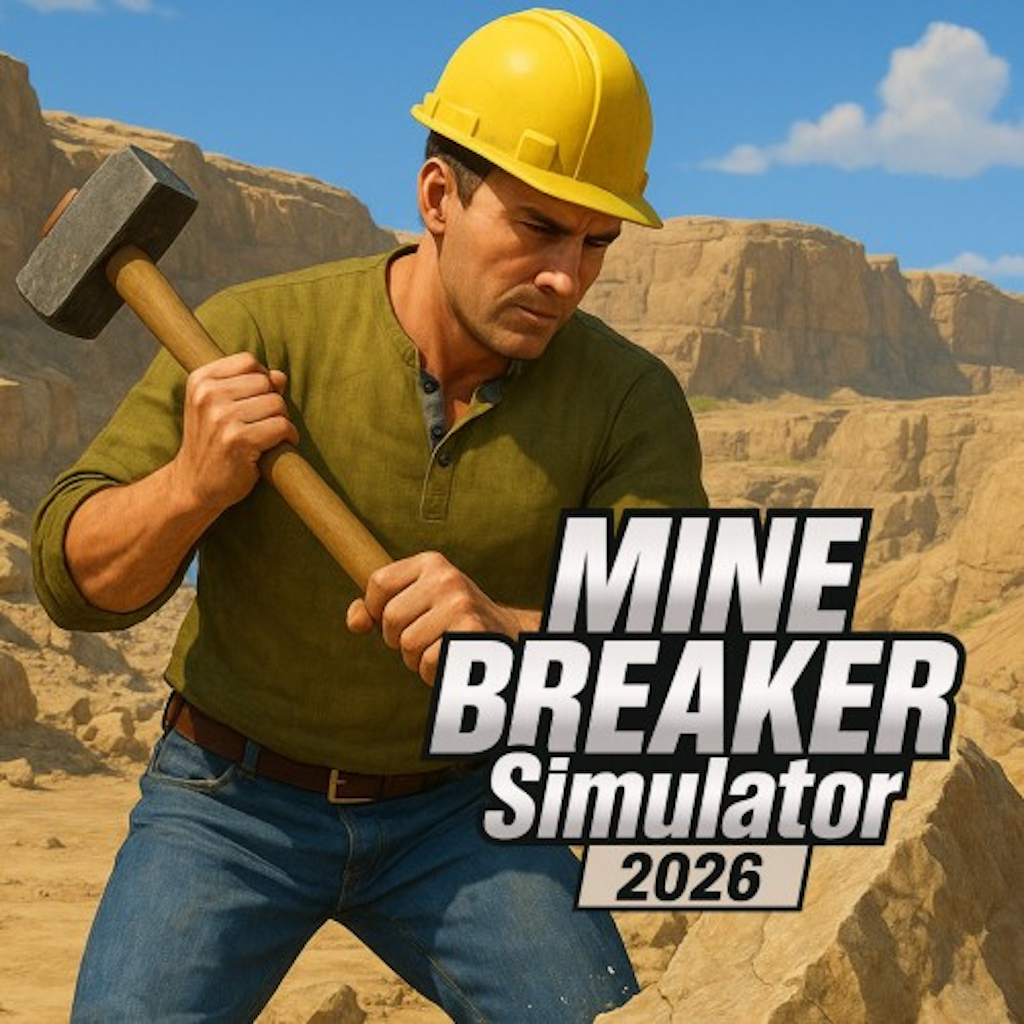
When you strip a game down to its core elements — exploration, resource management, risk versus reward — Mine Breaker Simulator 2026 hits a riveting sweet spot. At first glance it may seem like another entry in the increasingly crowded mining and base-builder genre, but beneath its surface lies a thoughtful design that blends tactile mining mechanics with strategic planning, emergent challenges, and a surprising sense of tension and accomplishment.
Minecraft may have made blocky mining ubiquitous, but Mine Breaker Simulator 2026 takes those familiar elements and crafts them into a distinctly shaped experience: one that rewards curiosity, strategic thinking, and precise execution. Whether you’re tunnelling through rock, optimising your supply chain, or dodging subterranean hazards, this simulator turns the act of extraction into something unexpectedly compelling.
Dig, Discover, Decide — The Core Loop
At its foundation, Mine Breaker Simulator 2026 revolves around excavation and discovery. You begin with a modest set of tools and a barely marked patch of land that hides valuable resources, geological secrets, and unexpected dangers. The core loop — mine, gather, upgrade, expand — is familiar, but the way the game scaffolds challenges and progression keeps it fresh.
Each dig site hides layers of complexity. Early sessions ease you in with soft soil and safe mineral nodes, but deeper strata are more volatile, requiring better equipment, protective gear, and careful planning. Stones yield iron and coal, deeper veins produce rare metals and gems, and lurking hazards — like unstable fault lines and gas pockets — demand cautious exploration.
Because the terrain is procedurally generated, every new location feels distinct. You never quite know what composition of reward and risk awaits beneath your next tunnel. This procedural element ensures high replay value: every excavation feels like its own adventure rather than a rote sequence of tasks.
Complex Tools and Thoughtful Progression
What separates Mine Breaker Simulator 2026 from generic dig-and-collect fare is its focus on tool mastery and progression. Your starter pickaxe and jackhammer may be fine for surface ore, but as you delve deeper you’ll quickly need advanced drills, reinforced supports, and specialised scanners that can detect resource densities or hazard locations before you expose them.
Upgrade pathways are satisfying and meaningful. Do you invest in a seismic scanner that helps avoid dangerous collapses? Or do you fund deeper fuel reserves for your drilling rig so you can reach rare metals faster? Every upgrade has trade-offs, and the game forces you to weigh immediate needs against long-term ambitions.
Progression isn’t just linear resource grinding, either. Skill trees for your crew — miners, engineers, and support techs — add layers of strategy. Hiring and developing personnel changes how effectively you traverse increasingly hostile depths. Do you prioritise a nimble team that minimises collapses or a heavy-duty crew that churns through ore faster? Choices matter, and they shape your playstyle.
Strategic Depth Meets Emergent Challenges
This is where Mine Breaker Simulator 2026 shines brightest: in its blend of strategic planning and emergent opposition. Mining itself remains tactile and satisfying, but throw in cave-ins, toxic gas pockets, and subterranean creatures that inhabit certain biomes, and you suddenly find yourself juggling more than simple extraction.
Cave-ins are especially memorable. One wrong excavation — or an overly ambitious tunnel without enough structural supports — can lead to cascading collapses, forcing you to rethink routes or evacuate crew members before it’s too late. These moments keep tension high and ensure the game never feels like a simple rhythm of clicks and upgrades.
Add in environmental hazards like underground rivers or pockets of methane that can ignite without warning, and Mine Breaker Simulator 2026 becomes more than a mining game — it’s a tactical survival experience in subterranean environments. The deeper you go, the more demanding these challenges become, and managing them becomes as important as harvesting resources.
Visuals, Audio and Atmospheric Design
Visually, Mine Breaker Simulator 2026 balances clarity with personality. While it isn’t pushing cutting-edge realism, the game’s aesthetic serves its purpose admirably: rock compositions and resource veins are distinct; environmental hazards are clearly distinguishable; and tool effects — sparks, drilling debris, and seismic tremors — feel weighty and satisfying.
Animation and character feedback are solid. Miners wield tools with believable motion, crew members respond to hazards with urgency, and environmental cues — like dust settling or rock cracks forming — reinforce the sense of immersion.
Audio design further elevates the experience. Ambient subterranean rumblings, the groan of drilling rigs, and the occasional distant thump of collapsing rock create an audio backdrop that’s tense without being oppressive. Sound cues are also functional, providing auditory feedback that helps guide decision-making — especially when visibility is low and hazards lurk in the shadows.
User Experience and Accessibility
Playability is one of Mine Breaker Simulator 2026’s strengths. Controls are intuitive, menus are clear, and tool interactions feel responsive. A robust tutorial system eases new players into core systems without overwhelming them, while advanced settings let experienced players fine-tune challenge and complexity.
That said, there is a learning curve, and players unfamiliar with mining sims or layered strategy titles might need time to grasp hazard management and crew optimisation. However, this isn’t a barrier so much as a rite of passage — once concepts click, gameplay becomes more rewarding and rich.
Multiplayer systems — cooperative mining expeditions — also add depth. Working with friends to tackle deeper strata, coordinate roles, and manage hazards together turns a satisfying solo experience into a rewarding shared one. Communication and teamwork become key, especially in tougher zones.
A Few Rough Edges Beneath the Surface
No game is without areas for improvement, and even one as accomplished as Mine Breaker Simulator 2026 has a few rough patches. Some late-game progression loops can feel grindy, particularly when rare minerals are gated behind layers of hazards that become repetitive without much narrative incentive to push further.
Occasionally, procedural generation produces layouts that feel unfairly punishing — long stretches of dead rock or tightly confined pockets with minimal strategic choice. These instances are relatively rare but can be discouraging when they occur.
User interface elements could also be sharper. While functional, inventory and crew management menus feel a bit cluttered once you have a large team and many tools. A more streamlined interface for late-stage play sessions could improve flow.
Final Verdict
Mine Breaker Simulator 2026 delivers a deeply engaging blend of tactile mining mechanics, thoughtful strategic progression, and emergent challenges that keep you invested from first dig to deepest strata. Its world may be underground, but the thrills are sky-high — from the satisfaction of uncovering mineral veins to the nail-biting tension of dodging hazards and balancing crew efficiency with risk.