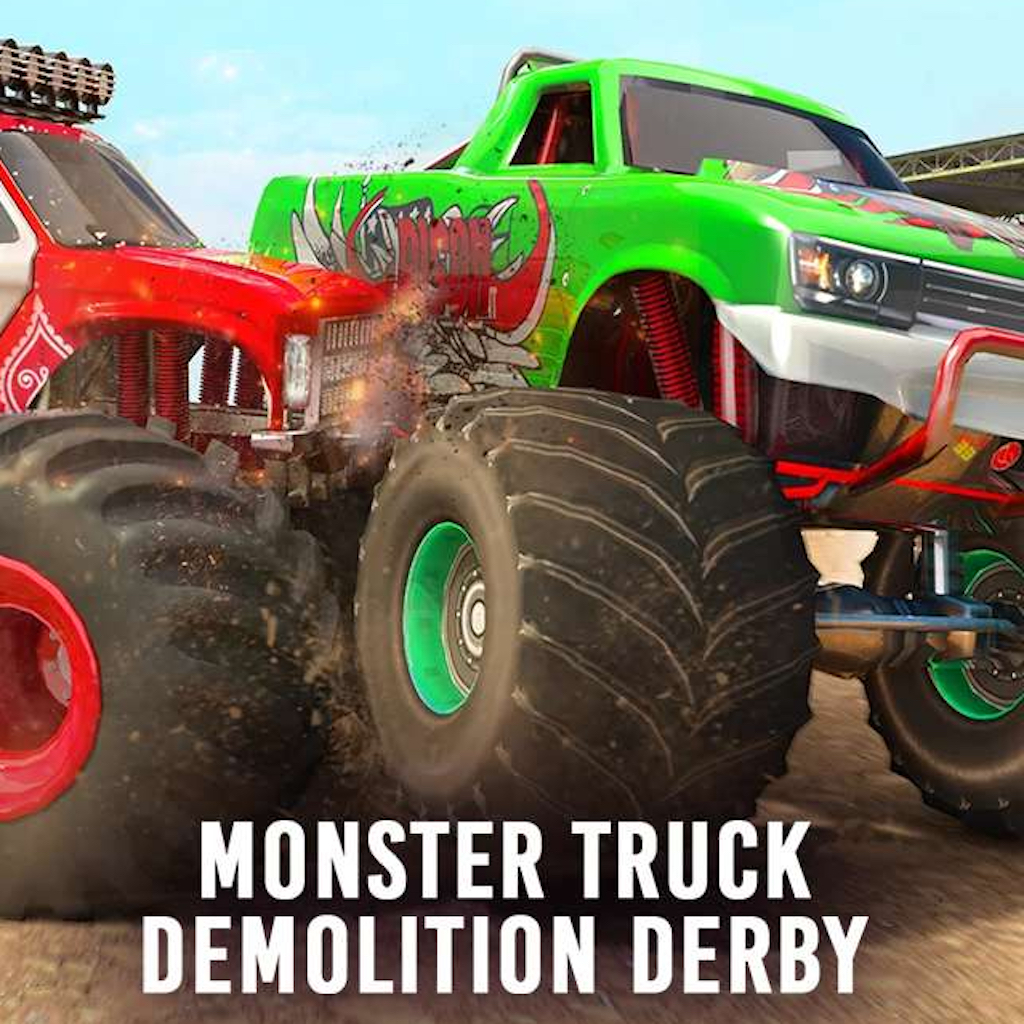
Monster Truck Demolition Derby is a fast-paced vehicular combat experience that mashes monster truck mayhem with arena-style demolition derby mechanics. At its core, the game promises chaotic crashes, customisable rigs, and high-octane action — and for the most part, it delivers. But the experience is as much defined by its limitations as its thrills; the wild collisions are high-reward, yet the broader depth and progression sometimes feel relatively shallow.
This is a game built for players who want immediate, visceral impact, not a deep motorsport simulation. It channels the raw energy of metal-on-metal carnage and pairs it with simple, punchy controls. Whether that’s enough to justify long-term engagement depends on your appetite for arcade-style destruction versus strategic progression.
Demolition, Drift, and Drive — Instant Gratification
From the very first match, Monster Truck Demolition Derby gets one thing right: feeling powerful. Driving a lumbering, oversized truck and slamming into opponents is inherently satisfying when the collisions land — and they land often. The physics are tuned toward spectacle, exaggerating jumps, flips, and impacts so that every hit feels weighty.
Controls are broadly intuitive. Forward, reverse, steer, and a turbo boost form the core inputs, with special abilities tied to power-ups that spawn in arenas. These elements come together in a way that is easy to pick up for newcomers yet still capable of surprising results as speed intersects with collision geometry.
The arenas themselves are compact but effective — chaos thrives in constrained spaces. There’s rarely a dull moment; opponents circle, collide, and break apart in satisfying ways that make it clear how much the game leans into its namesake concept. If your primary goal as a player is to smash things and see rubble fly, this game delivers that in spades.
Presentation and Audio — Loud, Proud, and a Little Lightweight
Monster trucks are inherently larger-than-life, and the game leans into that aesthetic. Trucks are chunky, environments have texture, and debris visibly scatters after impacts. There’s a cartoonish exaggeration to the art style that works well for arcade action. It doesn’t aspire to realism, and it doesn’t need to — the focus is fun over simulation.
That said, the visual polish varies. While trucks and arenas carry enough detail to differentiate them, background elements can feel sparse and repetitive. The arenas sometimes lack personality beyond simple color and obstacle layouts, which can make progression through different venues feel less meaningful than it should. A stronger sense of identity per arena — unique themes, destructible set pieces, or interactive hazards — might have given more weight to advancement.
The audio design is similarly mixed. Engine growls, crashes, and boost sounds have presence and contribute to the action, but the music and ambient audio rarely rise above generic background loops. There’s nothing here that you’re likely to remember long after playing — which isn’t fatal for the experience, but it does underscore the game’s focus on moment-to-moment gameplay rather than narrative or mood.
Progression — Punchy Short Term, Underwhelming Long Term
Where Monster Truck Demolition Derby shines in short bursts, it struggles slightly as a long-form experience. The progression model is typical of many mobile-meets-arcade titles: win matches to earn currency, unlock new trucks and upgrades, and tackle increasingly challenging opponents.
In the early game, this feels rewarding. New trucks bring tangible differences in handling, armor, and speed. Little improvements — a more powerful engine, better suspension, or increased boost — all meaningfully affect performance. Customisation, at least initially, feels impactful.
The problem lies in how this curve evolves. After a certain point, unlockable options start to feel iterative rather than transformative. Trucks become statistically stronger, but the core gameplay loop remains fundamentally the same. Without deeper systems — team tactics, advanced physics interactions, or varied match types — the sense of progression can flatten out.
Modes are functional but not highly diverse. Standard demolition derby, time trials, and simple races show variety on paper, but each still boils down to similar crash-heavy interactions with limited strategic depth. There’s excitement in brute force, but the lack of deeper mechanics like arena hazards, environmental interaction, or multiplayer synergy reduces the game’s long-term pull.
Controls and Accessibility — Easy to Learn, Harder to Master
Accessibility is a relative strength here. The basic controls are approachable for players of all skill levels, and tutorials ease you into movement and combat quickly. Core inputs feel responsive, even when the action becomes hectic.
That said, mastering momentum and hit timing takes practice. The physics lean into momentum, which can make precise positioning unpredictable at high speed — especially during moments involving multiple simultaneous impacts. For some players, this will be part of the fun; for others, it may feel like control slips just as intensity peaks.
The camera perspective largely stays close enough to the action to keep sightlines clear, but there are moments when an arena hazard or opponent approaches from a blind angle, which can lead to frustrating setbacks. A more dynamic camera or alternate view options might have helped mitigate these issues.
Multiplayer and Community Potential
At launch, Monster Truck Demolition Derby offers a basic multiplayer experience in local and online formats. Playing with others adds a layer of unpredictability that AI opponents struggle to replicate. Human opponents bring variance in aggression and movement patterns that elevate matches from repetitive to chaotic in the best way possible.
However, the multiplayer suite feels somewhat bare. Lobbies, matchmaking, and leaderboards exist in rudimentary form, but community-centric features like clans, seasonal events, or custom tournament systems are absent or minimal. These could have strengthened longevity and community engagement significantly.
Still, the core multiplayer chaos is fun enough that even with modest infrastructure, it remains one of the game’s more compelling draws.
Replay Value and Longevity
The highest-value moments in Monster Truck Demolition Derby are short, explosive, and unplanned — a well-timed boost through a cluster of opponents, a dramatic flip that ends in victory, or a comeback from the brink of defeat. These moments make the game consumable in short sessions and justify quick returns for a few rounds.
As a marathon play session, however, the experience is more variable. Without regular content drops, themed arenas, or evolving challenges, the core loop begins to feel familiar after several hours. That’s not necessarily a flaw for players who enjoy arcade demolition for its own sake, but it does limit broader appeal.
Verdict
Monster Truck Demolition Derby is a rollicking, crash-heavy vehicle combat game that delivers fun in short bursts. Its simple, intuitive mechanics and visceral collision feedback make for compelling moment-to-moment action. However, limitations in long-term variety, progression depth, and presentation polish mean the shine wears off somewhat over time.
For fans of arcade-style vehicular chaos who enjoy immediate action and don’t need deep systems to sustain engagement, this is a worthy addition to the genre. Players seeking deeper strategic layers or long-term progression may find it enjoyable but ultimately shallow.