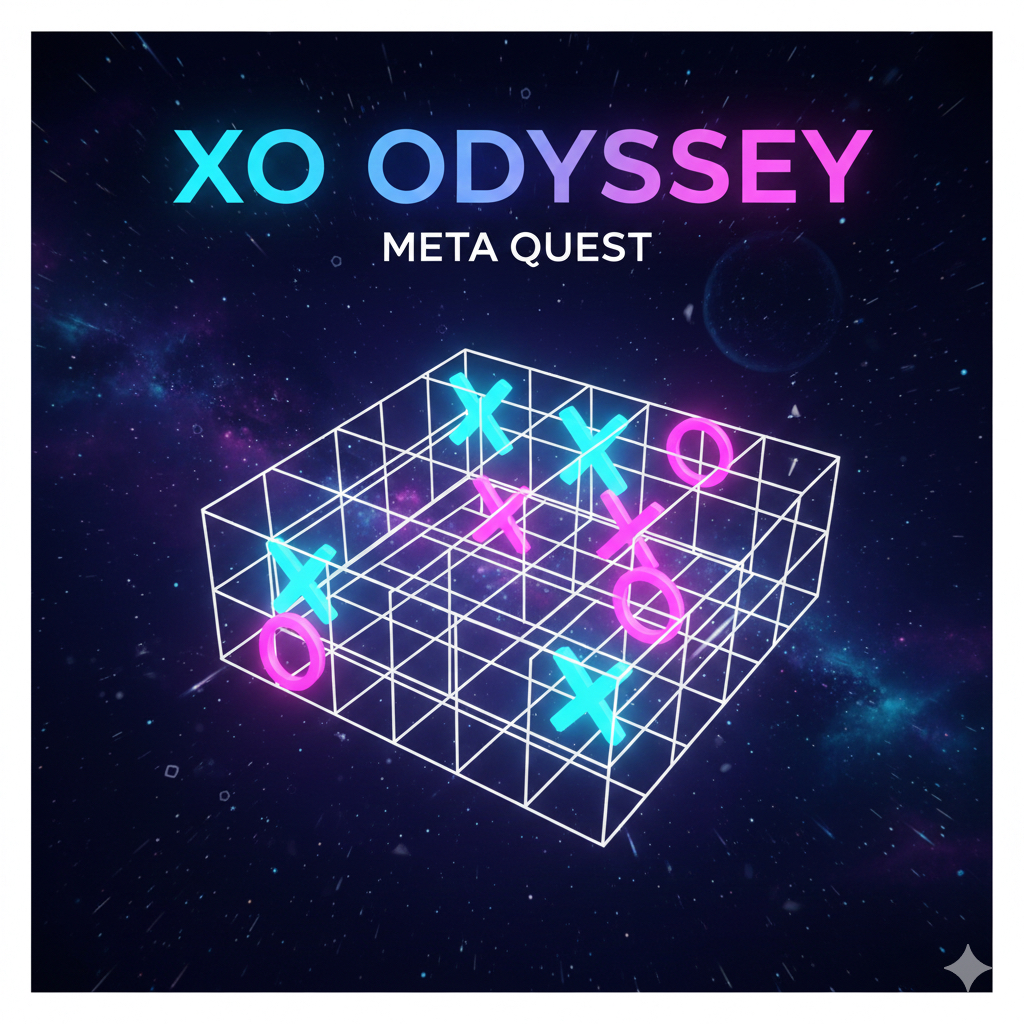
In the sprawling realm of VR adventures, where spectacle and immersion increasingly bleed into each other, XO Odyssey arrives with a clear ambition: to deliver a story-driven, emotionally engaging journey that proves virtual reality can be more than just action spectacle. On Meta Quest, XO Odyssey blends narrative exploration, puzzle mechanics, and spatial storytelling to deliver an experience that sits comfortably between a walking sim and a light adventure game. Its greatest strength lies in its emotional resonance and careful world-building—even if some mechanical and pacing decisions hold it back from reaching its full potential.
Over the many hours I invested in XO Odyssey, I encountered a title rich in atmosphere and thematic intent, anchored by a charming visual style and a slow-burn narrative that rewards patient exploration. But while its heart is in the right place, certain design limitations—most notably pacing and interaction depth—prevent it from becoming a must-experience for every VR enthusiast. Instead, it stands as a strong recommendation for players who prioritise atmospheric journeys and thoughtful world design over frenetic gameplay.
First Contact: Premise and World Building
XO Odyssey opens with an inviting mystery. You awaken on an enigmatic vessel adrift in space, with no immediate memory of how you arrived or what your objective should be. From this intriguing starting point, the game unfolds as an elegant exploration of identity, discovery, and connection. It positions the player not as a warrior or puzzle master, but as a curious interloper piecing together clues and uncovering truths.
From the outset, the game’s narrative intentions are clear: the journey is emotional as much as it is spatial. Information arrives sparingly, drip-fed through environmental details, voice logs, and interactive elements that encourage close observation. Unlike linear cinematic VR stories, XO Odyssey lets the world itself tell much of the tale, using player perspective as a narrative tool. This is a design choice that rewards players who enjoy discovery over exposition.
Mechanics: Interaction and Movement
While narrative is the heart of XO Odyssey, gameplay mechanics flesh out the body. Interactions are measured and intuitive—VR’s motion controllers feel natural for reaching, grabbing, and manipulating objects within the environment. Opening drawers, turning switches, reading logs, and riffing through digital panels all feel grounded and purpose-driven.
Movement options are well considered. The game offers teleportation for those sensitive to motion, alongside smooth locomotion for players seeking full immersion. Transitions between areas are thoughtfully paced; the designers clearly recognised that discomfort is the enemy of contemplation in VR, and they give players space to choose comfort over mechanical ambition.
However, while the mechanics are polished, they are also conservative. Puzzle elements are present but rarely challenging; they mostly serve as gating mechanisms rather than brain-burning obstacles. If you’re seeking complex logic puzzles or real mechanical innovation, XO Odyssey is more of a narrative compass than a cerebral feast. Yet this simplification is also part of its identity—an adventure that nudges rather than confronts.
World Design: Atmosphere and Immersion
Where XO Odyssey shines brightest is in its world design. The environments—ranging from the desolate interior of the vessel to broader spatial panoramas—communicate mood and story without relying on heavy dialogue. Ambient effects, lighting, and detail placement all convey narrative beats with a subtlety that many VR titles overlook.
Textures, shading, and object placement are crafted with a clear eye for visual storytelling. A wall scrawled with hastily scribbled notes, a flickering console light, an abandoned workstation: these elements cumulatively craft a world that feels lived-in and layered. This environmental storytelling invites repeat visits to areas previously explored, as even small details become plot cues when observed with intention.
Audio design reinforces immersion. Voice logs are delivered with warmth and sincerity, music swells during key moments without overwhelming quiet reflection, and spatial audio cues guide attention without being intrusive. It’s a testament to thoughtful production that XO Odyssey feels calm when it intends to be and poignant when the narrative demands it.
Narrative and Emotional Arc
The emotional core of XO Odyssey hinges on gradual revelation. The plot does not rush, choosing instead to let mystery simmer. Character backstories, contextual cues, and narrative beats are woven into the environment rather than directly handed to players. As you uncover more about the ship, its inhabitants, and its purpose, the stakes shift from personal bewilderment to layered understanding.
This slow-burn approach is one of the game’s strengths—and occasionally a challenge. Players who thrive on immediate plot payoff may find the pacing deliberate; those who appreciate thematic gout and reflective narrative developments will find this pacing an asset. The game trusts its audience enough not to spell out every threading, a decision that fosters engagement for players willing to piece the story together.
While the narrative arc doesn’t ascend to the dramatic heights of a blockbuster sci-fi epic, it provides contemplative value. It’s less about saving the universe and more about understanding your place within a fragmented system. For a VR experience, this grounded ambition is refreshing, even if it doesn’t always achieve emotional catharsis.
Accessibility and Comfort
XO Odyssey does a commendable job ensuring accessibility. VR motion sickness is addressed with flexible movement options, including teleportation and adjustable locomotion settings. Comfortable turning, vignette adjustments, and seated modes allow players to tailor experience to their physiological comfort rather than wrestle with it.
The user interface is unobtrusive and legible, offering clear instructions without detracting from immersion. Contextual prompts are subtle yet helpful, ensuring that players unfamiliar with VR interactions will not be left guessing at every turn.
Replayability and Long-Term Value
Replay value in XO Odyssey isn’t grounded in branching mechanics or alternate endings; it’s rooted instead in the layered environment and emergent curiosity. Upon first playthrough, most players will absorb the narrative at face value. On subsequent visits, puzzle cues, overlooked clues, and hidden moments become the focus. This environmental depth encourages thoughtful replay, even if the overall structure remains linear.
For completionists or narrative explorers, this is where XO Odyssey reveals its long-term appeal. It’s not a high-score chase or a timed challenge; it’s a mosaic of thematic threads waiting to be pieced together through careful observation.
Critiques and Limitations
Despite its many strengths, XO Odyssey has limitations. The gameplay loop is gentle to a fault; beyond environmental interaction and light puzzles, there is little mechanical variation to sustain extended sessions for players craving dynamic challenges. While this aligns with its contemplative ethos, it also means the title will resonate less with players seeking conventional game mechanics or adrenaline-charged moments.
Additionally, while the narrative is engaging, it ultimately resolves without fully capitalising on its emotional build-up. The ending satisfies, but it doesn’t linger with the same resonance found in the game’s most reflective moments.
Finally, the graphical fidelity is serviceable and stylistically effective, but it rarely pushes the Quest hardware visually. In a medium where some titles strive for cinematic spectacle, XO Odyssey opts for painterly subtlety. That choice will delight some and underwhelm others.
Final Verdict
XO Odyssey is a thoughtful, beautifully crafted VR adventure that rewards patience, reflection, and attention to detail. Its narrative depth, atmospheric world design, and accessible mechanics make it an excellent recommendation for players who prioritise story and mood over adrenaline rushes. While it may not appeal universally to players seeking fast-paced action or heavy puzzle complexity, it stands as a strong example of what narrative VR can achieve when it embraces subtlety and presence.