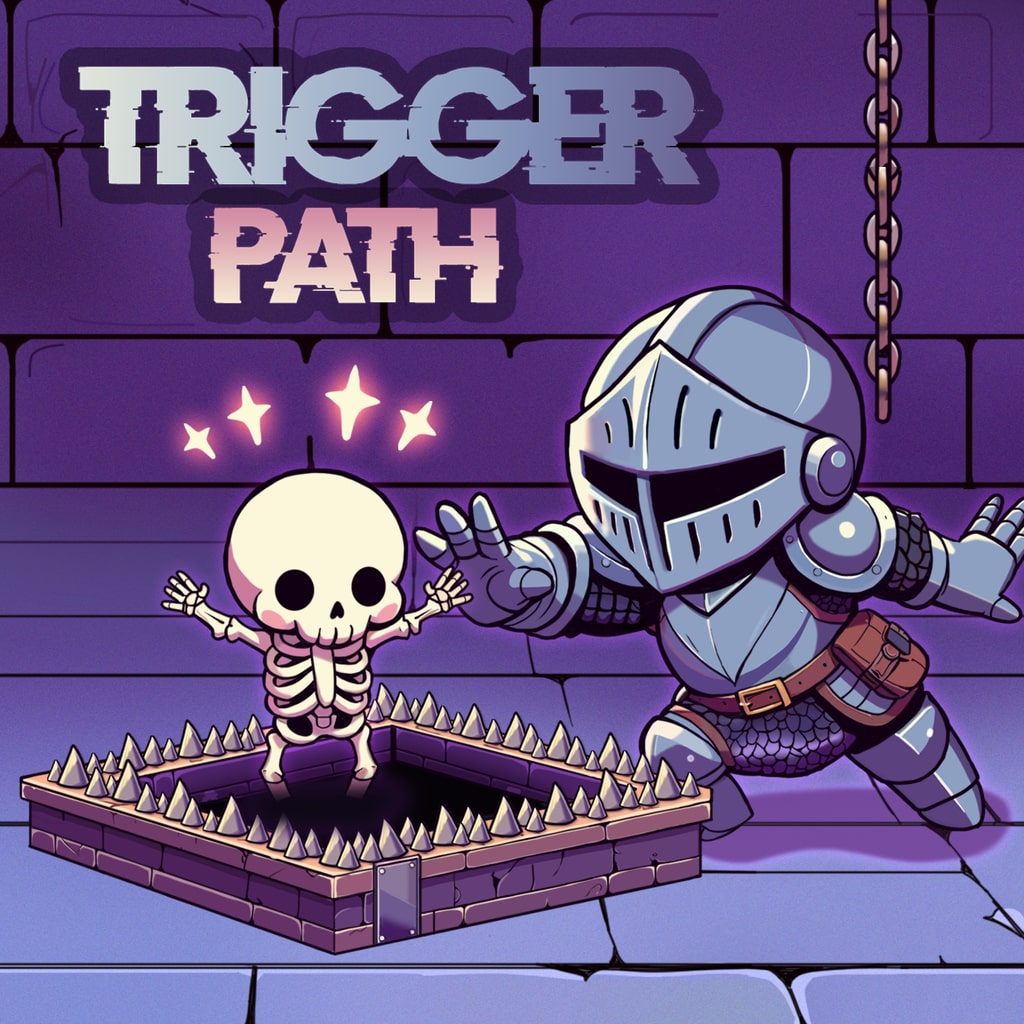
In an era dominated by sprawling open worlds and cinematic spectacle, Trigger Path stakes its claim with something far more focused: precision, timing, and the elegant thrill of overcoming tightly designed challenges. The game positions itself squarely within the skills-based action genre, pairing fast mobility with tactical decision-making in compact, high-stakes arenas. It is a design that eschews filler for intensity, inviting players to refine their technique and think several steps ahead of every encounter.
At its core, Trigger Path is an action platformer built around fast reflexes, momentum management, and environmental interaction. Players control a highly agile protagonist—equipped with movement options like dashes, wall runs, and directional jumps—through a series of increasingly complex levels populated with hazards, enemies, and precision demands. The name Trigger Path is apt: success hinges on knowing when to act, where to move, and how to chain actions into a smooth, responsive flow.
Precision Movement and Combat
Movement is the unquestioned foundation of Trigger Path. From the outset, the game makes clear that agility is paramount. Players can dash mid-air, rebound off certain surfaces, and string together directional inputs to maintain momentum. This emphasis on fluid motion gives the game a kinetic energy that is immediately engaging; even early levels feel purposeful and alive.
Controls are tight, responsive, and intuitively communicated. The learning curve rewards experimentation: what may feel daunting or chaotic at first gradually reveals its internal logic. As players learn to master speed, trajectory, and timing, the game’s challenges shift from frustrating obstacles to opportunities for self-expression through movement.
Combat, when it arises, is typically brief and integrated into movement rather than separate from it. Enemies rarely stand still and absorb damage; instead, confrontations are about positioning and timing. Dodging an enemy attack and using that moment of invulnerability to reposition or counterattack feels inherently satisfying, precisely because it aligns with the game’s overarching philosophy of momentum and tactical timing.
Level Design: Small Arenas, Big Demands
Levels in Trigger Path are compact arenas rather than sprawling maps. This design choice reinforces intensity at the expense of exploration, but it also ensures that every square inch of play space matters. Hazards—such as timed spikes, moving lasers, and dynamic platforms—are placed with purpose, forcing players to learn patterns and execute with precision.
Rather than overwhelming with quantity, the game layers complexity gradually. Early arenas build confidence by introducing mechanics in isolation, while later stages integrate multiple elements simultaneously, demanding both memorisation and split-second decision-making. There are moments where hazards overlap and require players to choose between competing risks—jump now and risk the laser, or wait and miss the platform window. These design decisions create memorable tension that feels both fair and exhilarating.
Importantly, the arenas always reset quickly. A mistake results in an immediate retry, allowing players to learn through repetition without disruptive load screens or extended penalties. This rapid restart loop keeps frustration in check and reinforces the core learning loop: observe, adapt, and execute.
Difficulty Curve
Trigger Path has a firm but thoughtful difficulty curve. Early stages are easy to engage with and teach core mechanics organically. The game does not hold the player’s hand, but it provides enough space to experiment before demands escalate. As the game progresses, challenges become decidedly less forgiving, requiring mastery of chained movement, split-second timing, and quick adaptation to evolving hazard patterns.
This escalation is deliberate and generally well-judged, though it will undoubtedly divide players. For newcomers or casual players, later stages may feel punishingly precise, bordering on exasperating. For those who enjoy skill-based challenges and iterative improvement, this is where Trigger Path shines. Every tight sequence that once felt impossible becomes a testament to the player’s growing competency when executed cleanly.
One potential area of frustration lies in sections where multiple tough mechanics converge. When timing, spatial judgment, and rapid sequencing all collide, a single mistimed input can undo an otherwise perfect run. Yet because the game resets so quickly and consistently communicates cause and effect, these sequences feel like respectable tests of skill rather than cheap tricks.
Visual Clarity and Aesthetic
Visually, Trigger Path prioritises clarity over spectacle, and this choice serves the gameplay exceptionally well. Environments are cleanly rendered with distinct visual contrasts that make hazards readable and interactive elements easy to identify. The aesthetic palette leans toward sleek futurism, with environments that feel purposeful and calibrated rather than decorative.
Animation quality is high and functional. Movement transitions—whether a dash, wall run, or jump—are crisp and communicative. These animations are not merely cosmetic; they provide subtle cues that help players understand timing windows and spatial relationships. Enemy animations also telegraph intent clearly, which is crucial in a game where split-second reactions can be the difference between success and reset.
Environmental hazards are similarly well-designed. Lasers, spikes, and moving platforms all employ distinct visual signatures that communicate their behaviour patterns without requiring memorisation. This clarity is fundamental in keeping the experience fair and empowering players to learn rather than guess.
Sound Design and Feedback
Sound design does much to reinforce the game’s responsive feel. Moving through the environment produces satisfying audio feedback: dashes have weighty whooshes, impacts resonate with clarity, and hazard cues are distinct enough to aid player anticipation. The audio design supports a sense of immersion without becoming distracting.
The soundtrack leans toward minimalist electronic textures that complement the game’s kinetic energy without overwhelming focus. Music rises during high-intensity sequences, reinforcing adrenaline, then recedes when precision and patience are required. It is not a standout score by blockbuster standards, but it fits the experience like a well-cut suit.
Replayability and Player Motivation
Replayability is woven into Trigger Path’s identity. Levels invite repeated attempts, not just for completion, but for mastery—faster times, cleaner execution, and consistent chains of movement. Leaderboards or performance metrics (if present) provide additional motivation for players who enjoy optimisation and competition.
However, for players who prefer narrative progression or discovery systems, the game’s tight focus on challenge and repetition may feel limiting over extended sessions. There are no branching storylines or collectibles to uncover; the reward lies in refining skill and internalising movement logic.
Final Verdict
Trigger Path is a polished, satisfying action platformer that rewards precision, strategic movement, and perseverance. Its strengths lie in its responsive controls, intelligently layered challenge, and clarity of design. The game understands exactly what it wants to be: a test of skill that entertains as much through repetition and mastery as through moment-to-moment execution.
While its uncompromising challenge and limited narrative scope may not suit all players, those who enjoy skill-based, speed-flow gameplay will find Trigger Path a compelling and rewarding experience.