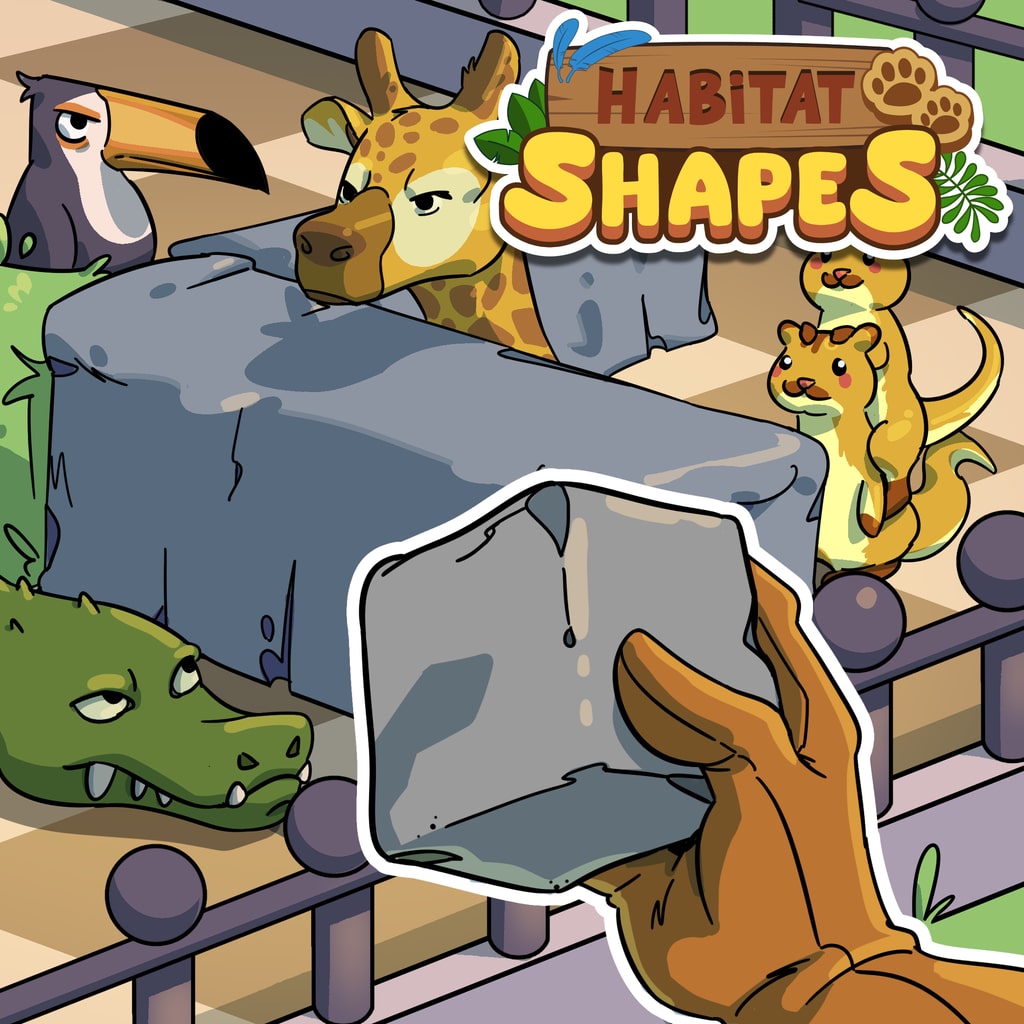
Habitat Shapes is a minimalist, logic-driven puzzle game that blends spatial reasoning with a calm, nature-inspired theme. Rather than overwhelming players with complex rules or rapid-fire challenges, the game focuses on clarity, structure, and thoughtful problem-solving. Its central idea is elegantly simple: arrange geometric shapes to create functional habitats that satisfy specific environmental requirements. From that foundation, Habitat Shapes builds a steadily engaging experience that rewards planning, observation, and incremental mastery.
The game positions itself firmly within the “relaxing puzzle” space, but it avoids feeling shallow. While the presentation is gentle and understated, the underlying design encourages deliberate thinking and experimentation. Habitat Shapes is less about speed or perfection and more about understanding systems and finding harmony within constraints.
Core Gameplay Concept
At its heart, Habitat Shapes revolves around placement-based puzzles. Each level presents players with a limited set of geometric shapes—squares, triangles, hexagons, and other clean forms—that must be arranged within a defined space. The objective is not merely to fill the area, but to meet habitat conditions such as adjacency rules, spatial balance, or specific configuration requirements.
Early puzzles act as tutorials, introducing the basic mechanics in a clear and intuitive way. Players quickly learn how shapes interact, how placement affects the overall structure, and how subtle changes can ripple across the entire layout. The learning curve is gentle, but purposeful, ensuring that players understand the logic behind each success.
As the game progresses, constraints increase. New shape types are introduced, placement rules become more nuanced, and players are required to think several steps ahead. Despite this escalation, Habitat Shapes never feels unfair. Every puzzle is solvable through logic and observation, with solutions that feel earned rather than guessed.
Puzzle Design and Difficulty
Puzzle design is one of Habitat Shapes’ strongest elements. Each challenge is carefully constructed to highlight a specific idea or mechanic, often building on lessons learned in earlier levels. Difficulty increases gradually, allowing players to develop confidence before being asked to combine multiple concepts.
Importantly, the game avoids artificial difficulty. There are no time limits, no penalties for experimentation, and no pressure to achieve optimal solutions. Players are free to place, remove, and rearrange shapes as needed, encouraging exploration and creative problem-solving.
Later puzzles can be deceptively challenging, requiring careful planning and spatial awareness. These moments provide satisfying “aha” breakthroughs when a configuration finally clicks into place. The absence of overt stressors ensures that even difficult puzzles remain enjoyable rather than frustrating.
Progression and Structure
Habitat Shapes is structured around a sequence of themed sections, each introducing new mechanics or variations on existing rules. This chapter-based progression gives the game a sense of momentum while maintaining its calm tone.
Progression is linear but flexible. Players can usually move forward without needing perfect performance, reinforcing the idea that understanding matters more than optimisation. Optional challenges and bonus puzzles provide additional depth for players who want to test their mastery, but they never gate core content.
There is no narrative in the traditional sense, but the game’s thematic framing—creating balanced habitats through thoughtful design—gives purpose to progression. It subtly reinforces ideas of harmony, balance, and structure without relying on explicit storytelling.
Visual Presentation
Visually, Habitat Shapes embraces a clean, minimalist aesthetic. Shapes are crisp and clearly defined, colours are soft and pleasing, and backgrounds are unobtrusive. This restraint ensures that visual clarity is never compromised, which is essential for a puzzle game built around spatial relationships.
Animations are smooth and understated. Shape placement is accompanied by gentle visual feedback, reinforcing successful interactions without unnecessary flair. Transitions between levels are seamless, helping maintain immersion and flow.
The overall presentation contributes significantly to the game’s calming effect. Nothing feels cluttered or distracting, allowing players to focus entirely on the puzzle space and the logic within it.
Audio and Atmosphere
Audio design complements the visuals perfectly. The soundtrack is ambient and unobtrusive, providing a soothing backdrop that supports concentration. Music loops gently, maintaining a consistent mood without drawing attention away from gameplay.
Sound effects are minimal but effective. Soft clicks, subtle tones, and gentle confirmations provide feedback for player actions, reinforcing interactions without becoming repetitive. Silence is used effectively, allowing players to think without constant auditory stimulation.
Together, the audio and visual elements create an atmosphere that feels meditative and focused—ideal for extended puzzle-solving sessions.
Accessibility and Player Experience
Habitat Shapes is highly accessible. Controls are simple and intuitive, requiring no complex inputs or fast reactions. The lack of timers or failure penalties makes it suitable for players of all ages and skill levels.
The game also respects player agency. Hints, where present, are optional and subtle, nudging players toward solutions without giving them away. This ensures that players remain engaged in the problem-solving process rather than relying on assistance.
While accessibility options are relatively basic, the inherent simplicity of the design makes the game broadly approachable. Players looking for a low-pressure, mentally stimulating experience will find Habitat Shapes particularly appealing.
Replayability and Longevity
Replayability in Habitat Shapes is moderate but meaningful. While many puzzles will not offer surprises on repeat playthroughs, revisiting earlier challenges can be rewarding, especially when experimenting with alternative solutions or refining understanding.
Optional content and bonus puzzles extend the game’s lifespan, and its short-session-friendly design makes it easy to return to over time. Habitat Shapes works well as a game that players dip into between other experiences, offering a reliable source of calm engagement.
That said, players seeking endless content or procedurally generated challenges may find the experience finite. The game’s strength lies in quality of design rather than sheer quantity.
Strengths and Weaknesses
Strengths
- Thoughtful, well-balanced puzzle design
- Calm, minimalist visual and audio presentation
- Gradual difficulty curve that rewards learning
- Accessible, stress-free gameplay
- Clear focus on logic and spatial reasoning
Weaknesses
- Limited appeal for players seeking fast-paced or competitive play
- Finite content with modest replay incentives
- Minimal narrative framing
Final Thoughts
Habitat Shapes is a confident and carefully designed puzzle game that succeeds by knowing exactly what it wants to be. It offers a relaxed yet intellectually engaging experience built around clean mechanics, thoughtful progression, and a soothing presentation. While it does not push the genre forward in dramatic ways, it delivers a consistently satisfying experience that respects the player’s time and attention.
For fans of logic puzzles, spatial reasoning challenges, and calming games that encourage focus rather than stress, Habitat Shapes is an easy recommendation. It may be understated, but within its chosen niche, it is quietly effective.