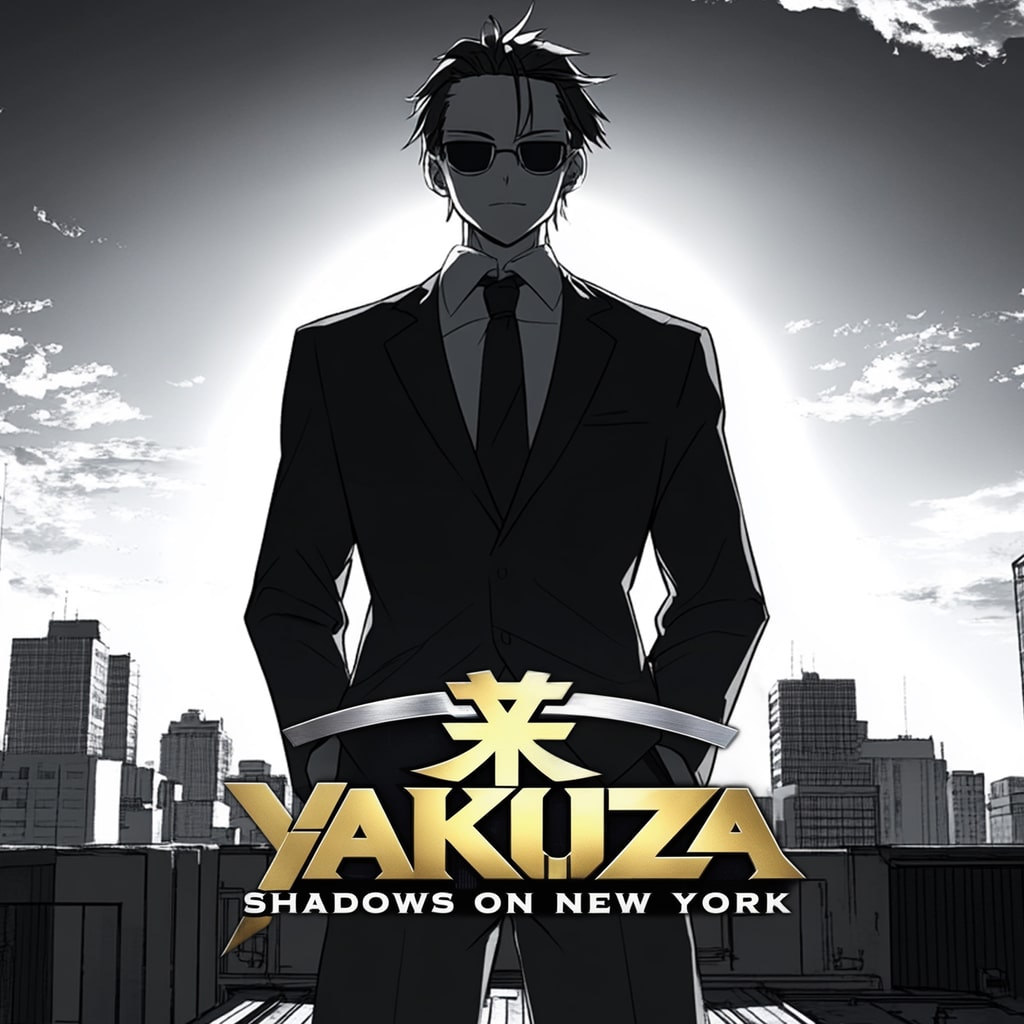
YAKUZA: Shadows of New York takes a deliberate step away from the bombastic brawling and sprawling city exploration that define the mainline Yakuza series. Instead, it embraces a focused visual-novel structure to deliver a tightly written, character-driven crime drama set against the neon-soaked streets of New York. The result is a compelling side story that prioritises perspective, atmosphere, and internal conflict over spectacle.
For long-time fans, this shift may initially feel disorienting. Gone are the improvised weapons, the sprawling side activities, and the physical comedy that often punctuates the series’ heavier moments. In their place is a moody, dialogue-heavy experience that explores themes of displacement, loyalty, and survival through the eyes of characters caught between worlds. It is a bold pivot — and one that largely pays off.
Setting and Premise: The Yakuza Abroad
Set in New York, Shadows of New York examines what it means to be part of the Yakuza far from its traditional Japanese roots. The city is portrayed not as a tourist spectacle, but as a hard-edged, unfamiliar landscape shaped by power struggles, immigrant communities, and criminal overlap. New York here is less about landmarks and more about mood — rain-slicked streets, dimly lit bars, backroom deals, and the quiet tension of being watched.
The narrative unfolds from a grounded perspective, focusing on a small cast rather than a sprawling ensemble. This tighter scope allows the writing to breathe, giving characters room to reflect, argue, and reveal vulnerability. Rather than chasing grand conspiracies, the story zeroes in on personal stakes — fractured alliances, cultural dissonance, and the psychological weight of loyalty in an unfamiliar land.
This approach suits the visual-novel format well. The story is structured around chapters that gradually peel back layers of motivation and consequence, encouraging players to engage with nuance rather than action.
Narrative and Writing: Sharp, Reflective, and Character-Driven
The writing is the game’s greatest strength. Dialogue is sharp and economical, with conversations often doing double duty — advancing the plot while deepening character relationships. The script balances noir-inspired cynicism with moments of quiet introspection, allowing characters to feel human rather than archetypal.
Unlike the mainline Yakuza titles, which often juxtapose melodrama with absurd humour, Shadows of New York maintains a more consistent tone. Humour exists, but it is restrained, dry, and situational. This tonal discipline reinforces the game’s noir sensibility and allows emotional beats to land with greater impact.
Choices play a modest but meaningful role. While the narrative does not branch wildly, dialogue options allow players to shape tone, attitude, and relational dynamics. These choices influence how characters perceive one another and subtly affect the narrative’s emotional texture, even when major plot points remain fixed. This design keeps the story focused while still granting players a sense of agency.
Visual Presentation: Stylish Restraint
Visually, YAKUZA: Shadows of New York adopts a stylised, illustrated aesthetic that complements its narrative ambitions. Character portraits are expressive, conveying subtle emotion through posture, facial expression, and lighting. Backgrounds are richly detailed but deliberately understated, evoking atmosphere without distracting from the dialogue.
The colour palette leans heavily into noir conventions — deep blues, muted reds, and shadow-heavy compositions dominate the screen. Neon signage and city lights punctuate scenes, reinforcing the sense of a city that never quite reveals itself fully. This visual restraint works in the game’s favour, keeping focus on character interaction rather than visual spectacle.
Transitions between scenes are smooth, and the interface is clean and readable. Text presentation is clear, with pacing that encourages careful reading rather than rapid skipping. This is a game designed to be absorbed, not rushed.
Audio and Voice Work: Mood Over Bombast
Audio design plays a crucial supporting role. The soundtrack is understated, favouring jazz-influenced motifs, ambient city noise, and low-key tension builders over dramatic crescendos. Music often fades into the background, subtly reinforcing mood without demanding attention.
Voice work — where present — is strong and well-directed. Performances are measured and naturalistic, aligning with the game’s grounded tone. Even in text-only segments, the writing carries a strong sense of voice, making it easy to imagine delivery and inflection.
Ambient sounds — distant sirens, muffled conversations, the hum of traffic — help anchor scenes in place, enhancing immersion without overwhelming the narrative.
Gameplay Structure: Focused and Intentional
As a visual novel, Shadows of New York offers limited mechanical interaction beyond dialogue choices and scene progression. This will be a sticking point for players expecting traditional gameplay systems. There are no combat mechanics, exploration segments, or mini-games to break up the narrative flow.
However, this restraint is intentional. The game understands its format and does not attempt to dilute its narrative focus with unnecessary systems. Progression is steady, chapters are well-paced, and the overall runtime respects the player’s time.
Replay value comes primarily from revisiting dialogue choices and exploring alternative conversational tones rather than radically different story paths. This places the emphasis squarely on narrative appreciation rather than completionist mechanics.
Themes and Tone: Identity, Loyalty, and Alienation
Thematically, Shadows of New York is concerned with identity — both personal and cultural. Characters grapple with what it means to represent a criminal tradition in a foreign environment, and whether loyalty to an organisation is compatible with personal survival. The game also touches on immigration, adaptation, and the tension between old codes and new realities.
These themes are handled with maturity and subtlety. The game does not sermonise or oversimplify; instead, it presents conflicting viewpoints and allows players to sit with discomfort and ambiguity. This thematic depth elevates the experience beyond a simple franchise spin-off and positions it as a meaningful narrative entry in its own right.
Where It Falls Short
Despite its strengths, YAKUZA: Shadows of New York will not appeal to everyone.
Limited Interactivity:
Players seeking traditional gameplay or mechanical variety may find the visual-novel structure too passive.
Narrow Scope:
The focused cast and setting limit the epic scale associated with mainline Yakuza entries, which may disappoint fans expecting a broader experience.
Modest Replay Value:
While dialogue choices add flavour, they do not drastically alter outcomes, reducing incentive for multiple playthroughs.
These limitations are largely a matter of expectation rather than execution. The game delivers exactly what it sets out to do — just not what every player may want.
Final Verdict
YAKUZA: Shadows of New York is a confident, well-written narrative spin-off that demonstrates the strength of the Yakuza universe beyond action-heavy gameplay. By embracing the visual-novel format, it offers a more intimate, introspective look at crime, loyalty, and identity in an unfamiliar setting.
It may lack the kinetic energy and breadth of the main series, but it compensates with sharp writing, strong atmosphere, and thematic maturity. For fans of narrative-driven games and noir storytelling, this is a rewarding detour — one that enriches the franchise by exploring its characters from a different angle.