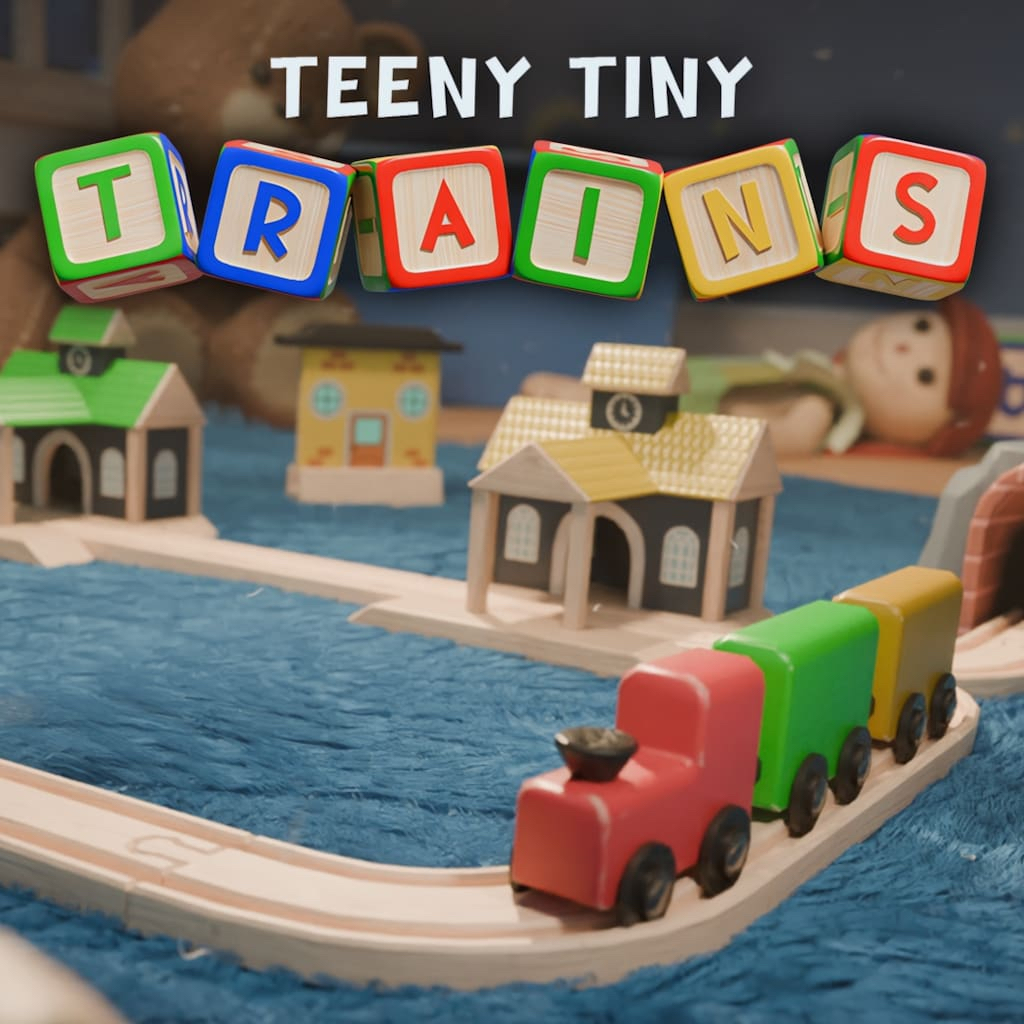
Teeny Tiny Trains is a deceptively simple puzzle game that takes a familiar concept — guiding trains safely to their destinations — and distils it into an elegant, charming, and surprisingly cerebral experience. With its clean presentation, intuitive mechanics, and steadily escalating challenge, the game delivers exactly what its name suggests: a small-scale idea executed with precision and care.
At first glance, Teeny Tiny Trains appears gentle and almost toy-like, inviting players of all ages to dip in without intimidation. Spend more than a few minutes with it, however, and it quickly becomes apparent that beneath the cute visuals lies a thoughtfully designed puzzle framework that rewards planning, foresight, and logical thinking. It is a game that respects the player’s intelligence while remaining accessible, making it one of the more satisfying casual puzzle titles to emerge recently.
Core Concept: Simple Rules, Endless Possibilities
The premise of Teeny Tiny Trains is refreshingly straightforward. Each puzzle presents a compact railway layout populated by colourful, miniature trains that must be guided safely to their destinations. Tracks intersect, paths overlap, and multiple trains often run simultaneously. Your task is to ensure that each reaches its goal without collisions, derailments, or deadlocks.
Interaction is minimal by design. Players typically control track switches, signals, or timing cues, rather than directly steering trains. This indirect control is what gives the game its strategic depth. You are not reacting moment to moment, but instead planning outcomes, predicting movement, and anticipating how one small change can ripple across the entire system.
This emphasis on cause and effect is central to the experience. Every decision matters, and even the most basic puzzles subtly teach players to think several steps ahead — a skill that becomes essential as complexity increases.
Puzzle Design: Carefully Crafted, Consistently Rewarding
Where Teeny Tiny Trains truly shines is in its puzzle design. Early levels function as gentle tutorials, introducing core mechanics one at a time. The game never overwhelms; instead, it layers ideas gradually, allowing players to build confidence before introducing new twists.
As the game progresses, puzzles become increasingly intricate. Trains may run at different speeds, tracks may split and rejoin in complex ways, and timing becomes just as important as routing. Later stages often require players to juggle multiple variables simultaneously, balancing precision with patience.
What’s particularly impressive is how rarely puzzles feel unfair. Solutions are logical and discoverable, and when you fail, it’s usually clear why you failed. This clarity encourages experimentation rather than frustration. Restarting a level feels like an invitation to rethink your approach, not a punishment.
The satisfaction of watching a perfectly timed sequence of trains glide through a busy junction without incident is immense. These moments of success are quiet but deeply rewarding — the kind of pleasure that only well-designed puzzle games can deliver.
Visual Presentation: Minimalist Charm With Purpose
Visually, Teeny Tiny Trains adopts a clean, minimalist style that perfectly suits its gameplay. Tracks, trains, and environments are rendered with clarity and charm, using soft colours and simple shapes that ensure readability at all times.
The “tiny” aesthetic isn’t just cute — it’s functional. Because puzzles can become dense with overlapping paths and moving elements, visual clarity is essential. The game excels here, making it easy to track each train’s route and anticipate potential conflicts even in more complex scenarios.
Animations are subtle but expressive. Trains glide smoothly along tracks, switches snap into place with satisfying feedback, and collisions — when they occur — are presented gently rather than harshly, reinforcing the game’s welcoming tone.
There’s a pleasing sense of consistency across levels. Whether you’re navigating a rural layout or a more abstract grid, the visual language remains coherent and easy to interpret.
Audio and Atmosphere: Calm, Focused, and Supportive
Sound design in Teeny Tiny Trains is understated, and intentionally so. Soft background music provides a calming backdrop that encourages concentration rather than urgency. This is not a game that rushes you; it invites thoughtful engagement.
Audio cues play an important functional role. Switch toggles, train movement, and successful completions are all accompanied by gentle sound effects that reinforce player actions without becoming intrusive. The absence of loud or distracting audio ensures that players can focus entirely on problem-solving.
This restrained approach to audio complements the game’s overall philosophy: reduce noise, enhance clarity, and let the puzzles take centre stage.
Difficulty Curve and Accessibility
One of Teeny Tiny Trains’ greatest strengths is its well-balanced difficulty curve. The game is welcoming to newcomers, including younger players or those less familiar with puzzle games, while still offering enough complexity to engage experienced problem-solvers.
There’s no pressure from timers or scores in most modes, which encourages experimentation and reduces anxiety. Players are free to pause, observe, and plan at their own pace — a design choice that aligns perfectly with the game’s thoughtful nature.
Optional challenge levels and later-stage puzzles provide additional difficulty for those who crave it, ensuring that the experience doesn’t plateau too early. Importantly, these challenges feel like natural extensions of the core mechanics rather than artificial difficulty spikes.
Replayability and Longevity
While Teeny Tiny Trains is not an endlessly replayable sandbox, it offers solid longevity through the sheer quality and quantity of its puzzles. Completing a level perfectly — especially later ones — often feels rewarding enough on its own, but many players will enjoy revisiting earlier stages to refine their solutions or simply appreciate the elegant design.
Some puzzles offer multiple valid solutions, encouraging creative thinking and experimentation. Discovering a more efficient or elegant solution after completing a level once adds a subtle layer of replay value.
The game’s structure also makes it ideal for short play sessions. Individual puzzles can often be completed in just a few minutes, making Teeny Tiny Trains well-suited for handheld play or casual gaming breaks.
Strengths and Limitations
Strengths:
- Exceptionally well-designed puzzles
- Clean, readable visuals that support gameplay
- Calm, focused presentation ideal for thoughtful play
- Accessible mechanics with meaningful depth
- Excellent difficulty progression
Limitations:
- Limited narrative or thematic variation
- Players seeking action-heavy gameplay may find it too slow
- Replayability depends largely on personal enjoyment of optimisation
Final Verdict
Teeny Tiny Trains is a superb example of how thoughtful design and restraint can create a deeply engaging experience. It doesn’t rely on spectacle or gimmicks; instead, it focuses on delivering consistently satisfying puzzles that challenge the mind without overwhelming it.
Its minimalist presentation, intuitive mechanics, and carefully tuned difficulty curve make it an ideal choice for puzzle fans of all experience levels. Whether you’re solving a single puzzle during a short break or settling in for a longer session of methodical problem-solving, the game delivers a steady stream of rewarding moments.