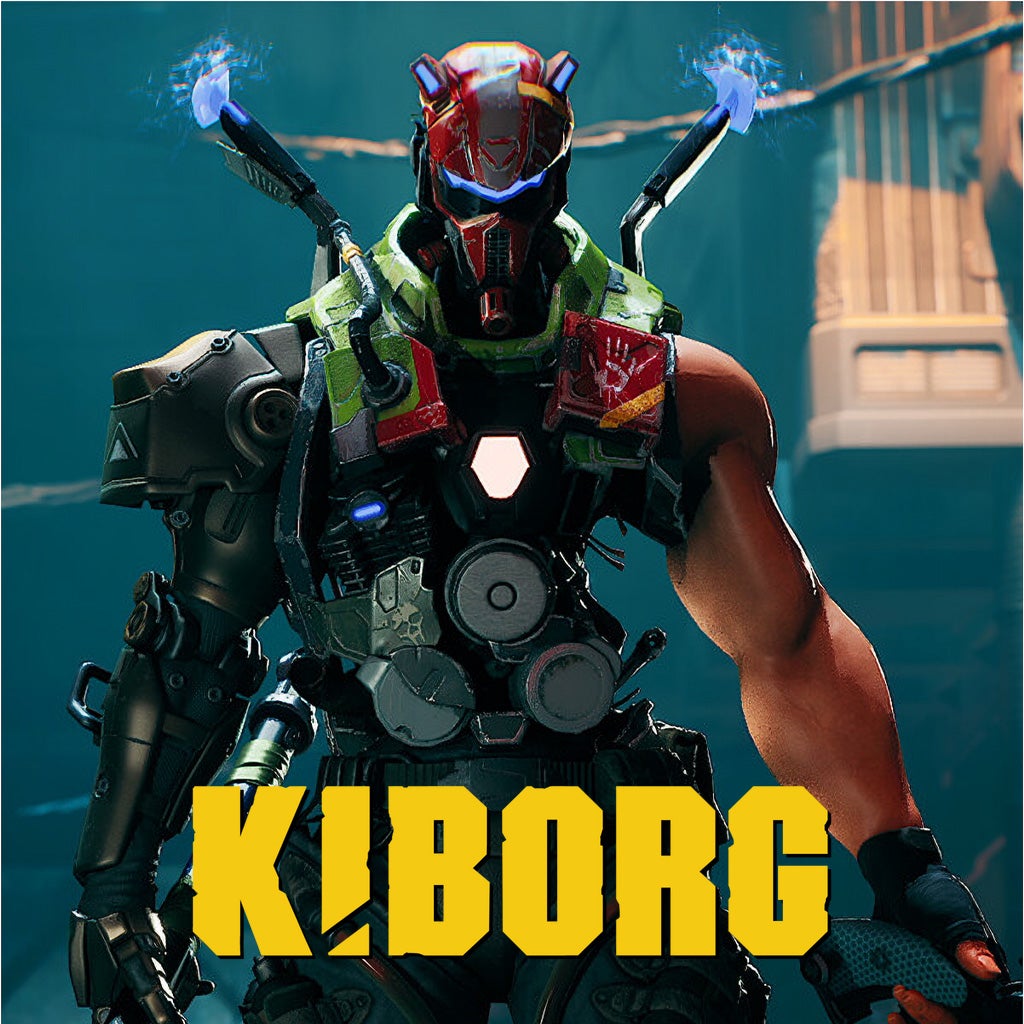
KIBORG arrives with the force of a clenched cybernetic fist—hard-hitting, stylish, and unapologetically brutal. It’s a top-down action game that fuses breakneck combat with a pulsing dystopian atmosphere, creating a world where every corridor feels hostile and every encounter demands precision. What could have been just another cyberpunk hack-and-shoot becomes something far more gripping thanks to tight mechanics, expressive presentation, and encounter design that constantly keeps you on edge.
For players who crave intensity, KIBORG wastes no time establishing its identity. Its world is a rust-coated dystopia where humanity and machinery coexist in a state of violent disrepair. You step into the role of a hardened cyborg survivor pushed into conflict by a society collapsing under corruption and mechanical mutation. While the story is delivered in lean, punchy segments, the narrative framing is surprisingly effective. It’s not lore-heavy, but every environment, character, and encounter reinforces the bleak, desperate tone.
But let’s be clear—KIBORG is a game about combat, and this is where it shines brightest.
Combat With Weight, Flow, and Consequence
Unlike many top-down action shooters that lean heavily on bullet-hell chaos, KIBORG focuses on deliberate impact. Every swing of your melee weapon, every ballistic shot, every dash carries weight. It’s kinetic without being frenetic, fast without being sloppy. There’s a tactility to it, a feeling that your character is made of reinforced metal and muscle rather than air and pixels.
Enemy encounters are where the design brilliance comes through. Groups are rarely just tossed at you; they’re assembled with intent. Shielded brutes push forward with frightening determination. Ranged cyborg snipers lock onto your position, forcing movement. Agile hounds leap unpredictably, closing gaps before you’re ready. In tougher battles, these combinations create arenas of controlled chaos where success depends on reading patterns, exploiting openings, and managing your stamina with discipline.
It’s the kind of combat system that rewards learning—not because it’s punishing for its own sake, but because its depth becomes more rewarding the more you invest in it.
A Progression System That Enhances Identity
KIBORG’s upgrade system is refreshingly free of bloat. Instead of branching skill trees with dozens of filler abilities, you’re given tightly curated enhancements that meaningfully change the rhythm of combat. Do you lean into increased dash mobility, enabling more evasive play? Or embrace heavy-hitting melee amplifiers that turn every strike into a kill-zone? Perhaps you push into ranged augmentations that let you shred enemies before they close in?
What works particularly well is how these upgrades align with the game’s storytelling. You’re not an all-powerful superhero—you’re a beaten, scarred cyborg fighting with imperfect machinery. Every upgrade feels earned not because it makes you overpowered, but because it makes you functional in a world trying to tear you apart.
The result is a sense of gritty progression that never undermines the challenge.
Level Design That Builds Pressure with Precision
Each level is a compact, hand-crafted gauntlet. KIBORG often funnels you into tight rooms, industrial corridors, or arena-like chambers designed to highlight specific enemy behaviours. A cramped room might favour melee-focused cyborgs, whereas a wider area invites long-range firefights that force you to dodge incoming projectiles while managing crowd control.
Environmental storytelling is subtle but effective. Broken machinery, abandoned labs, scavenged markets, and neon-lit warrens all paint a picture of a society rotting from the inside. There’s beauty in the grime, and the game uses its environments to cultivate an oppressive but mesmerising sense of place.
Boss encounters deserve a special mention. These fights are creative, mechanical, and often surprising—not just visually but mechanically. Each boss tests a specific facet of your skillset: spatial awareness, pattern recognition, stamina management, or ability to shift tactics on the fly. They’re tough, sometimes brutally so, but they’re consistently fair and exhilarating.
A Presentation That Bleeds Style
From its smoky neon palette to its chunky animations, KIBORG has a visual identity that demands attention. There’s a rawness to the art direction, an industrial grit that makes the world feel lived-in and damaged. Character designs are sharp and memorable, emphasising augmentations and physical degradation that fit perfectly with the tone.
The soundtrack is equally impactful, pulsing with metallic percussion, synth-driven energy, and tension-heavy ambience. It’s not just background noise—it matches the tempo of combat, lifting encounters into something almost rhythmic.
Sound design deserves praise as well. Every action has punch: the crack of metal on metal, the reverb-soaked impact of a heavy strike, the electric discharge of an energy weapon. It’s visceral, immersive, and helps anchor you in the game’s brutal aesthetic.
Difficulty That Demands, but Rarely Feels Dishonest
KIBORG isn’t easy, and it doesn’t pretend to be. Some encounters feel intentionally stacked against you, forcing adaptation rather than encouraging brute force. Death is frequent, but quick respawns and tightly-packed checkpoints keep frustration low.
What’s notable is how fair the game usually feels. Mistakes are punished, but almost always telegraphed. Success comes from improvement, not luck. It’s a game built for players who enjoy refining their skills and understanding enemy patterns.
Still, a few spikes stand out. Some enemy combinations feel slightly overtuned in early difficulty tiers, and a handful of boss phases border on overwhelming for first-time players. But these moments rarely overshadow the overall balance.
A Few Rough Edges
While KIBORG is consistently strong, it isn’t perfectly polished:
- The UI can occasionally feel cluttered during heavy fights.
- Some visual effects overlap too aggressively, obscuring telegraphs.
- A small number of enemy behaviours can feel overly sticky or unpredictably erratic.
- The story, while atmospheric, leaves some arcs underexplored.
These issues don’t meaningfully detract from the overall quality, but they stand out because the rest of the package is so tight.
Verdict
KIBORG is a standout cyberpunk action game—ferocious in combat, rich in atmosphere, and crafted with the confidence of a team that knows exactly what experience it wants to deliver. It’s brutal without being unfair, stylish without being shallow, and enormously satisfying once its mechanics click into place.
If you’re a fan of top-down action games with weighty combat, gritty worldbuilding, and a progression system that rewards skillful play, KIBORG isn’t just worth your time—it’s one of the genre’s strongest offerings in years.