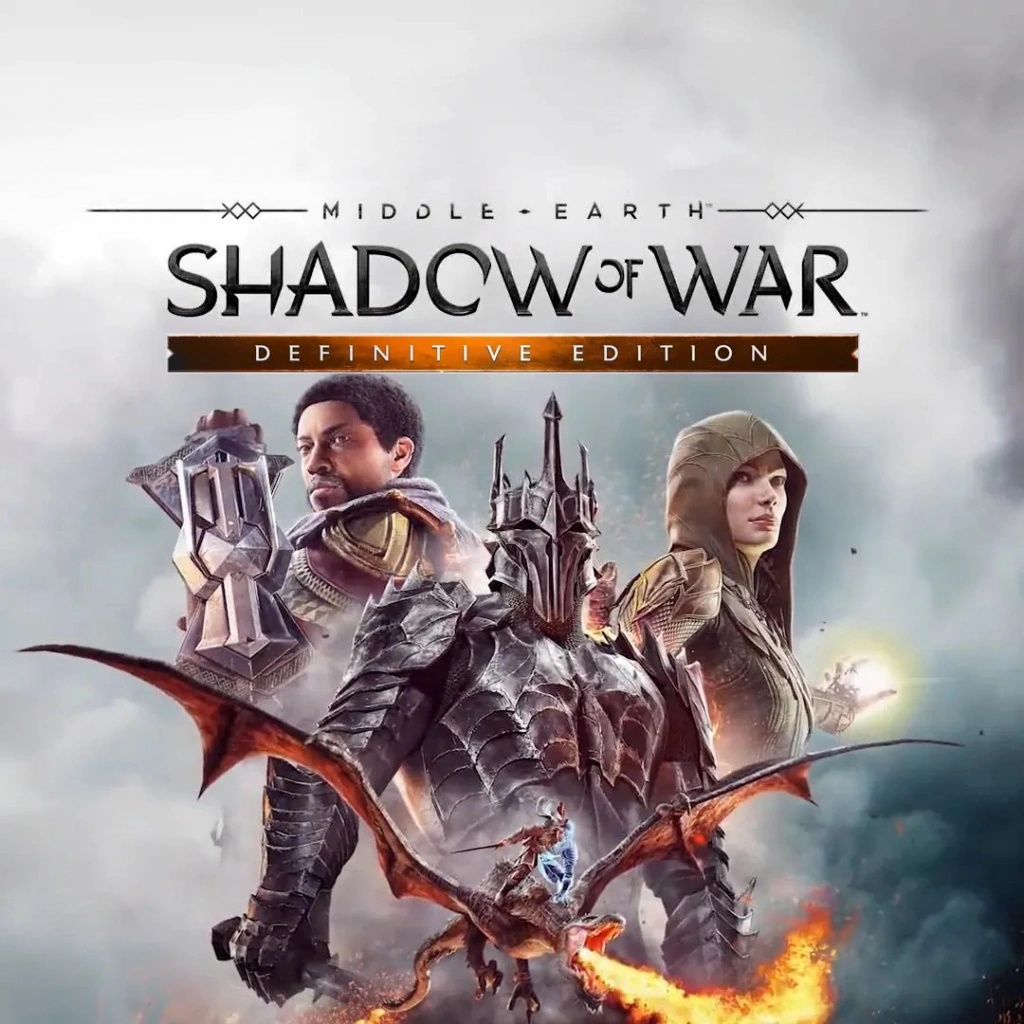
There are few things in gaming quite as satisfying as having a personal grudge against something the game itself created. In most action games, you can defeat an enemy, move on to the next area and forget about them almost immediately. Middle-earth: Shadow of War has never been interested in letting you off that easily. An Orc captain can kill you, remember it, grow stronger because of it, and then come looking for you later, creating the kind of personal rivalry that feels far more meaningful than anything a traditional scripted boss encounter could offer.
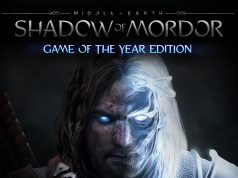
That is the magic of the Nemesis System, and it remains the beating heart of Middle-earth: Shadow of War: Definitive Edition. Originally released in 2017, Monolith Productions’ ambitious sequel built on the foundations of Shadow of Mordor and expanded them into something considerably larger, introducing a vast open world, fortress sieges, army management and an even more elaborate network of Orc relationships. Now, the complete experience arrives on Nintendo Switch 2, bringing Talion’s war against Sauron to Nintendo’s latest hardware. Considering how much is happening beneath the surface of this game, getting it running on a handheld system is an impressive achievement.
For anyone who missed Shadow of War the first time around, this Definitive Edition is also an extraordinarily generous package. Alongside the main adventure, it includes the Blade of Galadriel and Desolation of Mordor story expansions, the Slaughter Tribe and Outlaw Tribe Nemesis expansions, the Sword of Dominion bonus weapon and the various post-launch improvements that eventually removed the game’s controversial microtransactions. It is a huge amount of Middle-earth for one package, and there is something rather satisfying about returning to Mordor without the baggage that surrounded the original release.
Back to Mordor
Set between the events of The Hobbit and The Lord of the Rings, Shadow of War once again places players in control of Talion and the Wraith Celebrimbor. Their uneasy partnership continues as they attempt to forge a new Ring of Power and build an army capable of challenging Sauron from within his own territory. It is an appropriately enormous premise, and the game wastes little time in making it clear that this is not simply another journey through Middle-earth. Talion is not visiting Mordor this time around; he is attempting to turn it against its master.
The story occasionally struggles under the weight of that ambition, particularly when the personal relationship between Talion and Celebrimbor competes for attention with the much larger war unfolding around them. There are moments when the narrative feels more interested in moving the campaign forward than in allowing its characters to breathe, but the central idea remains compelling. Watching Talion gradually build an army from the very forces he is supposed to be fighting gives the campaign a satisfying sense of progression. You are not simply following a predetermined path through Mordor, because the people you recruit and the battles you fight help shape your experience along the way.
The Nemesis System Remains the Star
If there is one reason to play Shadow of War, it is the Nemesis System. The idea is deceptively simple, yet the results can be extraordinary, with Orc captains generated with their own names, personalities, strengths, weaknesses and relationships. Defeat one and you might never see him again, but allow him to kill you and he can rise through the ranks, growing stronger and more confident because of your failure. Suddenly, an enemy who was barely worth noticing can become one of the most memorable characters in your entire playthrough.
This creates stories that feel surprisingly personal because they are shaped by what actually happens while you play. You might be fighting an Orc captain who gets the better of you, only to encounter him later after he has been promoted and given a new position within Sauron’s army. Eventually, you might defeat him and use your Wraith abilities to dominate him, turning a former enemy into one of your own followers. The relationship has gone from enemy to personal rival to reluctant soldier, and the game has created that story almost entirely through its systems.
That remains the game’s greatest achievement. Shadow of War does not simply give you a story to watch unfold; it creates little stories that happen because of your actions. Some of them will be amusing, some frustrating and others genuinely memorable, but they belong to your version of Mordor. Few open-world games have managed to make their enemies feel quite so alive.
Building an Army
Once you begin dominating Orcs, the scale of Shadow of War becomes even more apparent. Your followers are not merely disposable soldiers who exist to fill a health bar or provide a temporary advantage in combat. They become part of your personal army, and each one can play a role in your attempt to conquer the fortresses scattered throughout Mordor. The process of recruiting, developing and managing your forces gives the sequel a strategic layer largely absent from its predecessor.
The fortress assaults are where all of this preparation finally comes together. Looking across an enemy stronghold before launching an attack gives you a genuine sense of impending significance, particularly when the army behind you contains Orcs you personally recruited. There is a wonderful sense of progression in seeing a fortress fall after hours spent weakening its defences and building up your own forces. It makes the campaign feel less like a series of disconnected missions and more like an actual war.
Of course, things rarely go exactly according to plan. Followers can betray you, enemies can exploit weaknesses, and battles can rapidly descend into spectacular chaos. That unpredictability is one of the reasons the army system works so well, because your forces never feel completely under your control. You can prepare as carefully as you like, but Mordor always has a way of throwing something unexpected into the battle.
A World Worth Getting Lost In
Mordor is considerably larger than in Shadow of Mordor, with several regions offering distinct environments, enemies, missions and opportunities for exploration. There is plenty to discover away from the main storyline, and the sheer number of activities can occasionally make the game feel almost overwhelming. You can spend hours following the central narrative, or you can completely lose track of what you were supposed to be doing because an Orc captain has just insulted you and you have decided this is now the most important thing in your life.
That is where the Nemesis System quietly transforms the open world. A journey across the map is rarely just a trip from one objective to another, because an encounter can suddenly create an entirely new reason to stop what you were doing. You might set out to complete a particular mission and end up involved in a feud, a recruitment attempt or an ambush. The world therefore feels less like a collection of activities and more like a place where things can happen around you.
There is also a pleasing sense of progression as you become more powerful and learn to manipulate the systems to your advantage. Early encounters can feel chaotic and dangerous, while later battles allow you to approach situations with considerably more confidence. Even then, Mordor has a habit of reminding you that overconfidence can be punished, particularly when several powerful captains decide to enter the same fight.
The Definitive Edition
The Definitive Edition is particularly attractive because it brings together the complete post-launch package. The Blade of Galadriel and Desolation of Mordor story expansions add substantial new adventures, while the Slaughter Tribe and Outlaw Tribe expansions introduce new Orcs, missions, followers, abilities, weapons, fortresses and other additions to the Nemesis System. There are also new legendary gear sets and other rewards to discover, making this much more than a simple collection of cosmetic extras.
The inclusion of the post-launch balance updates is arguably even more important for modern players. The original version launched with a controversial progression model that included microtransactions, but those have since been completely removed. That makes the Definitive Edition feel much more focused on the core game, with progression driven by playing, exploring, fighting and building your army rather than by an additional layer of monetisation.
For newcomers, this is therefore the version that makes the most sense. It contains the main campaign, the major expansions and the improvements that have been made to the experience over time. There is an enormous amount of content here, and even after completing the main adventure, the Nemesis System provides plenty of reasons to keep wandering back into Mordor.
Mordor in Your Hands
Bringing Shadow of War to the Nintendo Switch 2 is an intriguing proposition, given that it is neither a small nor a technically simple game. The Nemesis System constantly tracks Orcs, relationships and rivalries, while the open world can become packed with enemies, combat effects and activity. Fortress battles add another layer of complexity, with large numbers of characters occupying the same battlefield. Getting that entire experience onto Nintendo’s latest hardware without stripping away the elements that make it special is therefore no small achievement.
The Switch 2 version benefits from the system’s increased capabilities, allowing the adventure to retain its sense of scale while supporting both portable and docked play. Portability is particularly appealing because Shadow of War is exactly the sort of game that can consume enormous amounts of time without you noticing. Being able to settle into a lengthy campaign on the sofa is one thing, but having Mordor available when away from the television gives the experience a different kind of convenience.
There is something almost fitting about taking Talion’s campaign on the move. The game is built around short encounters that can unexpectedly develop into much longer sessions, and the Switch 2 makes it remarkably easy to tell yourself that you will deal with one more Orc captain before putting the system down. Of course, one more Orc captain often becomes another fortress assault, followed by another recruitment attempt and then another revenge mission. Before you know it, the evening has disappeared.
What Has Changed
However, there is one important consideration for returning players. Some of the online features from the original release are no longer available, including Online Conquests, Vendettas, Fight Pits, Chests and Training Orders. These features were part of the wider online ecosystem surrounding the original game, so their absence will be noticeable to veterans who remember those systems. For newcomers, however, the loss is less significant because the core single-player adventure remains enormous.
The good news is that the Garrison is now available offline. This allows undeployed Orc followers to be moved between regions without an internet connection, which is particularly useful in a game where managing your army is such an important part of progression. It is a sensible adaptation for a modern release and means one of the most enjoyable aspects of the original experience remains readily accessible.
The result is a version that feels much more focused on the content that matters most. You are here to explore Mordor, fight Orcs, build your army and conquer fortresses, and there is more than enough content to keep you occupied without relying on the retired online features. It is not quite the same package that veterans might remember, but it is still a remarkably complete single-player experience.
A Sequel That Still Feels Special
What makes Shadow of War so interesting all these years later is that it remains difficult to describe as simply another open-world action game. There are familiar ingredients here, including combat, exploration, collectables, missions, equipment and character progression, but the Nemesis System gives everything a personality that conventional open-world design often struggles to create. The world remembers what you do, and enemies sometimes remember it better than you would like.
That memory is what turns an ordinary encounter into a story. An Orc who kills you can become a recurring nemesis, while another who repeatedly helps you might eventually become one of your most trusted followers. A seemingly insignificant encounter can therefore have consequences hours later, creating moments that could never have been written in advance because they are based on what happened during your own playthrough.
It is also why the game remains so replayable. Even if you know the broad direction of the campaign, you do not know which Orcs will rise through the ranks, which followers will betray you or which rivalries will emerge along the way. The main storyline provides the framework, but the Nemesis System supplies the personality.
Verdict
Middle-earth: Shadow of War: Definitive Edition is a brilliant reminder of how ambitious Monolith Productions’ original game was. Beneath the familiar Lord of the Rings setting lies an action RPG built around one of gaming’s most fascinating systems, capable of transforming ordinary enemies into recurring villains, unlikely allies and genuinely memorable characters. It remains one of those games where the systems themselves can create stories that stay with you long after a conventional scripted encounter would have been forgotten.
The combat is still satisfying, the world is enormous, the fortress sieges provide genuine spectacle, and the army management mechanics give the adventure a wonderful sense of progression. The Definitive Edition also deserves credit for bringing together the substantial story and Nemesis expansions while removing the microtransactions that were such a contentious part of the original release. For anyone experiencing Shadow of War for the first time, this is a remarkably comprehensive package.
The Nintendo Switch 2 version makes the experience even more appealing by allowing that huge adventure to be played both at home and on the move. The retired online features are an understandable caveat, particularly for returning players, but the offline Garrison helps preserve an important part of the army management experience. More importantly, the essential single-player adventure remains intact, and there is enough content here to keep even committed players busy for a very long time.
Most importantly, Shadow of War still has something that many much newer open-world games struggle to achieve. It can make you care about an Orc. You might hate him, recruit him, betray him, lose him, and eventually come face to face with him again, and suddenly a random enemy has become part of your personal history in Mordor. That is the game’s secret weapon. It does not simply give you a world to explore. It gives you a world that reacts to you. And sometimes, somewhere in the darkness of Mordor, there is an Orc who remembers exactly what you did.