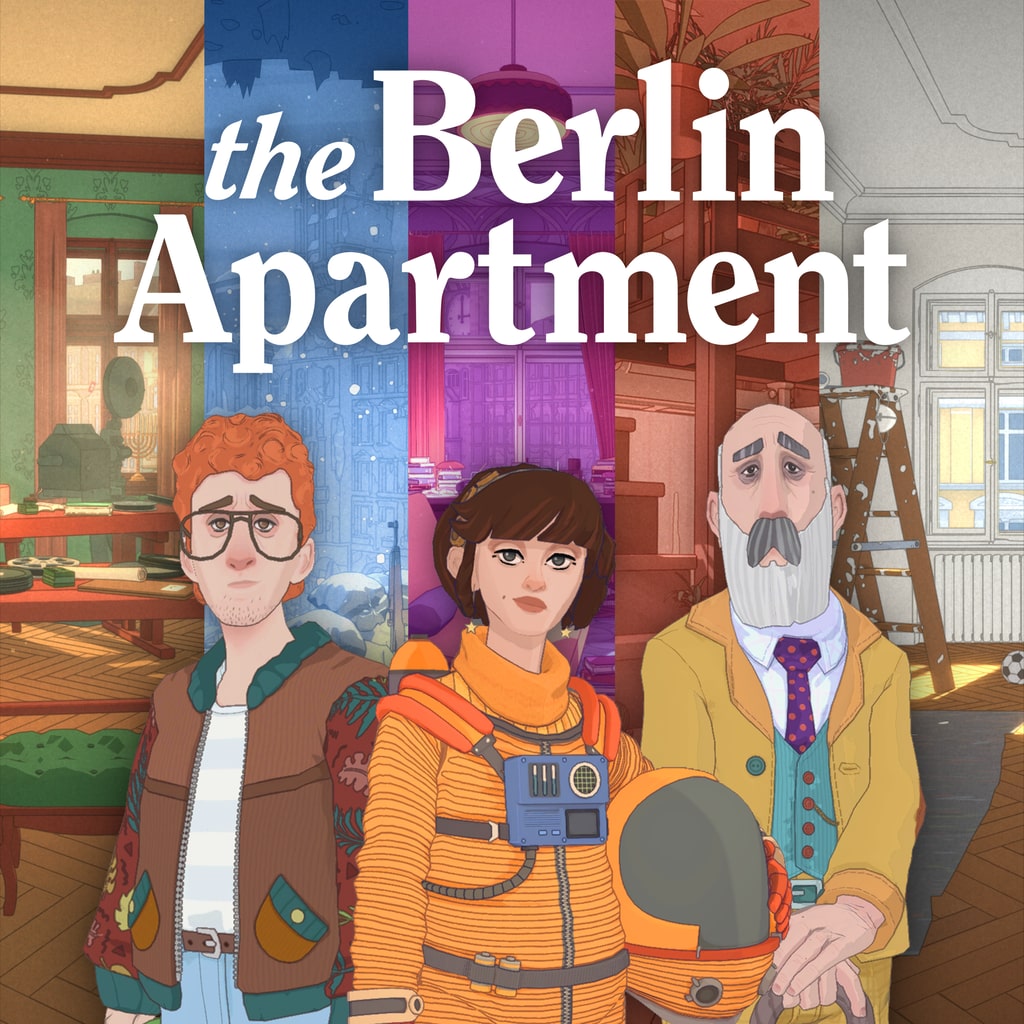
In a landscape crowded with mystery and narrative-driven games, The Berlin Apartment stands out as a chilling, meticulously crafted thriller that demands patience, attention to detail, and a willingness to step into a morally ambiguous world. Developed by Inklings Interactive and released in 2025 on PC and consoles, this first-person exploration game blends escape-room-style puzzles with psychological storytelling, delivering a tense and immersive experience that lingers long after you’ve put down the controller.
Story & Setting
The premise is deceptively simple: you play as an unnamed protagonist who inherits an apartment in Berlin from a distant relative, only to discover that the unit is filled with secrets, strange objects, and a hidden history that spans decades. As you explore, you uncover documents, photographs, and recordings that hint at the lives — and sins — of previous tenants.
The narrative unfolds gradually, using environmental storytelling to immerse players in its eerie world. The apartment itself is a character: peeling wallpaper, creaking floorboards, and dimly lit corridors create an atmosphere of unease. Each room holds layers of detail, from meticulously arranged furniture to cryptic notes that hint at a deeper, darker story. The plot explores themes of obsession, isolation, and human frailty, culminating in revelations that are unsettling rather than gratuitous.
What’s particularly effective about The Berlin Apartment is how it balances ambiguity and clarity. It never spoon-feeds answers, allowing players to piece together the narrative themselves. Multiple endings reward careful observation and thorough exploration, encouraging replayability and deep engagement.
Gameplay & Puzzles
At its heart, The Berlin Apartment is a first-person puzzle adventure. Exploration is deliberate: players examine every drawer, bookshelf, and hidden compartment, often discovering clues essential to progression. The puzzles themselves range from logic-based conundrums to environmental manipulation, requiring careful observation and deduction.
Some highlights include combination locks, hidden passageways, and intricate mechanical puzzles that feel organic to the setting. The game also encourages lateral thinking — a single object may have multiple uses depending on context, and deciphering cryptic clues is often as satisfying as solving the puzzle itself.
Difficulty is well-balanced. Early puzzles serve as gentle introductions, while later challenges demand patience, reflection, and a willingness to experiment. While a few puzzles may stump casual players, the game’s design ensures that the solution is never arbitrary; all clues are fair, if sometimes subtly hidden.
Movement and interaction are smooth, with intuitive controls that allow players to focus on exploration rather than fighting against the interface. A contextual hint system exists, but it is minimal, preserving the sense of discovery that drives the game’s tension.
Atmosphere & Presentation
The Berlin Apartment excels at creating a sense of place. Its visual style is realistic, yet stylized enough to amplify unease. Lighting is used masterfully: shadows creep along walls, flickering bulbs illuminate clues, and subtle visual cues guide players through complex spaces. The apartment feels lived-in, with personal touches that tell silent stories about the former occupants.
Sound design is equally impressive. Ambient noises — distant traffic, dripping water, and the occasional groan of the building settling — contribute to a sense of tension and realism. Sparse, haunting music underscores key moments without ever becoming intrusive, heightening suspense while leaving room for players’ imagination to fill in the gaps. Audio cues also play a functional role in puzzles, adding another layer of immersion and challenge.
Strengths
- Immersive narrative: Environmental storytelling rewards close attention and careful exploration.
- Well-designed puzzles: Logic-based and environmental challenges are clever, fair, and satisfying.
- Atmosphere: Lighting, sound, and detail create a tense, believable world.
- Replayability: Multiple endings and hidden secrets encourage exploration and multiple playthroughs.
- Accessibility: Intuitive controls and minimal interface distractions keep focus on the story and puzzles.
Weaknesses
- Slow pacing: Some players may find the deliberate exploration and puzzle-solving a bit slow or methodical.
- Limited action: Those expecting combat or high-octane sequences may be disappointed.
- Occasionally opaque clues: A few puzzles require extreme attention to subtle detail, which could frustrate casual players.
Replayability & Longevity
The main campaign can be completed in roughly 8–10 hours, depending on how thoroughly you explore. However, multiple endings and optional hidden items encourage careful revisitation. Completing the game with different outcomes reveals new narrative layers and puzzles, enhancing replay value. For completionists, hunting down every clue can extend the experience considerably.
The game also rewards players who approach it as a puzzle narrative rather than a conventional adventure. Observant players who take notes, experiment with objects, and pay attention to environmental storytelling will get the most out of its layered narrative.
Conclusion
The Berlin Apartment is a masterclass in tension, atmosphere, and thoughtful puzzle design. It is not a game for those seeking constant action or a fast-paced storyline. Instead, it invites you to slow down, examine your surroundings, and engage your mind. The combination of immersive storytelling, clever puzzles, and a richly detailed environment makes it a standout in the exploration and puzzle genres.
For fans of narrative-driven mystery games and cerebral puzzles, The Berlin Apartment delivers an experience that is equal parts haunting and rewarding. Its subtle terror, attention to detail, and layered storytelling make it a title that will linger in players’ minds long after the credits roll.