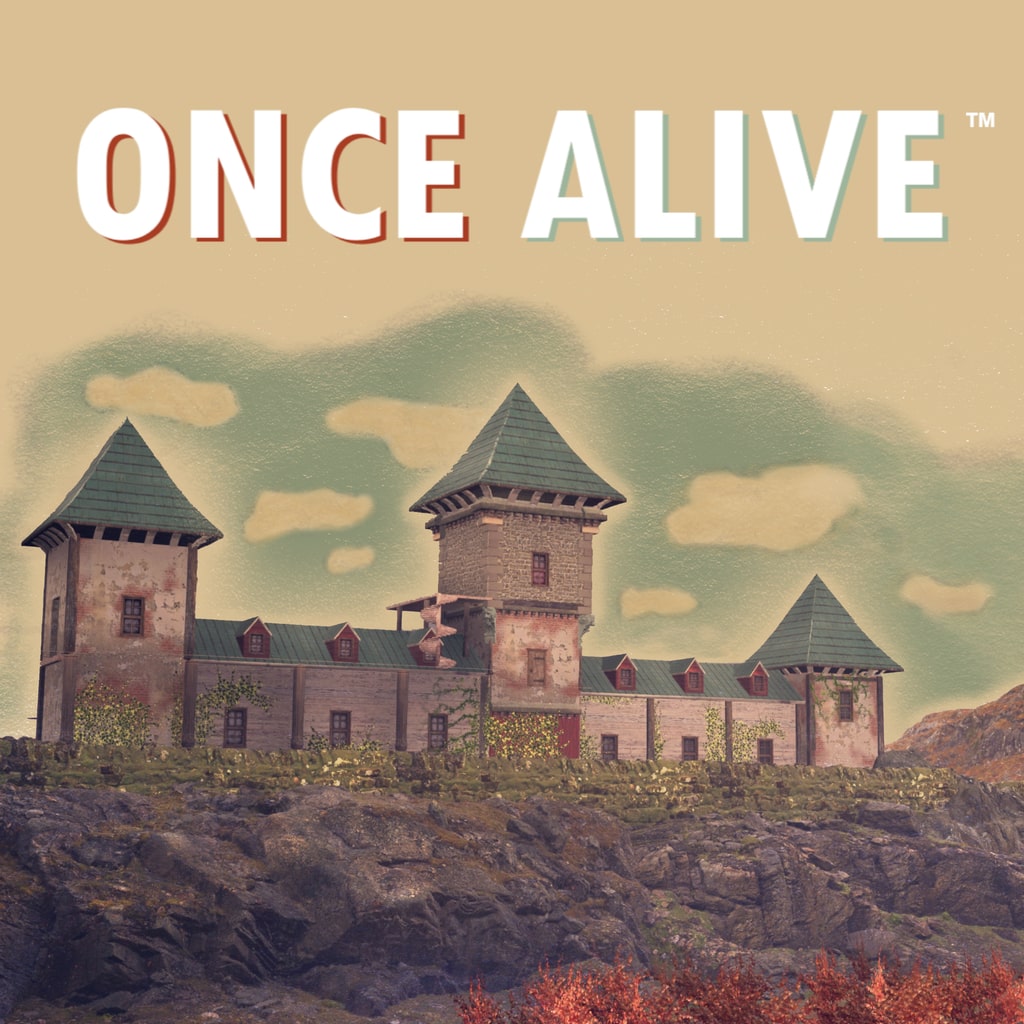
Once Alive is the sort of game that understands one of the most powerful things about post-apocalyptic fiction: sometimes the absence of people is far more frightening than the presence of monsters. Sixteen years after a global virus has apparently wiped out humanity, James has settled into a grim existence alongside his brother, Daniel, believing they may be the last survivors. Then a mysterious invitation arrives, pointing towards a settlement called HaustVille, and suddenly the possibility of finding another human being becomes too important to ignore.
That premise is hardly unfamiliar territory, but Once Alive approaches it with a refreshing willingness to slow down and let its environment do the talking. Developed by solo creator Cem Boray Yıldırım, the game is primarily an atmospheric first-person adventure about exploration, discovery, and trying to understand what happened, rather than blowing away endless hordes of enemies. It is a game about walking into a house and immediately wondering who lived there, why they left, and whether they left willingly. When it works, Once Alive creates exactly the kind of uncomfortable curiosity that keeps you moving forward even when every instinct tells you to turn around.
Welcome to HaustVille
The journey begins with a simple objective. James and Daniel want to find other survivors, and HaustVille represents their best chance of doing exactly that. After travelling for several days, however, they arrive to find something very wrong with the village. There are homes, buildings, belongings, and all the familiar traces of ordinary life, but the people themselves have vanished.
It is an effective setup because Once Alive does not immediately throw its entire mystery at you. Instead, it allows questions to build naturally as you explore. Why was this place abandoned? What happened to the people who lived here? What role did the virus play? Most importantly, why does HaustVille feel as though its residents disappeared rather than simply died?
The story is divided into three parts, beginning with The Last Survivor, moving into Whatever It Takes, and eventually reaching They Are Gone. That structure gives the adventure a clear sense of progression while maintaining its central mystery. There is a deliberate sense that every discovery is bringing James closer to something he may not actually want to know.
Exploration That Rewards Curiosity
Exploration is unquestionably the heart of Once Alive. HaustVille is the real star of the show, and wandering through its houses, streets, outbuildings and surrounding wilderness is where the game finds most of its personality. There is no constant stream of objectives filling the screen, nor is there an intrusive interface telling you where to go next. Instead, the environment itself provides the clues.
This approach makes even the most ordinary objects surprisingly important. A discarded item, a photograph, a note or a room left in disarray can provide another small piece of the puzzle. You start examining shelves and tables not because the game tells you to, but because you have learned that the developers might have hidden something meaningful there. That sense of discovery is one of the game’s strongest qualities.
The environmental storytelling also benefits from the game’s abandoned setting. There is something inherently eerie about walking through a place clearly designed for a community and finding nobody there. Chairs remain where people once sat, possessions are scattered around homes, and buildings retain the physical scars of lives that have simply stopped. It creates a strange intimacy, as you learn about people you never meet through the things they left behind.
Listening to the Past
One of the more interesting touches is the use of speech echoes. Rather than relying exclusively on conventional audio logs, Once Alive occasionally lets remnants of conversations and voices surface as you explore. These moments can make the otherwise silent environment suddenly feel occupied, only for that sensation to disappear almost as quickly as it arrived.
It is an effective way of playing with memory. You are physically standing in an empty location while hearing fragments of what once happened there, creating a bridge between the present and the settlement’s mysterious past. The technique also prevents the storytelling from becoming too reliant on lengthy exposition dumps.
There is a certain melancholy to these sequences that fits the game’s wider atmosphere. Once Alive is not particularly interested in making the apocalypse feel glamorous. There is no heroic survival fantasy here, at least not at its core. Instead, there is loneliness, uncertainty and the uncomfortable realisation that the world has continued without the people who once filled it.
A World That Isn’t Quite Safe
Although Once Alive is predominantly an exploration experience, it does not forget that this is a world where civilisation has collapsed. The virus has not simply reduced the human population. Wildlife has also become more aggressive, so the wilderness surrounding HaustVille can pose a genuine threat.
These encounters add a little tension to what might otherwise become an entirely passive experience. Heading away from the relative safety of the settlement can make the journey feel more uncertain, particularly when you know something could be lurking nearby. The game wisely avoids becoming a full-blown survival shooter, because combat is not really the point.
Instead, danger serves to remind you that James is not wandering through a museum. This is a hostile world, and being one of the last survivors means there is nobody coming to rescue you if something goes wrong. That vulnerability works well alongside the game’s slower pace.
Puzzles That Keep You Moving
The puzzle design is comparatively straightforward, focusing largely on exploration, observation and finding the right objects to progress. Keys need to be found, notes examined and environmental clues interpreted before certain areas can be accessed. None of this is likely to leave seasoned adventure fans scratching their heads for hours, but that isn’t necessarily a problem.
The puzzles feel more like a natural extension of exploration than artificial obstacles designed to pad out the running time. You are searching a house to understand what happened there, and finding a key simply gives you another reason to investigate somewhere else. That relationship between exploration and progression is important because it keeps the experience cohesive.
There are moments when you might wish the game pushed its puzzles a little further. More elaborate environmental challenges could have given the exploration additional depth, particularly later in the adventure. Still, the relatively light touch means the story remains the priority, and players who enjoy walking simulators should find the balance comfortable.
A Beautifully Desolate World
Visually, Once Alive makes an immediate impression. Built using Unreal Engine 5, HaustVille benefits from detailed environments, convincing lighting and an impressive amount of environmental clutter. Abandoned buildings don’t simply feel like empty boxes waiting for the player to walk through them. They feel lived in, even though the people who once lived there are long gone.
That detail is crucial to the atmosphere. A post-apocalyptic village can easily become visually repetitive, particularly when every building is another variation on the same abandoned interior. Once Alive generally avoids that trap by filling its environments with enough small details to encourage investigation.
There are occasional rough edges, particularly in character animation, where some movements can feel less convincing than the environments surrounding them. These moments serve as reminders of the game’s modest development origins. Even so, the overall visual presentation is one of its biggest strengths, and HaustVille can look genuinely beautiful when the lighting and scenery come together.
Sound of Silence
Audio plays an equally important role. There is something wonderfully unsettling about walking through an abandoned village where your footsteps and the occasional environmental sound are given room to breathe. Door creaks, distant noises and subtle shifts in the soundscape can make otherwise harmless locations feel strangely threatening.
The soundtrack complements this beautifully. Rather than constantly pushing dramatic music into every scene, Once Alive understands that silence can be more effective. The melancholic score appears when it matters, helping important discoveries carry emotional weight without overwhelming them.
This restraint makes the speech echoes particularly effective. Hearing a voice in an otherwise quiet environment immediately grabs your attention. It makes you wonder whether you have genuinely heard something or whether you are simply experiencing another fragment of the village’s past.
A Mystery Worth Following
Where Once Alive succeeds most convincingly is in making you care about what happened to HaustVille. The central mystery is not necessarily groundbreaking, and experienced players will probably recognise familiar post-apocalyptic storytelling ideas along the way. What makes the journey worthwhile is the atmosphere surrounding those ideas.
There is a real sense of loneliness here. James isn’t simply searching for information. He is searching for proof that he and his brother are not alone, which gives every discovery an additional emotional layer. Finding evidence of other survivors can feel exciting, but it can also raise even more uncomfortable questions.
The relationship between James and Daniel reinforces that emotional core. Their decision to leave everything behind in search of other people gives the adventure a human motivation rather than simply providing an excuse to send the player into another abandoned settlement. It makes the mystery feel personal.
The Final Word
Once Alive will not be for everyone. If you need constant combat, elaborate character progression or complicated puzzles to keep you engaged, its deliberate pace may test your patience. This is an adventure that wants you to look around, listen carefully and absorb the atmosphere rather than sprint from one action sequence to the next.
For players who enjoy environmental storytelling, however, there is plenty to appreciate. HaustVille is an intriguing setting, the visual presentation can be surprisingly impressive, and the combination of abandoned locations, echoing speech and scattered objects creates an effective sense of mystery. It may occasionally show the limitations of its smaller production, but those imperfections are outweighed by the ambition behind the experience.
Most importantly, Once Alive understands that the best post-apocalyptic stories aren’t necessarily about saving the world. Sometimes they are about finding one reason to keep going after the world has already ended. James arrives in HaustVille hoping to find people, but what he discovers instead is a mystery that forces him to confront the past and question what being alive really means. That is a surprisingly powerful idea, and it gives Once Alive enough heart to rise above its limitations.
Verdict
Once Alive is a haunting, atmospheric exploration adventure that makes excellent use of its abandoned village setting. Its environmental storytelling, subtle audio design and Unreal Engine 5 visuals create an absorbing world that encourages curiosity, while the mystery surrounding HaustVille provides enough intrigue to keep the journey moving.
It is not a game built around constant excitement, and some of its mechanics and animations could have benefited from further refinement. Yet there is something genuinely compelling about wandering through a deserted settlement and slowly piecing together the lives of those who once called it home.