Grab your shades, straighten that tie, and prepare for a mission that feels like it has fallen straight out of an old Saturday morning spy serial. 1964: Operation Velvet Twins is not interested in reinventing the wheel. It simply wants to make that wheel roll very, very quickly.
There is something wonderfully uncomplicated about 1964: Operation Velvet Twins. At a time when many games are determined to overwhelm us with enormous worlds, sprawling progression systems and enough menus to require a degree in accounting, SEEP’s latest adventure goes in precisely the opposite direction. It gives you a secret agent, a collection of colourful locations, some extremely suspicious-looking villains and a frankly impressive selection of things to hit people with. Then it gets out of the way and lets the punching begin.
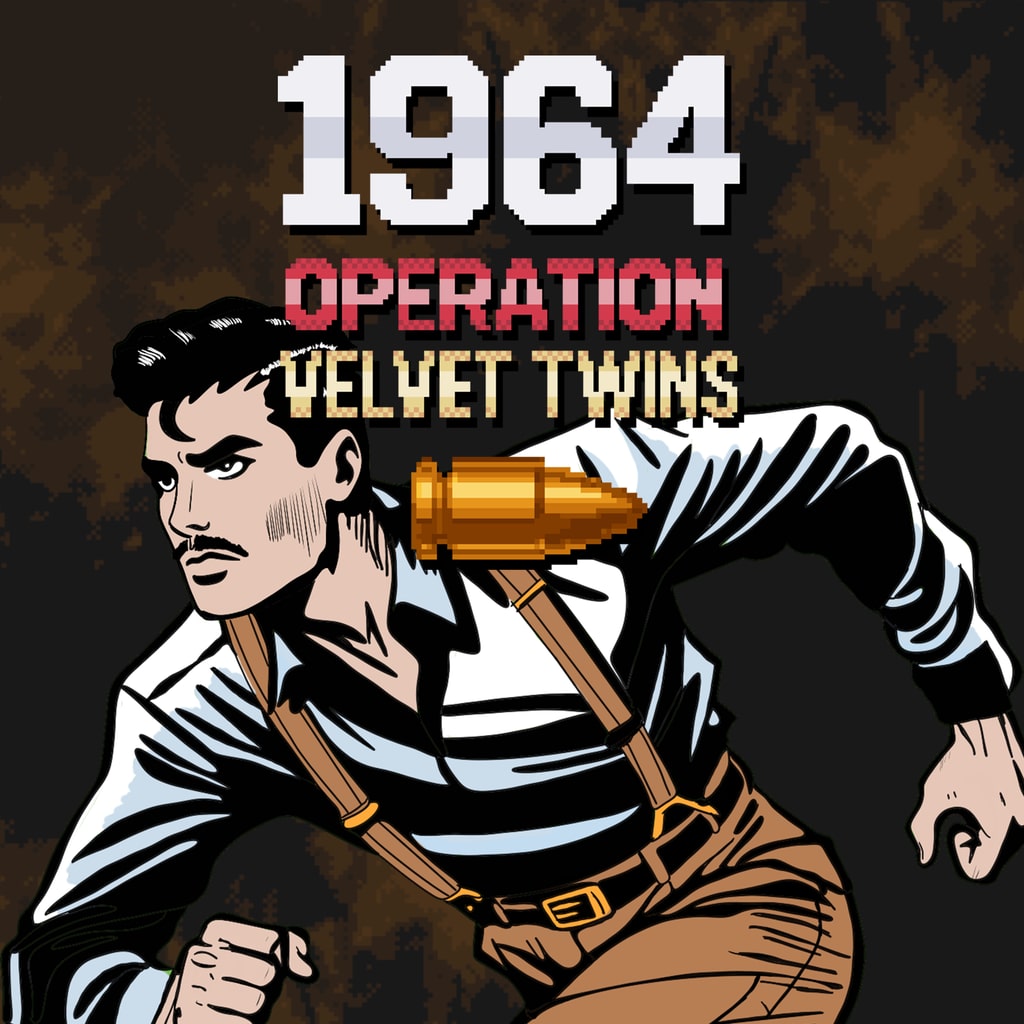
Playing as Secret Agent Mike Rogers, you are tasked with tracking down the mysterious Velvet Twins, a pair of fugitive terrorists who have caused enough trouble to warrant an international manhunt. Your pursuit takes you through seven distinctive locations, from neon-drenched Las Vegas and grimy Chinatown to abandoned factories and a wonderfully unexpected Wild West setting. It is all presented through deliberately retro 8-bit visuals, complete with chiptune music and an arcade sensibility that feels increasingly refreshing the longer you play.
A Mission Straight From the Arcade
The first thing that becomes apparent is how committed 1964: Operation Velvet Twins is to its influences. This is a game that remembers when an action title could be explained in a couple of sentences and still offer plenty of reasons to keep playing. Walk forwards, deal with enemies, collect money, survive the stage and take down the boss waiting at the end. It sounds simple because it is, but there is real pleasure in that clarity.
Mike begins proceedings relying on his fists, and there is something particularly satisfying about watching an old-school secret agent wade into trouble with nothing but his knuckles. Enemies arrive in groups, forcing you to pay attention to positioning and timing rather than simply hammering away at the attack button. Once firearms and other weapons enter the equation, things become considerably more chaotic, and suddenly the screen can resemble the sort of gloriously over-the-top action sequence that would have been accompanied by a cheesy brass soundtrack in a 1960s spy film.
The weapons are among the game’s most entertaining touches. Pistols and submachine guns provide obvious firepower, but 1964: Operation Velvet Twins is equally happy to let you pick up swords, baseball bats, crates and whatever else happens to be lying around. There is a charming sense of improvisation to it all. When an enemy is coming at you with bad intentions, apparently the correct response is simply to find the nearest object and hit them with it.
Punch First, Ask Questions Later
Combat is deliberately straightforward, but that doesn’t mean it is entirely mindless. Enemies can quickly overwhelm you if you fail to manage their positioning, especially when several opponents approach from different directions. Knowing when to attack, when to move and when to make use of a newly acquired weapon becomes increasingly important as the stages progress.
The best moments come when everything clicks. You knock an enemy down, grab their weapon, use it to clear a small crowd, pick up some cash, and then find yourself facing another group before you’ve had time to catch your breath. There is a pleasing momentum to these sequences, and they capture that old arcade sensation of being constantly pushed forward.
That said, players accustomed to modern action games may occasionally find the mechanics somewhat rigid. There is no enormous combat system to master, no sprawling skill tree and no elaborate character progression. 1964: Operation Velvet Twins knows what it wants to be and rarely strays from that path. Whether that is a strength or a weakness depends largely on how much you enjoy old-fashioned arcade design.
Personally, I found the simplicity rather refreshing. Not every game needs to give you a hundred abilities before you are allowed to have fun.
Seven Stops on a Very Strange Mission
The journey across the game’s seven locations is another of its strongest elements. Las Vegas immediately establishes the colourful, pulpy tone, while Chinatown brings a darker urban flavour. The abandoned factories provide plenty of industrial grime, and the Wild West village is such a wonderfully odd change of scenery that it feels like Mike has accidentally wandered into an entirely different film.
These environments are not enormous, intricately detailed worlds, but they don’t need to be. Each location provides enough visual identity to keep the adventure moving, and the changing scenery helps prevent the action from becoming visually monotonous. There is also a pleasing sense of travelling through a ridiculous international spy adventure, even if the actual journey is considerably more compact than the premise suggests.
The bosses add further personality. Eight eccentric encounters stand between Mike and his ultimate target, and these fights provide welcome punctuation after the regular enemy encounters. They also fit the game’s pulpy personality rather nicely. Rather than attempting to create deeply nuanced antagonists, SEEP seems much more interested in producing memorable characters who look like they have escaped from the pages of an outrageous comic book.
The Joy of 8 Bit
Visually, 1964: Operation Velvet Twins is unapologetically retro. The pixel art deliberately evokes the Master System and NES era, with chunky sprites, limited colour palettes and environments that convey their ideas through simple yet effective visual design. It isn’t trying to fool anyone into thinking this is a lost 1960s arcade cabinet discovered in a warehouse, but it certainly understands why that style remains appealing.
There is a warmth to this kind of presentation that modern photorealism cannot always replicate. Mike’s animation may be basic by contemporary standards, but his silhouette is instantly recognisable. Enemies are similarly legible, which is particularly important when the action gets busy.
The soundtrack completes the package. Chiptune melodies give the adventure exactly the right amount of retro swagger, while the sound effects provide the necessary punctuation for every punch, shot and weapon strike. Nothing here is trying to be subtle. The music wants to make you feel like you have just inserted another coin into an arcade machine, and it succeeds.
Cash, Power Ups and High Scores
Money adds a simple extra layer to the action. Dollars can be collected throughout each stage and either spent on power-ups or saved towards your eventual score. It is not a revolutionary system, but it gives you another small decision to make as you progress through the levels.
Do you spend your cash to make the current run easier, or take the risk and hold onto it in pursuit of a higher score? That choice fits neatly with the game’s arcade roots. 1964: Operation Velvet Twins is not just about reaching the end. It also encourages you to replay stages, improve your performance and see whether you can squeeze a little more out of each run.
This is where the game’s longevity largely comes from. If you are looking for a lengthy campaign filled with character development and elaborate side missions, you will probably finish wanting more. If, however, you enjoy the idea of replaying a compact action game in an attempt to improve your score and execution, there is considerably more here to appreciate.
A Little More Personality Wouldn’t Hurt
If there is one area where 1964: Operation Velvet Twins could have pushed harder, it is in its overall depth. The retro simplicity is part of the appeal, but there are moments when the game feels as though it could have benefited from a few more ideas. More enemy types, additional weapon interactions, or a deeper scoring system could have given experienced players another reason to return once they had mastered the basic stages.
The story also exists primarily as an excuse to move Mike from one fight to the next. That isn’t necessarily a criticism, because the game clearly isn’t trying to deliver a serious espionage thriller. Still, the idea of a 1960s secret agent chasing a pair of notorious fugitives has enough potential for some wonderfully silly storytelling, and I occasionally wished the game leaned even further into its B-movie personality.
There is a difference between being deliberately simple and leaving potential ideas unexplored. 1964: Operation Velvet Twins occasionally finds itself somewhere between the two.
Verdict
1964: Operation Velvet Twins is an enjoyable little blast from the past that understands exactly what makes retro action games so appealing. It is fast, colourful, uncomplicated, and more than happy to let you solve most problems with your fists. The combination of firearms, improvised melee weapons, eccentric bosses and varied locations gives the adventure enough variety to remain entertaining without sacrificing its wonderfully old-fashioned simplicity.
It won’t satisfy players looking for a huge campaign or a sophisticated modern combat system, but that was never really the point. This is a game built around the pleasure of picking up a controller, getting stuck into some colourful trouble and seeing how far your skills can carry you.
Most importantly, it has personality. The Wild West showdown, the absurd assortment of weapons and the knowingly cheesy spy premise all give 1964: Operation Velvet Twins a charm that could easily have been lost beneath its retro ambitions. Instead, SEEP has created something that feels like a love letter to a simpler era of gaming, complete with plenty of punches and just enough ridiculousness to keep a smile on your face.