There are plenty of games that test your reflexes, memory or ability to solve complicated puzzles, but very few are brave enough to question whether you actually know how to behave around other people. KUUKIYOMI 4: Consider It takes that wonderfully strange idea and turns it into an entire game, asking players to read the room, understand what is happening around them and make the choice that feels socially appropriate. Sometimes that choice is obvious. Other times, you will stare at the screen wondering how on earth the game expects you to interpret what is going on. That uncertainty is where much of the fun comes from.
Developed and published by G-MODE, KUUKIYOMI 4 continues a series that has always found comedy in the tiny social decisions we make every day. This fourth instalment has an especially charming premise because it focuses on the main character’s childhood, presenting its collection of situations with a sense of innocence and curiosity. The accompanying “Dire Situations” DLC then takes that innocent concept and gleefully throws it into a blender, replacing everyday awkwardness with zombies, aliens, disasters and other considerably more pressing problems.
What makes the package work so well is that the controls are almost ridiculously simple. You generally manipulate the red object on screen and decide what it should do in response to whatever situation has been presented. There are no complicated button combinations to learn and no enormous instruction manuals to digest. The challenge is entirely in understanding the circumstances, which can be considerably harder than the controls make it sound.
Reading the Room
The basic idea behind KUUKIYOMI is wonderfully accessible. You are presented with a brief scenario and given control of a red character or object, with the goal of doing the right thing. Sometimes you need to move out of someone’s way; sometimes you need to help another character; and sometimes the correct response is simply to do absolutely nothing. It sounds easy when described like that, but the game has a mischievous habit of presenting situations where the socially acceptable answer isn’t necessarily the one you initially expect.
That is where the game’s personality really shines. KUUKIYOMI 4 understands that reading the atmosphere isn’t an exact science, because social interactions are filled with tiny details and assumptions. A gesture that seems perfectly reasonable in one situation might be completely inappropriate in another. The game takes those nuances and exaggerates them just enough to make them funny without losing sight of the underlying idea.
The childhood setting also gives this instalment a slightly different flavour. Rather than making every scenario feel like another adult etiquette examination, there is an innocent quality to many of the situations. Looking at the world through the eyes of a child allows G-MODE to explore familiar experiences from a more playful perspective, and that helps make the stranger scenarios feel considerably more natural.
100 Ways to Make a Decision
The main “Consider It” mode is the heart of the experience, offering 100 situations to work through before providing a diagnosis of your ability to read the atmosphere. It is a deceptively effective structure because each challenge is short, yet the cumulative effect can be surprisingly revealing. You might breeze through several scenarios feeling like a social genius, only to completely misunderstand something so obvious that you begin questioning your entire existence.
There is a lovely rhythm to the way these situations are presented. You see what is happening, make your decision, and immediately move on to the next challenge. There is very little unnecessary padding, allowing the game to maintain its almost arcade-like momentum. Before long, you are second-guessing yourself, trying to determine whether the game wants you to behave naturally or whether there is some tiny visual clue you have overlooked.
The scoring system adds another layer of entertainment. You aren’t simply told whether you succeeded or failed, but are given an overall assessment of your ability to consider the feelings and circumstances of those around you. It is deliberately silly, yet there is a tiny part of you that genuinely wants to improve your score. Nobody wants a digital game to tell them that they are socially hopeless.
Consider It Together
The multiplayer “Consider It Together” mode is arguably where KUUKIYOMI 4 becomes the perfect party game. Two people are presented with situations and must make their own decisions, after which the game assesses their compatibility. It is a wonderfully simple concept, because you quickly discover just how differently two people can interpret the same situation.
This can produce genuinely funny moments, particularly when both players are convinced their decision was obviously correct. What starts as a harmless social test can quickly become an argument about whether somebody should have moved, waited, helped, ignored, or simply stayed out of the way. That makes the mode particularly well suited to playing with friends or family, because the entertainment often continues after the scenario itself has finished.
It also gives the game a welcome reason to be played repeatedly. Once you know what the single-player mode feels like, playing through it with somebody else changes the experience considerably. You aren’t just trying to get the highest score anymore. You are discovering how well your judgement matches somebody else’s, and the results can be wonderfully unpredictable.
When Everything Goes Wrong
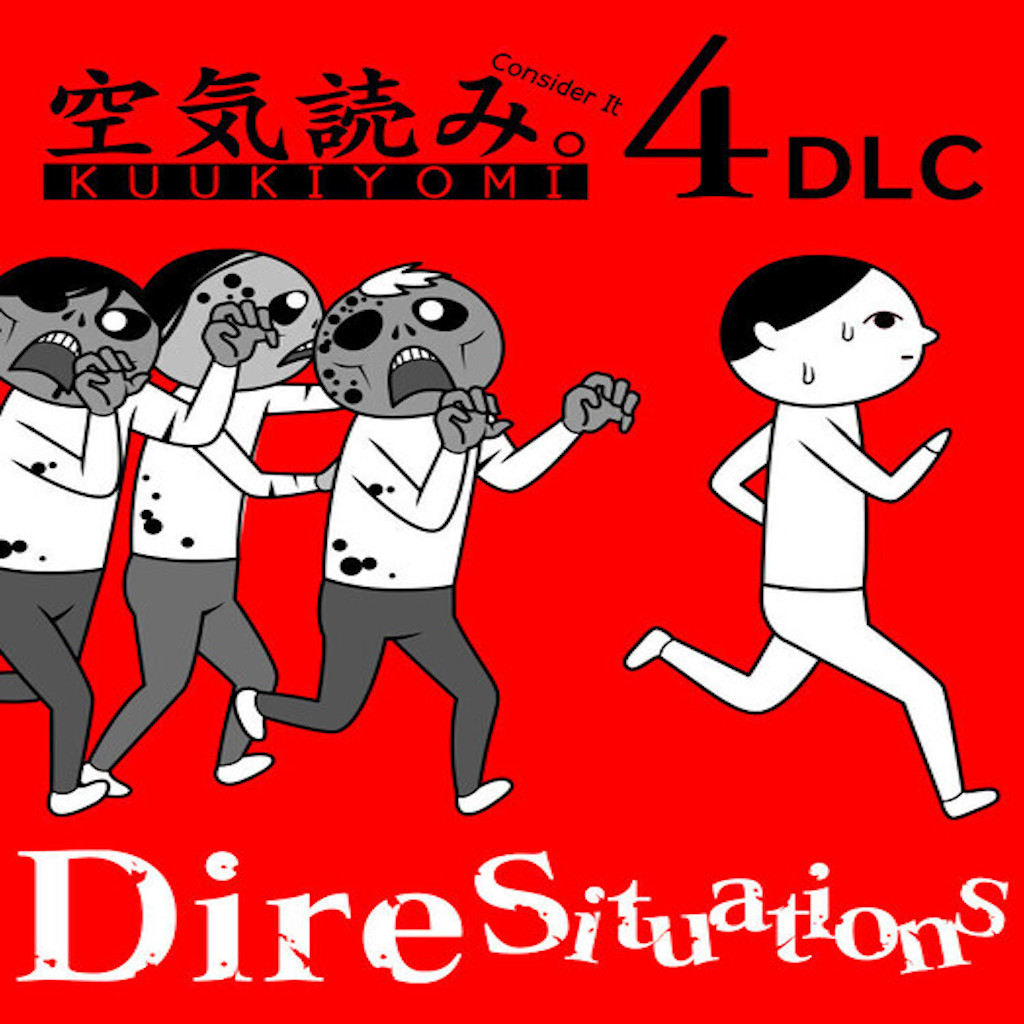
Then there is the “Dire Situations” DLC, which takes the central premise and turns the absurdity dial several notches higher. Instead of worrying exclusively about everyday social etiquette, you are suddenly confronted with situations involving zombies, aliens, disasters and other catastrophes. The core mechanics remain reassuringly familiar, but the consequences of making the wrong choice are suddenly far more dramatic.
The clever thing is that G-MODE doesn’t overcomplicate the concept simply because the circumstances are more extreme. You are still manipulating the red object and working out what the situation demands of you. The humour comes from applying the same social awareness to situations where conventional etiquette has arguably become considerably less important.
There is something inherently funny about being asked to “read the room” when the room is effectively falling apart around you. A normal social interaction might involve deciding whether to hold an elevator door, while the DLC can throw you into an emergency where the stakes are dramatically higher. That contrast gives “Dire Situations” its own identity rather than making it feel like a collection of leftover challenges.
Simple Art, Big Personality
Visually, KUUKIYOMI 4 remains wonderfully simple. The black-and-white line art, combined with the unmistakable red player character, creates an instantly recognisable presentation that puts the emphasis exactly where it belongs. There are no elaborate environments competing for your attention, and no unnecessary visual clutter. Everything is stripped back so you can concentrate on the situation in front of you.
That simplicity also makes the game’s comedy work. Characters are little more than expressive sketches, yet their body language often conveys everything you need to understand. A small movement or shift in position can completely alter the meaning of a scene. It is a reminder that good visual design doesn’t necessarily require elaborate graphics.
The audio follows the same philosophy. Rather than filling every moment with music and constant chatter, the game knows when silence is funnier. Small sound effects punctuate the action, while awkward pauses can make an otherwise simple situation surprisingly uncomfortable. It feels intentionally restrained, and that works beautifully with the series’ understated sense of humour.
A Different Kind of Challenge
What I particularly enjoy about KUUKIYOMI 4 is that it doesn’t really test traditional gaming skills. There are no enemies to defeat, no complicated systems to master, and no vast skill tree waiting to be filled. Instead, it asks you to observe, interpret and react. These are everyday skills we use constantly without necessarily thinking about them, which makes turning them into a game surprisingly effective.
It also doesn’t take itself too seriously. The premise is ridiculous, the situations can become increasingly bizarre, and the resulting diagnoses are clearly designed to make you laugh as much as to judge you. Yet beneath all the silliness lies an interesting little examination of human behaviour. We spend an enormous amount of time trying to understand what other people expect from us, and KUUKIYOMI 4 finds comedy in that universal experience.
There are moments when the intended solution can feel slightly obscure, particularly when you believe you have correctly interpreted a situation only for the game to disagree. That is part of the package, although it can occasionally be frustrating. Thankfully, the short nature of each challenge means a failed attempt rarely feels like a major setback, and curiosity usually encourages you to try again.
Verdict
KUUKIYOMI 4: Consider It + “Dire Situations” DLC is a wonderfully odd little puzzle game that turns one of life’s most intangible skills into a surprisingly entertaining challenge. Its minimalist presentation, simple controls and rapid-fire scenarios make it immediately approachable, while the sheer variety of situations keeps the experience fresh. More importantly, it has the rare quality of making you laugh at yourself, particularly when you confidently make what you believe is the correct decision and discover that you have spectacularly misread the room.
The “Dire Situations” DLC is a particularly welcome addition because it takes the established formula somewhere completely ridiculous without abandoning what makes the series work. Going from everyday social awkwardness to alien invasions and zombie outbreaks sounds like an enormous leap, but the basic premise remains wonderfully intact. You are still being asked to consider what is happening around you and make a decision based on the circumstances, even if those circumstances have become utterly bonkers.
It may not offer the depth or longevity of a traditional puzzle adventure, but that would rather miss the point. KUUKIYOMI 4 is designed to be enjoyed in short bursts, shared with other people and revisited simply to see whether you can improve your judgement. It is funny, accessible and refreshingly different, with enough personality to turn what could have been a simple collection of mini-games into something genuinely memorable.