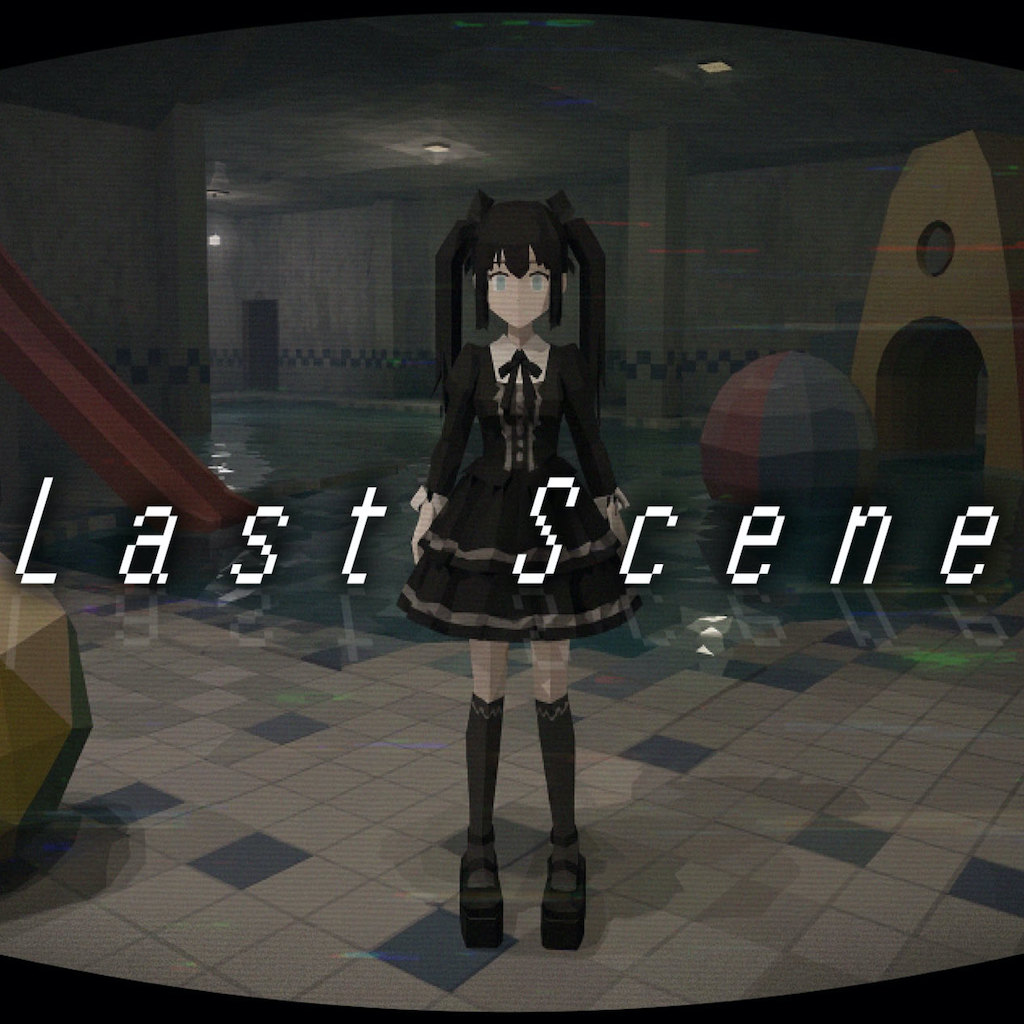
Memory is a funny thing. We like to think we are good at remembering what we have seen, particularly when something has been sitting directly in front of us for a full minute. Yet ask us to recall a tiny detail from a busy image, and that confidence can disappear remarkably quickly. The Final Scene takes that very human weakness and turns it into the basis of a deceptively simple visual memory challenge.
There is no complicated story to distract you, no sprawling world to explore, and no elaborate progression system demanding hours of your time. Instead, The Final Scene presents you with an illustration and gives you 60 seconds to study it. Then part of the image is covered, a question appears, and you are given four possible answers. It sounds easy until you realise the game is deliberately testing whether you actually noticed the small details you thought you did.
That simplicity is perhaps the game’s greatest strength. The Final Scene understands that a good puzzle does not necessarily need layers of complicated mechanics. Sometimes all you need is an image, a question, and the dawning realisation that you really should have paid more attention to that tiny object in the corner.
Look Closely
The rules could hardly be easier to understand. You are shown an illustration and given a minute to examine it before the game obscures part of the scene. Once the image is obscured, a question asks you to recall something you saw. Four possible answers are presented, leaving you to decide whether your memory is reliable enough to identify the correct one.
Getting the answer right brings a satisfying sense of relief because you can see the original image again and confirm that your memory was accurate. Getting it wrong is a different experience entirely. Suddenly, that seemingly insignificant detail you ignored becomes the only thing you can think about, and the temptation to replay the challenge immediately and prove yourself right is surprisingly strong.
There is a clever psychological quality to the format. During the 60 seconds, you might initially assume you have plenty of time. You scan the picture, take in the major objects, and perhaps start looking for anything unusual. Yet because you do not know what you will be asked afterwards, there is no obvious way to prioritise your attention. That uncertainty is what gives The Final Scene its tension.
The Pressure of a Minute
Sixty seconds may not sound like a particularly demanding time limit, but it can feel very different when you know you are expected to remember something you have not yet been told to look for. You might spend most of the minute concentrating on a character in the foreground, only to discover that the question concerns an object almost unnoticed in the background.
It encourages a different way of looking at pictures. Rather than simply taking in an illustration as a whole, you begin to scan systematically. You notice colours, objects, positions and relationships between elements. You start asking yourself questions before the game has even given you one.
Was that vase on the left or the right? Was the character wearing a hat? How many objects were on the table? Was the door open? These are simple questions, but once you realise how easily your brain can fill in details that were never actually there, the challenge becomes considerably more interesting.
The game therefore works surprisingly well as a brief exercise in observation. It does not feel like a serious brain-training programme, nor does it need to. It simply makes you pay attention, and there is something satisfying about discovering that your memory is either sharper or considerably more unreliable than you thought.
Simple, But Not Mindless
The danger with a game this straightforward is that repetition could quickly become boring. Fortunately, The Final Scenegets some mileage out of the basic concept by changing the illustrations and questions rather than endlessly repeating the same visual exercise.
The illustrations themselves are the real content. A good memory puzzle needs scenes with enough visual detail to create uncertainty without becoming completely overwhelming. When that balance works, you find yourself looking at the image differently every time. The challenge is not simply identifying what is present, but deciding which details are likely to matter.
There is also an appealing accessibility to the format. You do not need years of gaming experience, a complicated control scheme or a particularly powerful machine to understand what is happening. Button and touch controls make it easy to interact with the game, while the basic structure means that virtually anyone can pick it up and understand the rules within seconds.
That makes it particularly suitable for playing with family or friends. One person can study the image while another tries to remember the details, and the inevitable arguments over what was actually visible can become part of the fun. It is the sort of experience that can produce a surprisingly competitive atmosphere despite being fundamentally relaxed.
A Game That Makes You Question Yourself
What I particularly like about The Final Scene is how it builds tension without relying on traditional high stakes. There are no monsters chasing you, no countdown clock once the question appears, and no elaborate punishment for getting something wrong. The tension comes entirely from your own uncertainty. That can be strangely effective.
You finish studying an image feeling reasonably confident, only for the question to make you doubt everything. You might stare at the four answers, thinking that two of them sound equally plausible. Then you pick one. The answer is revealed, and suddenly you either feel like a photographic genius or someone who has just discovered that their memory cannot be trusted.
That emotional reaction gives the game more personality than its minimalist design might suggest. It is not about mastering a complicated system. It is about mastering yourself.
Presentation That Lets the Pictures Speak
The visual presentation is naturally the most important part of the experience, as everything revolves around examining illustrations. The scenes need to be clear enough to study while containing enough detail to make remembering specific elements challenging, and the game generally strikes that balance.
There is also a pleasant sense of calm surrounding the experience. Rather than filling the screen with distracting interface elements, The Final Scene allows the artwork to take centre stage. That is important because anything that distracts you during the study period would undermine the central challenge.
The sound design plays a supporting role rather than attempting to dominate proceedings. Subtle audio feedback gives correct answers a satisfying sense of resolution, while the overall presentation remains focused on concentration. This is exactly what the game needs. It is not trying to be a blockbuster. It is trying to make you look at a picture very carefully.
The Perfect Short Challenge
One of the strongest aspects of The Final Scene is how easily it fits into a spare few minutes. You can play a handful of challenges without committing to a lengthy session, making it ideal for those moments when you want something engaging but do not have the time or inclination to start a much larger game.
At the same time, the format encourages repeat attempts. Once you get an answer wrong, there is an immediate urge to see whether you can do better next time. The first attempt becomes almost like reconnaissance, as you now understand what sort of details the game is likely to ask about.
It also works well as a social experience. The simplicity of the rules means that children, adults and less experienced gamers can all understand what they are supposed to do. Watching someone confidently select an answer only to discover they remembered the scene completely incorrectly is likely to produce more than a few laughs.
Final Verdict
The Final Scene is a wonderfully simple puzzle game that turns one of the most ordinary things we do every day into an entertaining challenge: looking at something and assuming we will remember it. Its 60-second observation periods are just long enough to make you feel confident without giving you time to memorise every detail. Once the image disappears and the question arrives, that confidence can evaporate remarkably quickly.
There is not a huge amount of mechanical depth here, and players looking for a lengthy adventure or a complex puzzle system will inevitably find the experience lightweight. That is not really what The Final Scene is trying to achieve, though. Its appeal lies in being accessible, quick and surprisingly addictive, with each challenge offering another opportunity to test how observant you really are.
Most importantly, it succeeds because the concept is so easy to understand. Study the image. Remember what you saw. Answer the question. It sounds almost laughably straightforward, yet the moment the picture disappears, you suddenly realise just how much information your brain decided was unimportant. That is where The Final Scene finds its charm.