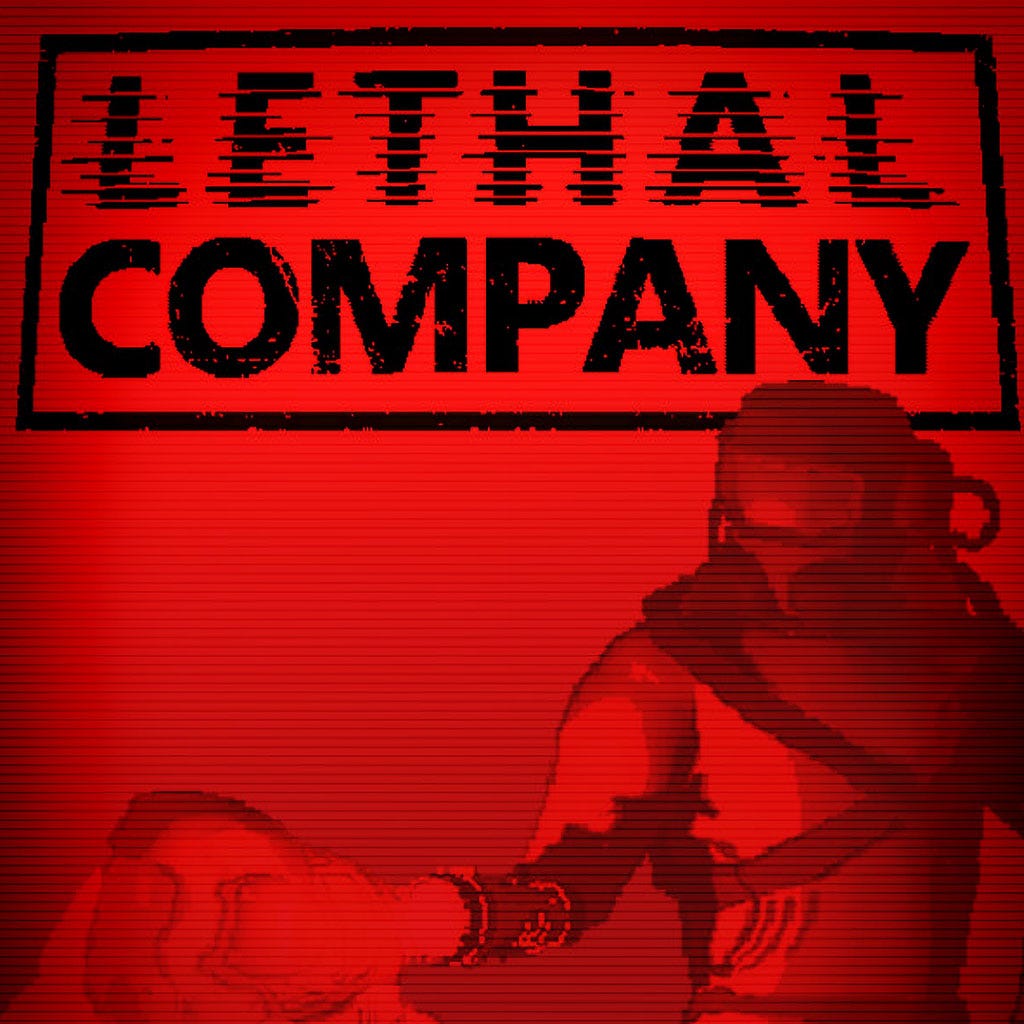
There is something inherently appealing about a game that gives you a simple job and then makes you regret accepting it. Lethal Corporation takes that familiar survival-horror setup and boils it down to its most addictive ingredients: explore somewhere you absolutely should not be, collect as much valuable scrap as possible, and get out before the place kills you. There is no heroic army waiting outside, no reassuring safety net, and no endless supply of equipment to fall back on. You are alone, the quota is waiting, and every decision about how much longer to stay could be the one that ends the expedition.
What makes the concept work is how it turns exploration into a constant argument with yourself. You enter a dark, abandoned facility knowing that every piece of scrap brings you closer to your target, but you also know that greed can be disastrous. The longer you remain inside, the more opportunities there are for something horrible to find you. Lethal Corporation understands that survival horror doesn’t always need elaborate storytelling or mechanics to create tension. Sometimes all it takes is a dark corridor, a half-full inventory, and the knowledge that everything you’ve collected disappears if you die.
Into the Darkness
The basic premise is wonderfully straightforward. You are sent to distant planets to complete dangerous contracts, entering abandoned bases and searching through deserted facilities for valuable materials. Your employer isn’t particularly interested in whether you are comfortable, frightened or emotionally prepared for what you might encounter. They want their quota, and you are the unfortunate person expected to bring it back.
That immediately gives each expedition a clear purpose. You aren’t simply wandering around looking for things because the game expects you to. Every scrap of useful material has value, and every item brings you closer to completing your objective. This creates a lovely little risk-and-reward loop, because finding another valuable object can be the difference between completing the contract and coming home empty-handed.
The problem is that the facilities aren’t exactly welcoming. Dark corridors, traps, environmental hazards and hostile creatures turn what should be a simple scavenging operation into something considerably more stressful. Even when nothing is attacking you, there is always the possibility that something is waiting around the next corner. That uncertainty gives the quieter moments a surprising amount of atmosphere.
Greed Is the Real Monster
The strongest element of Lethal Corporation is arguably its approach to risk. Many games encourage you to explore every corner because there is usually little reason not to. Here, exploration carries a very real cost. The more scrap you collect, the more you have to lose, making the decision to leave increasingly difficult.
Imagine you’ve already collected enough to meet your quota. You could turn around, make your escape and chalk the mission up as a success. Then you spot something valuable in a nearby room. Suddenly, the sensible decision doesn’t seem quite so appealing. Surely you can grab one more piece, right?
That mentality is where Lethal Corporation can be at its most effective. It isn’t necessarily the monsters that make you nervous. It is your own greed. You know exactly what is at stake, but the temptation to squeeze one more valuable item out of an expedition can be incredibly hard to resist. When that decision goes wrong and you lose everything, the frustration is real, but so is the urge to try again.
Every Planet Has Teeth
The different planets and locations provide welcome variety, ensuring the experience doesn’t feel like repeatedly walking through the same building. Each expedition can introduce distinct environments, hazards and hostile creatures, so familiar strategies aren’t always enough. You have to pay attention to where you are and adapt to what the environment throws at you.
That sense of uncertainty works particularly well with the first-person perspective. You aren’t looking at your character from a safe distance, so the environment feels more immediate. A corridor disappearing into darkness can be enough to make you hesitate, especially when you know there is something out there that would quite happily turn your profitable expedition into a very short obituary.
The horror isn’t necessarily about constant jump scares either. The better moments come from anticipation. You hear something, notice movement, or realise that the route back to the exit is no longer as safe as it was when you arrived. Lethal Corporation gets plenty of mileage from making you feel vulnerable, and vulnerability is one of the most important ingredients in effective survival horror.
Scrap, Quotas and Limited Space
Inventory management plays a key role in the experience. You can’t simply hoover up everything you find and worry about the consequences later. Valuable objects take up space, so you have to decide what to carry and what to leave behind.
That might sound like a relatively minor mechanic, but it adds another layer of tension to exploration. You might stumble across something particularly valuable but have nowhere to put it. Do you abandon something you’ve already collected, return to the entrance, or risk pushing deeper into the facility? Every decision becomes part of the larger survival equation.
The quota system gives all of this a satisfying sense of progression. Rather than simply collecting objects for their own sake, you have a measurable target to achieve. Once you have enough, the question shifts from “Can I find more?” to “Should I risk finding more?” That distinction is crucial because it turns a simple collection mechanic into a genuine strategic decision.
Death Has Consequences
The fact that dying costs you all the scrap collected during the expedition gives Lethal Corporation some teeth. It is a familiar mechanic in the survival horror and extraction style space, but it remains effective because it makes every successful escape feel meaningful.
Failure can sting, particularly when you have spent considerable time exploring and are nearly at your target. However, the relatively straightforward structure makes restarting feel more like an invitation than a punishment. You know what went wrong, have a better idea of what to expect, and can attempt the expedition again with a slightly smarter approach.
That creates the familiar “one more run” feeling that can keep these games going long after you initially expected to stop playing. A failed expedition isn’t necessarily wasted time because you have learned something. Perhaps you discovered a dangerous creature, found a safer route, or realised that staying for another piece of scrap was a terrible idea. The next run gives you the opportunity to put that knowledge to use.
Simple, But Effective
Visually, Lethal Corporation isn’t trying to compete with the biggest horror productions. Its presentation is functional and clearly shaped by its indie budget, but there is something to be said for keeping things relatively restrained. Dark environments, sparse lighting and unsettling spaces allow the atmosphere to do much of the heavy lifting.
There are moments when the limitations are more noticeable. Some environments can feel basic, and players looking for elaborate visual spectacle may find the presentation modest. Likewise, the experience isn’t overflowing with intricate narrative detail or lengthy character development. This is a game that wants you to get into the facility, find the goods and get back out alive.
That simplicity is both its greatest strength and its biggest limitation. If you approach Lethal Corporation expecting a huge cinematic horror adventure, you may come away wanting more. If you see it for what it is, a focused survival experience built around exploration, risk and repetition, there is considerably more to enjoy.
The Verdict
Lethal Corporation doesn’t reinvent survival horror, but it doesn’t need to. Its strength lies in taking a familiar premise and stripping it down to a satisfying loop of exploration, scavenging, risk assessment and escape. The idea of losing everything on death gives every expedition a sense of importance, while limited inventory space and quotas make even apparently harmless decisions feel meaningful.
Most importantly, the game understands the psychology of greed. You are constantly encouraged to ask whether you have collected enough, whether something more valuable might be nearby, and whether you are really brave enough to make it back to the exit. That internal debate can be more effective than any scripted scare because the consequences are yours. When you finally make it home with a valuable haul, there is a genuine sense of relief.
There are some obvious limitations to the presentation, and the overall experience could have benefited from greater variety and a little more polish. Nevertheless, Lethal Corporation delivers what matters most for this type of game. It gives you a reason to explore, something worth risking your life for, and enough danger to make getting back out feel like an achievement.
It may not be the biggest or most sophisticated survival horror game around, but there is something charming about its straightforward approach. Lethal Corporation knows exactly what it wants to be, and it doesn’t waste time pretending to be anything else. For players who enjoy tense scavenging runs, dangerous exploration and that wonderful feeling of getting out with seconds to spare, this is a modest but enjoyable little horror excursion.