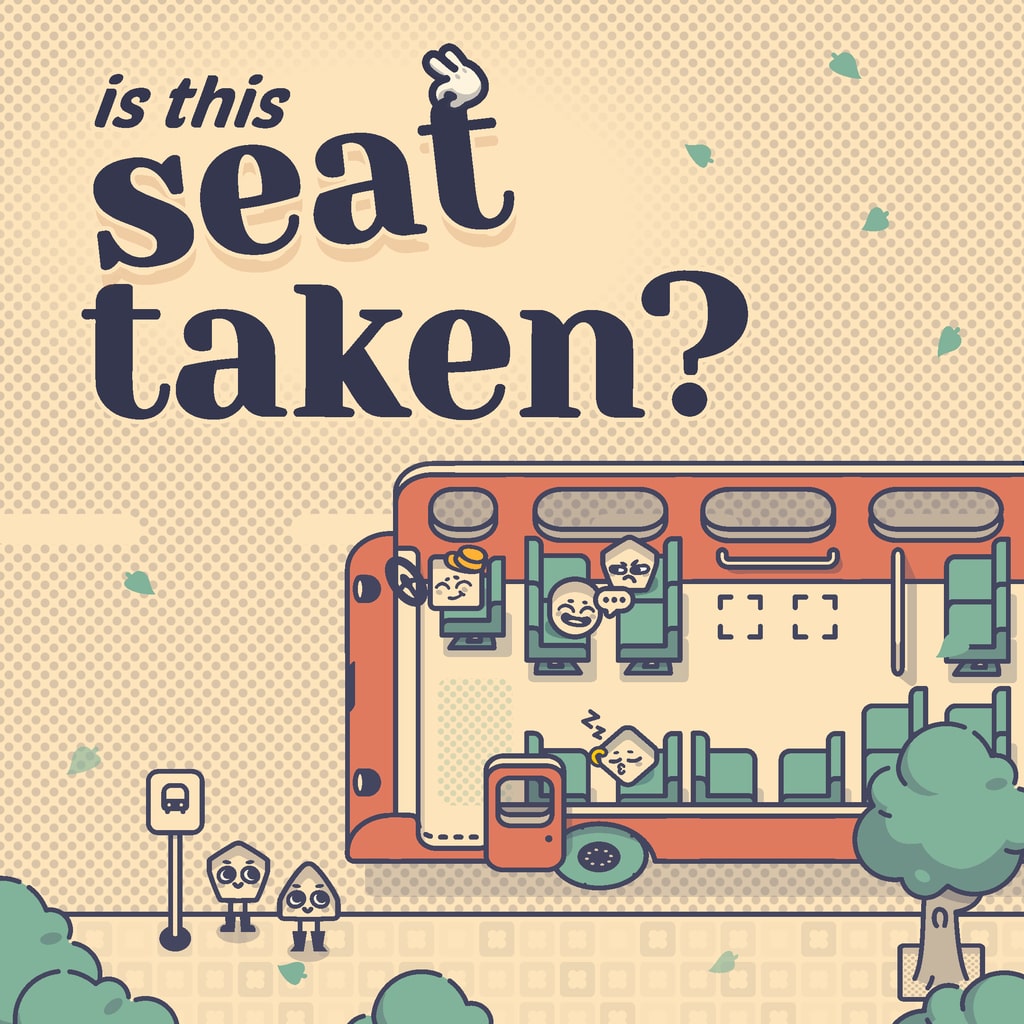
Some puzzle games challenge your reflexes. Others test your mathematical skills or ask you to memorise increasingly complex patterns. Is This Seat Taken? takes a different approach. It poses a deceptively simple question that almost everyone has considered at some point in life: where should people sit? What begins as a light-hearted exercise in arranging strangers on a bus gradually evolves into one of the most charming and surprisingly thoughtful logic games in recent memory.
On paper, its premise sounds too ordinary to build an entire game around. You’re simply matching people to seats that suit their personalities and preferences. Yet within minutes it becomes clear that developer Poti Poti Studio has found something wonderfully clever in everyday social situations. Every puzzle feels relatable because we’ve all shared public spaces with people who talk too loudly, wear overpowering perfume, invade personal space, or simply want to be left alone.
Wrapped around these cosy puzzles is a gentle story following Nat, an aspiring actor searching for belonging after spotting someone remarkably similar on the big screen. It’s an understated narrative that quietly explores identity, confidence and finding your place in the world without ever becoming overly sentimental. Much like the puzzles themselves, its emotional impact comes from subtle details rather than grand gestures.
Gameplay
At its core, Is This Seat Taken? is a logic puzzle game centred on understanding people. Each character arrives with their own likes, dislikes and little quirks that influence where they should sit. One passenger may insist on a window seat, while another refuses to sit beside someone listening to loud music. Someone else might desperately want to be close to a friend, while another would rather avoid crowds altogether.
Your task is to satisfy as many of these conditions as possible by carefully placing everyone in the right spot. At first, the puzzles are straightforward, easing players into the rules without overwhelming them. Before long, however, multiple personalities begin interacting in increasingly complex ways, transforming what looked like a simple seating chart into a surprisingly intricate web of relationships.
The brilliance lies in how naturally every rule makes sense. You’re rarely dealing with arbitrary mechanics invented solely to create difficulty. Instead, every puzzle feels rooted in believable human behaviour, making each successful solution satisfying because it feels socially logical as well as mechanically correct.
Trial and error is actively encouraged. Without timers, move limits or harsh penalties, experimentation becomes part of the fun rather than something to fear. Rearranging an entire room after noticing one overlooked personality trait never feels frustrating because the game creates an environment where curiosity is rewarded rather than punished.
Small Spaces, Big Ideas
One of the game’s greatest strengths is its ability to continually introduce fresh situations. The humble bus ride eventually gives way to cinemas, restaurants, wedding receptions, taxis and numerous other everyday locations, each with new seating layouts and fresh complications.
These new environments naturally change how puzzles are approached. A cinema introduces priorities different from those of a crowded café, while banquet seating presents social dynamics distinct from public transport. Rather than simply increasing the number of characters, the game cleverly shifts the context of each challenge.
New personality traits also arrive at a steady pace. Some characters become increasingly particular, while others create amusing conflicts with existing rules. The resulting combinations produce puzzles that remain engaging throughout the adventure without ever resorting to artificial difficulty spikes.
There are moments when solving a particularly complicated arrangement feels almost like untangling a social mystery. One small adjustment often causes several other relationships to fall perfectly into place, creating those wonderfully satisfying moments that define great puzzle design.
A Story About Finding Your Place
While the puzzles provide the main attraction, Nat’s personal journey lends the experience surprising emotional warmth. The story unfolds gently between puzzle sets, allowing players to gradually learn more about this aspiring performer and their search for identity.
Nat’s adventure never overshadows the gameplay, yet it provides enough context to make progression feel meaningful. Watching them travel between cities while meeting colourful new characters creates a pleasant sense of momentum that keeps each new location feeling connected.
The writing deserves praise for its restraint. Rather than delivering heavy-handed emotional speeches, it communicates through quiet conversations, thoughtful observations and subtle character interactions. The result feels genuine and refreshingly sincere.
Themes of belonging, self-acceptance and understanding others naturally mirror the gameplay itself. After all, the entire game revolves around finding places where everyone feels comfortable. That connection between narrative and mechanics gives Is This Seat Taken? an identity that extends well beyond being simply another puzzle game.
Presentation
Visually, the game embraces minimalist design without sacrificing personality. Every character is represented by simple geometric shapes, yet clever animation and expressive movement make each one feel surprisingly alive. Small gestures and reactions convey emotions more effectively than lengthy dialogue ever could.
The environments are equally inviting. Bright colours, clean lines and cosy backgrounds create spaces that feel welcoming without being visually distracting. Everything serves the puzzles while maintaining a warm, comforting atmosphere.
Animation is delightfully expressive despite the minimalist style. Characters visibly react when they’re pleased or uncomfortable with their seating arrangements, providing immediate feedback and reinforcing their personalities. It’s a small touch, but one that adds considerable charm throughout the experience.
Performance on the Nintendo Switch is flawless. Menus remain responsive, transitions are smooth and loading times are minimal, allowing players to settle into a wonderfully relaxing rhythm.
Sound Design
The soundtrack perfectly complements the game’s cosy nature. Soft melodies drift through each puzzle, creating a calm atmosphere that encourages thoughtful problem-solving rather than hurried decision-making.
Sound effects are understated yet effective. Small clicks, cheerful chimes and subtle responses accompany every placement, making successful arrangements feel quietly rewarding without becoming repetitive.
Perhaps most importantly, the audio never overwhelms the experience. It recognises that puzzle games often benefit from giving players room to think, providing pleasant background ambience rather than demanding constant attention.
Replay Value
Although the main campaign can comfortably be completed over several relaxing sessions, there’s genuine appeal in revisiting earlier puzzles. Knowing each character’s preferences helps players appreciate how elegantly many scenarios are constructed.
Completionists will also enjoy refining their understanding of the game’s systems and revisiting favourite locations simply because they’re enjoyable places to spend time. Unlike many puzzle games that lose their appeal once solved, Is This Seat Taken? remains oddly comforting to revisit.
The relaxed structure also makes it ideal for short play sessions. Completing a handful of puzzles during a quiet evening feels just as satisfying as spending several uninterrupted hours working through multiple chapters.
Final Verdict
Is This Seat Taken? proves that originality doesn’t require extravagant mechanics or spectacular visual effects. By turning ordinary social situations into clever logic puzzles, it delivers an experience that feels fresh, inviting and consistently rewarding.
Its accessible design welcomes newcomers while gradually introducing enough complexity to satisfy dedicated puzzle fans. Each new environment, personality trait and seating arrangement expands the formula naturally, keeping the game engaging from beginning to end.
The heartfelt story surrounding Nat adds an emotional layer that elevates the experience beyond simple brainteasers, while the minimalist presentation delivers warmth and charm in equal measure. Combined with the absence of timers or unnecessary pressure, the result is one of the most relaxing puzzle games on the Nintendo Switch.
In a genre often built around escalating difficulty and relentless challenges, Is This Seat Taken? reminds us that solving problems can be every bit as enjoyable when approached with kindness, empathy and a quiet smile. It’s a wonderfully thoughtful puzzle game that understands people just as well as it understands puzzles.