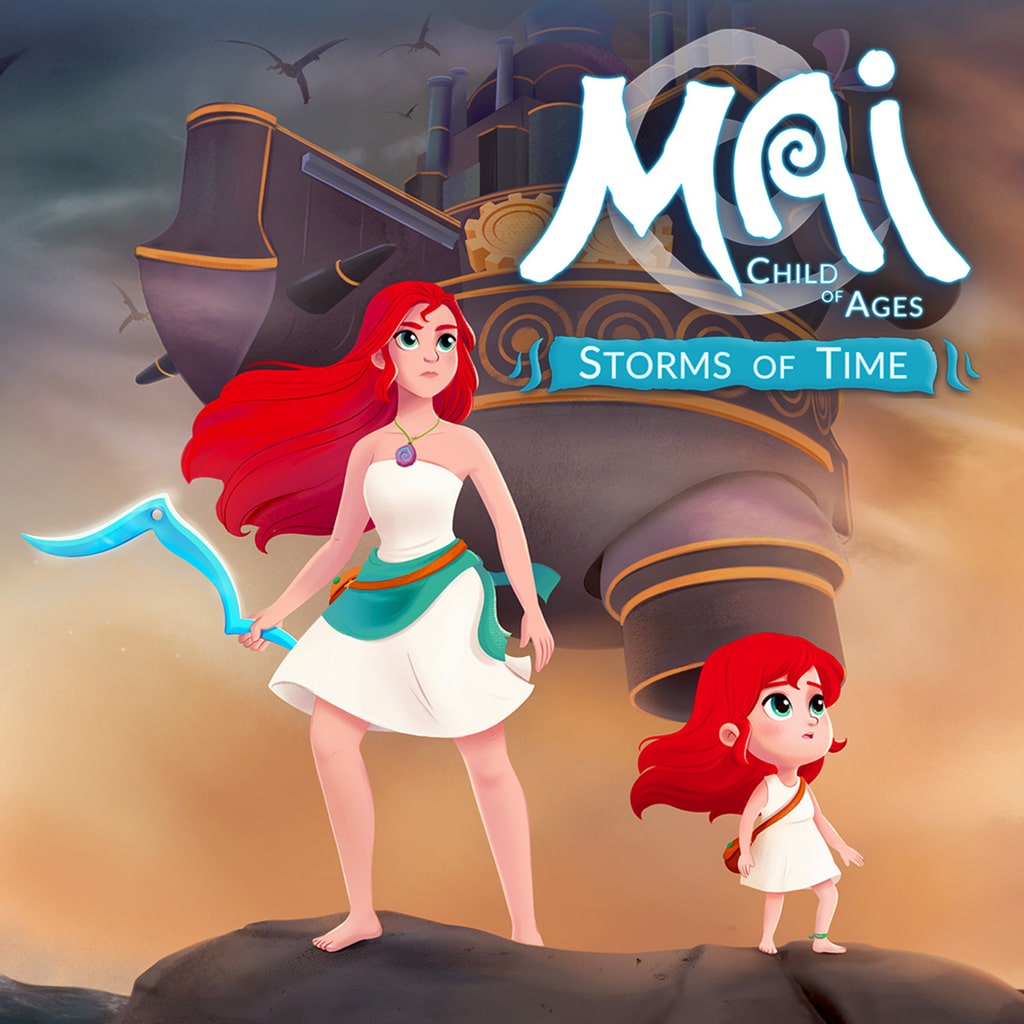
Expansions often have a difficult balancing act to perform. They need to reward returning players with meaningful new content while remaining faithful to the mechanics and world that made the original game worth playing. Too often, they feel like disconnected bonus levels or a collection of recycled ideas stitched together under a new title. Mai: Child of Ages – Storms of Time avoids that trap by building naturally on the foundation established by the base adventure.
Rather than simply introducing a handful of extra battles, Storms of Time expands Mai’s journey with a mysterious floating factory that immediately sparks curiosity. Hanging high above the world, this colossal structure feels like a forgotten relic from another age, filled with strange machinery, dangerous experiments and long-buried secrets waiting to be uncovered. It is a location that not only offers new challenges but also enriches the game’s lore, making the wider world feel even more believable.
Players who enjoyed the original adventure will quickly settle back into its familiar rhythm of exploration, puzzle-solving and combat. The expansion doesn’t reinvent the experience, but it doesn’t need to. Instead, it confidently builds on everything that already worked, delivering another satisfying chapter that feels like a genuine continuation rather than an afterthought.
Gameplay
The heart of Storms of Time remains exploration. The floating factory is a cleverly designed dungeon with interconnected pathways, towering vertical spaces and intricate environmental puzzles that consistently encourage experimentation. Each new area invites players to pause and observe their surroundings before rushing ahead, rewarding curiosity with hidden treasures, crafting materials and optional lore.
Verticality is a major focus throughout the expansion. Lifts, moving platforms and mechanical structures constantly reshape available routes, creating levels that feel more dynamic than many areas in the original adventure. Progress rarely follows a straight line, and finding your way through the enormous facility often becomes a puzzle in itself.
Environmental hazards are introduced at a steady pace without becoming frustrating. Rotating machinery, collapsing platforms and timed obstacles require patience and careful movement, creating sections that blend platforming with puzzle-solving in satisfying ways. These moments keep exploration engaging by asking players to think rather than simply react.
Combat also benefits from the new environments. Enemies frequently occupy elevated positions or patrol narrow walkways, forcing players to pay attention to positioning rather than relying on familiar attack patterns. Encounters become more tactical without ever abandoning the accessible combat system that defines Mai’s adventures.
New Challenges Worth Mastering
The expansion introduces several new enemy types that fit naturally within the mechanical setting. Clockwork-inspired creatures, aggressive machines and strange experimental constructs each demand slightly different approaches. Some pressure players with relentless attacks, while others rely on clever positioning or environmental advantages to make encounters more memorable.
Boss encounters continue the series’ tradition of combining spectacle with mechanics. Rather than devolving into simple damage races, these fights encourage players to recognise attack patterns, exploit environmental openings and remain patient during lengthy battles. Victory feels earned because success comes through observation as much as skill.
The new puzzles are equally enjoyable. Some involve manipulating machinery to redirect power, while others require careful timing on moving platforms or the activation of ancient mechanisms hidden throughout the factory. They strike a good balance between challenge and accessibility, rarely becoming so obscure that progression grinds to a halt.
What makes these puzzles particularly satisfying is how naturally they fit into the environment. Nothing feels artificially inserted simply to slow players down. Every challenge feels like part of the factory itself, reinforcing the illusion that this forgotten place once served a genuine purpose.
Expanding Mai’s Story
Story has always been central to Mai: Child of Ages, and Storms of Time continues that tradition with confidence. The floating factory is more than another dungeon. It is another missing piece of the world’s fractured history, slowly revealing answers while raising even larger questions.
Mai herself continues to develop as a protagonist. Her curiosity, determination and compassion remain central to the adventure, making her an easy character to invest in throughout the expansion. Rather than relying on lengthy exposition, much of the storytelling unfolds naturally through exploration, environmental details and optional discoveries.
Lore enthusiasts will find plenty to enjoy. Hidden journals, forgotten experiments and mysterious machinery gradually paint a picture of the civilisation that built the floating fortress. These discoveries reward players who take the time to thoroughly investigate every corner of the world rather than simply following the main objective.
The writing also succeeds by resisting the urge to explain everything. Some mysteries remain intentionally unresolved, leaving enough room for players to speculate about the wider world and what may come next in Mai’s journey.
Presentation
Visually, Storms of Time delivers some of the strongest environments in the series so far. The floating factory immediately establishes a distinctive identity through towering steel structures, glowing machinery and ancient technology that feels both beautiful and intimidating. Every room feels handcrafted, with enough visual variety to prevent the lengthy dungeon from becoming repetitive.
Lighting plays a particularly important role throughout the expansion. Flickering machinery, glowing energy sources and shafts of natural light filtering through broken ceilings create a constant contrast between warmth and cold industrial design. These subtle touches help each location feel atmospheric without becoming visually overwhelming.
Performance on the Nintendo Switch remains generally stable throughout most of the adventure. Despite increased verticality and more complex environments, the game maintains a respectable level of consistency. Occasional frame-rate dips can occur during particularly busy combat encounters or effects-heavy sequences, but they rarely linger long enough to significantly impact gameplay.
Character animations continue to improve. Combat feels fluid, platforming remains responsive and environmental interactions are polished enough to make exploration consistently enjoyable. While the production values cannot compete with larger-budget releases, the developers clearly understand how to maximise their artistic direction.
Sound Design
The soundtrack deserves particular praise for how effectively it supports the expansion’s atmosphere. Quiet orchestral themes accompany slower moments of exploration, creating a lingering sense of mystery throughout the abandoned factory. As danger approaches, the music gradually shifts towards more energetic arrangements without feeling abrupt or intrusive.
Environmental audio also contributes significantly to immersion. The constant hum of machinery, distant metallic echoes and mechanical groans make the factory feel alive despite its abandonment. Small details like these reinforce the illusion that this forgotten structure continues to operate long after its original creators disappeared.
Combat effects remain satisfying without becoming excessive. Weapon strikes carry appropriate impact, enemy attacks are clearly communicated through sound, and environmental hazards provide enough audio feedback to help players react quickly during more demanding platforming sequences.
Replay Value
Although Storms of Time can be completed in a relatively focused playthrough, completionists will find plenty of reasons to return. Hidden collectibles, optional crafting resources and additional lore entries encourage thorough exploration of every corner of the floating factory.
The new craftable items also provide worthwhile incentives for players who enjoy experimenting with different equipment and upgrades. Combined with hidden pathways and optional encounters, the expansion offers enough extra content to reward players willing to look beyond the critical path.
Most importantly, the expansion integrates naturally into the existing adventure. It never feels detached from the core experience, making it easy to recommend as an essential continuation rather than optional bonus content.
Final Verdict
Mai: Child of Ages – Storms of Time succeeds because it understands exactly what made the original adventure enjoyable. Rather than chasing larger spectacles or radically changing established mechanics, it focuses on smarter level design, stronger environmental storytelling and another memorable chapter in Mai’s evolving journey.
The floating factory stands out as one of the most interesting locations in the series, combining intricate puzzles, satisfying exploration and rewarding lore discoveries into a consistently engaging adventure. New enemies, carefully designed boss encounters and expanded crafting systems ensure there is always something fresh around the next corner.
Players hoping for dramatic gameplay reinvention may find the expansion comfortably familiar, but for fans of the original game, that familiarity is exactly its greatest strength. Storms of Time respects its foundations while confidently expanding them, resulting in an adventure that feels meaningful from beginning to end.